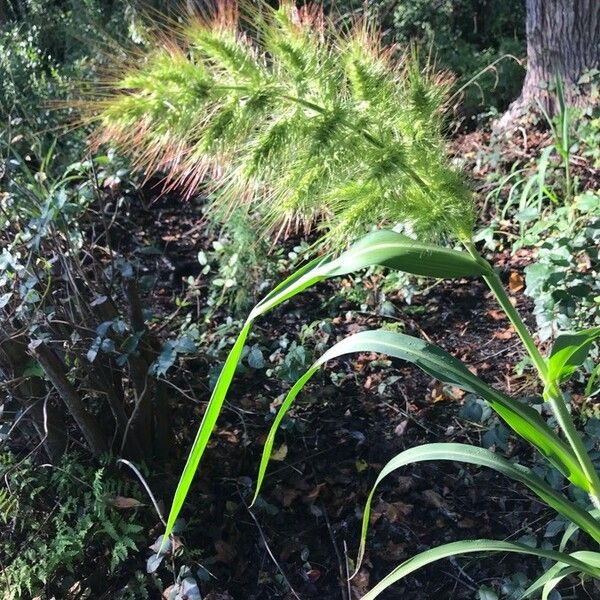
Plant Overview
Echinochloa walteri, commonly known as Coast Cockspur Grass, is the statuesque giant of the marshlands. Found waving its shaggy heads across North American wetlands, this grass is a master of the shoreline, thriving where the soil is constantly soaked. While it might look like a wild "weed" to the untrained eye, it is a vital pillar of coastal ecosystems, serving as a high-protein feast for migrating birds.
🔍 How to Identify
- 📏 Towering Stature: This is no ordinary lawn grass; it is a giant that can reach heights of 3 to 10 feet. The stems are thick and robust, often displaying a reddish-purple tint at the base.
- 🌾 The "Shaggy" Seed Head: The flowering part (panicle) is a dense, drooping cluster of spikes. Each seed is armed with a long, stiff "awn"—a hair-like needle that can be over an inch long—giving the plant a fuzzy, prehistoric appearance.
- 🍃 Bristly Sheaths: A key identification tip is to look at the "leaf sheath" (where the leaf wraps around the stem). Unlike many of its cousins, this species has noticeably stiff, bristly hairs in that area.
🏡 In Your Garden
- 💧 A Thirst for the Wet: This plant is a true "water baby." In a landscape setting, it requires a pond edge, a marshy depression, or a rain garden where the soil never dries out. It is remarkably salt-tolerant, making it one of the few grasses that can thrive in brackish coastal water.
- 🦆 Nature’s Bird Feeder: If you are looking to attract wildlife, this is a "gold star" plant. Its heavy, nutrient-dense seeds are a preferred food source for mallards and other waterfowl. It provides excellent nesting cover for birds that prefer staying close to the water's surface.
⚠️ Safety & Toxicity
- 🟢 General Safety: Coast Cockspur Grass is non-toxic to humans, cats, and dogs. It is safe to handle without gloves, though the long "awns" on the seeds can be a bit scratchy.
- 🐄 Nitrate Note: Like many fast-growing wild grasses, it can occasionally accumulate nitrates if grown in heavily over-fertilized agricultural runoff. While this is only a concern for large livestock (like cattle) eating massive quantities, it is perfectly safe for a home garden environment.
✨ Fun Fact
The long "awns" or spikes on the seeds aren't just for defense; they act like tiny velcro hooks! They are designed to hitch a ride on the feathers of ducks or the fur of passing animals, allowing the plant to "travel" miles away to colonize new wetlands.

Detailed Care Instructions
To grow Echinochloa walteri, also known as Chinese sprangletop, you can follow the steps below:
- Choose a suitable planting location: Echinochloa walteri thrives in full sun or partial shade. Ensure the planting area is well-draining soil to prevent waterlogged conditions.
- Prepare the soil: Loosen the soil by removing weeds, rocks, and obstructions. Amend the soil with compost or well-rotted organic matter to improve its nutrient content and drainage.
- Sow the seeds: Scatter the seeds evenly across the prepared soil surface. Lightly rake the seeds into the soil, ensuring they are barely covered. Alternatively, you can press the seeds slightly into the soil surface without burying them.
- Watering: Keep the soil consistently moist but not waterlogged. Water the newly sown seeds gently to avoid displacing them. Use a watering can or a fine mist spray for even distribution. Depending on weather conditions, you may need to water daily until the seedlings establish.
- Fertilization: Apply a balanced slow-release fertilizer or organic fertilizer according to the package instructions. Fertilize the plants every 4-6 weeks during the growing season to promote healthy growth.
- Maintenance: Remove any weeds that may compete with the Echinochloa walteri plants for nutrients and space. Monitor pests and diseases and take appropriate measures if necessary.
- Harvesting: Echinochloa walteri is mainly grown for its ornamental grass-like foliage and does not typically produce flowers or seeds. You can trim the foliage as desired to maintain the desired height or shape.
- Winter care: In colder regions with frost, Echinochloa walteri is often grown as an annual. If you live in a frost-free area, you can allow the plant to die back naturally and regrow in the following spring.
Remember to check if Echinochloa walteri is suitable for your specific climate and region before planting. It's always beneficial to consult with local gardening experts or extension services for tailored advice based on your location.

Place in a bright room that is sun drenched almost all day. Or directly in a south-facing window.

To water this plant, you should first ensure that it is planted in well-draining soil. Wait until the top inch of soil is dry before watering, and then water deeply, being careful not to let the soil become too saturated. It may be helpful to water the plant in the early morning or late evening to prevent evaporation and excess water loss due to heat. Additionally, avoid getting water on the leaves as this can encourage disease. Overwatering should be avoided as it can lead to root rot.
To fertilize this plant, apply a balanced fertilizer with equal parts nitrogen, phosphorus, and potassium every three months. Water the plant thoroughly before and after fertilizing, and avoid getting fertilizer on the leaves or stem. Always follow the manufacturer's instructions for the specific fertilizer being used. Additionally, consider supplementing with additional nutrients such as iron or magnesium if the plant shows signs of deficiency.
The recommended type of soil to use with this plant is a well-draining, sandy loam soil with a pH range of 5-7. The soil should be rich in organic matter and mineral nutrients such as nitrogen, phosphorus, and potassium. The plant prefers soils that are moist but not waterlogged, and it can tolerate both acidic and slightly alkaline soils. It is important to avoid heavy clay soils as they can restrict the plant's root system and hinder its growth. Additionally, it is recommended to add a layer of organic mulch around the base of the plant to help retain moisture and improve overall soil health.
To propagate this plant, you will need a well-established parent plant. Cutting a stem or shoot from the plant is the best way to propagate. Cut at a point where there are at least two nodes present. Remove the lower leaves from the stem, leaving only the top two to three leaves. Dip the end of the stem in rooting hormone and plant the stem in a pot filled with potting soil. Water the soil thoroughly and keep the soil moist until the plant takes root. Place the pot in a bright, sunny location but out of direct sunlight. Within a few days, new leaves or roots will start to appear. Once the plant becomes established, it can be transplanted into the ground or a larger pot.








