Plant Overview
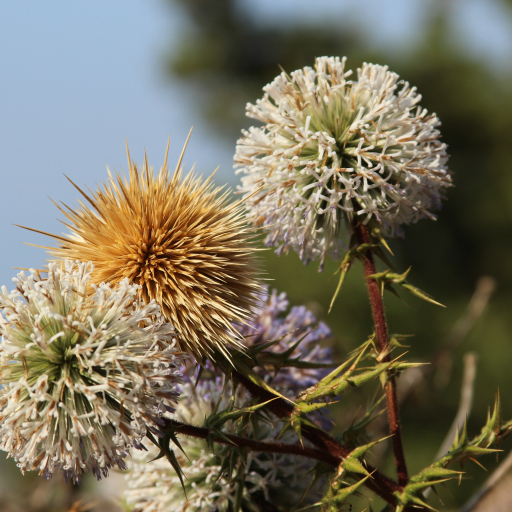
The Spiny Globe Thistle (Echinops spinosissimus) is the tough, silver-armored warrior of the Mediterranean hillsides. Often called the "Hedgehog Thistle," it is famous for its perfectly spherical flower heads that look like miniature, metallic-blue planets orbiting a stiff, woolly stem. In ancient times, its resilient nature and prickly defense made it a symbol of endurance in harsh, sun-drenched landscapes.
🔍 How to Identify
- 🔵 The Flower Spheres: It produces perfectly round, golf-ball-sized flower heads. These are actually "capitula" composed of dozens of tiny, individual tubular flowers that bloom from the top down.
- 🗡️ The Spiny Armor: The leaves are deeply lobed and "pinnatifid," meaning they have sharp, needle-like spines at every tip. The foliage often has a cobweb-like, silvery fuzz on the underside.
- 🏛️ The Sturdy Stature: It grows on rigid, upright stems that can reach up to 3 or 4 feet tall. These stems are often covered in white, woolly hairs to reflect the intense Mediterranean sun.
🏡 In Your Garden
- ☀️ Sun Seeker: This plant is a true "heliophile." It requires full sun to maintain its structural integrity; if grown in shade, the heavy flower heads will cause the tall stems to flop over.
- 🏜️ Drought Specialist: Thanks to a deep, thick taproot, it can survive in bone-dry, rocky, or sandy soils where other plants wither. Because of this taproot, it hates being moved—pick its "forever home" carefully!
- 🐝 Pollinator Magnet: While its spines keep mammals away, it is a five-star hotel for bees and butterflies. The nectar is easily accessible, making it a vital resource in late summer when other flowers have faded.
⚠️ Safety & Toxicity
- 🌵 Physical Hazard: While not chemically toxic, the Spiny Globe Thistle is a "mechanical" threat. The spines are very sharp and can easily pierce garden gloves or thin clothing.
- 🐾 Pet Safety: It is generally considered non-toxic to dogs and cats. However, most pets will naturally avoid it due to the painful prickles. Keep it away from high-traffic areas where a running pet might collide with it.
✨ Fun Fact
The name Echinops is derived from the Greek words echinos, meaning "hedgehog," and opsis, meaning "appearance." It literally translates to "looking like a hedgehog," which perfectly describes the prickly, rounded flower heads before they fully bloom!

Detailed Care Instructions
| Humidity | Normal |
| Difficulty | Medium |
| Hibernation | Cold Period |
| Hardiness Zones | 6 - 9 |
To grow Echinops spinosissimus, also known as the spiny globe thistle, follow these steps:
- Climate and Soil: Select a planting location with full sun exposure, as Echinops spinosissimus requires at least six hours of direct sunlight daily. It prefers well-draining soil with moderate to low fertility. Sandy or loamy soil types are ideal.
- Seed sourcing: Obtain seeds from a reputable nursery or online seed supplier.
- Stratification: Soak the seeds in water for 24 hours to encourage germination. Next, "stratify" the seeds by placing them in a moist medium, such as damp sand or peat moss, in a sealed plastic bag. Store the bag in the refrigerator for approximately four weeks to mimic the plant's natural winter dormancy.
- Sowing: After stratification, sow the seeds in early spring when the threat of frost has passed. Choose a well-prepared planting area and scatter the seeds over the soil surface or sow them individually at a depth of approximately 1/8 inch. Space the seeds at least 12 inches apart to allow for growth.
- Watering: Keep the soil evenly moist, but avoid overwatering, as excessive moisture can lead to root rot. Water the seeds regularly until they germinate.
- Germination: Echinops spinosissimus typically germinates within two to three weeks when provided with consistent moisture and suitable temperatures of around 70°F (21°C).
- Transplanting: Once the seedlings have reached a height of around 3-4 inches, they can be transplanted to their permanent location in the garden. Ensure the new location mirrors the sun and soil requirements mentioned earlier.
- Care: Provide occasional watering during dry spells, especially during the first growing season. Avoid excessive fertilizer, as Echinops spinosissimus prefers lean soil. Deadhead the spent flowers to encourage further blooming and prevent self-seeding if desired.
- Maintenance: Echinops spinosissimus is generally a low-maintenance plant. It may require staking if the stems become droopy or fall over. Additionally, removing dead foliage in late fall or early spring promotes healthier growth.
- Propagation: Echinops spinosissimus can also be propagated through division. Every three to four years, carefully lift the plant in early spring and divide the crown using a sharp knife or spade. Replant the divided sections, ensuring each new plant has sufficient roots and shoots.
With proper care, Echinops spinosissimus should thrive and reward you with its unique and beautiful thistle-like blooms.

Place in a bright room that is sun drenched almost all day. Or directly in a south-facing window.

The best way to water this plant is to moisten the soil consistently, but not have it sit in standing water. Before watering, check the soil moisture level by sticking your finger in the soil. If it feels dry to the touch, it is time to water. Use room temperature water, and pour it gently over the soil, making sure to cover the entire root system. Avoid getting water on the leaves as this can lead to fungal growth. Allow any excess water to drain away from the pot, and do not let the plant sit in standing water. Watering frequency will vary with temperature, humidity, and the size of the pot.
The Echinops Spinosissimus plant should be fertilized with a balanced, slow-release fertilizer in early spring before new growth appears. Use the recommended amount for the size of the plant and water it in well. Repeat the application every 4-6 weeks during the growing season. Avoid over-fertilizing as this can lead to excessive growth and weaken the plant.
Echinops Spinosissimus plant prefers a well-draining soil that is rich in organic matter. The soil should be moist but not waterlogged, and it should have a pH level between 6 and 7.5. Additionally, the soil should be able to hold nutrients for a longer period of time so that the plant can absorb them easily. It is recommended to amend the soil with compost or other organic matter before planting. As this plant is a perennial, the soil should be supplemented with organic fertilizers during its active growing period. It is not recommended to use heavy soils that do not drain well or soils that are excessively sandy and dry for this plant.
To propagate this plant, choose a healthy and mature specimen with an established root system. Take a sharp and sterilized cutting tool and remove a stem cutting from the main plant. The cutting should be about 4-6 inches long and should include at least 2-3 pairs of leaves.
Remove the lower leaves from the cutting and dip the cut end in rooting hormone powder. Plant the cutting in a well-draining potting mix, using a clean and sanitized container. Water the cutting lightly and cover the container with a plastic bag or a glass jar to create a humid environment.
Place the container in a warm and bright spot, preferably near a window with indirect sunlight. Check the cutting regularly and mist it lightly with water to keep the soil moist. After a few weeks, the cutting should start to show signs of growth, such as new leaves and roots.
Once the cutting has developed a strong root system and several new leaves, it can be transplanted into a larger pot or into the garden soil. Water the new plant regularly and provide it with enough sunlight and nutrients to ensure healthy growth.








