Plant Overview
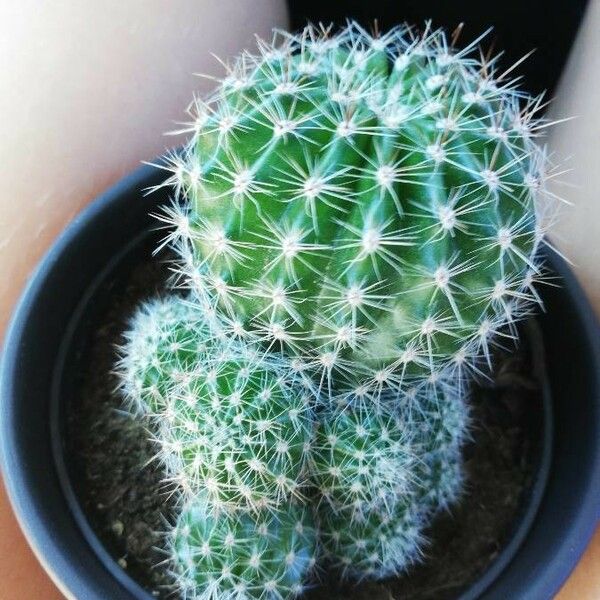
Known for its vibrant, emerald-hued skin, the Echinopsis calochlora is a standout member of the "Hedgehog Cactus" family. Native to the dry plains of Brazil and Bolivia, this cactus is often nicknamed the "Brilliant Green Cactus" or the "Sunrise Cactus" because of its glowing appearance and stunning nocturnal flowers. It is a favorite among collectors who love a plant that stays compact but packs a huge punch during the blooming season.
🔍 How to Identify
- 🌵 The Body: A glossy, bright green globose (ball-shaped) stem that becomes slightly cylindrical as it ages. It typically stays small, around 2-4 inches in diameter.
- 📐 The Ribs: Features 10 to 12 sharp, well-defined vertical ribs that create a star-like pattern when viewed from the top.
- ☀️ The Spines: Small, needle-like spines that range from golden yellow to light brown. They are arranged in clusters (areoles) and give the plant a shimmering, metallic look in the sunlight.
- 🌸 The Bloom: Massive, trumpet-shaped white flowers that can grow up to 6 inches long—often larger than the cactus itself! They typically open at night and emit a delicate fragrance.
🏡 In Your Garden
- 🏜️ Drainage is Vital: This cactus has a sensitive root system that hates "wet feet." Use a gritty cactus mix with plenty of perlite or pumice to prevent root rot, which is its biggest enemy.
- 👯 The Clustering Habit: Over time, this plant will produce "pups" or offsets around its base. You can leave them to create a lush, spiny mound or gently twist them off to start new plants for friends.
- 🌞 Light Stress: While it loves bright light, very intense midday sun in peak summer can cause the bright green skin to turn a yellowish-red. Provide some light afternoon shade to keep its signature "emerald" glow.
⚠️ Safety & Toxicity
- 🟢 Non-Toxic: This species is generally considered non-toxic to cats, dogs, and humans if accidentally nibbled.
- 🌵 Physical Hazard: While not poisonous, the spines are very sharp and can easily puncture the skin or get stuck in fur. Always use tongs or thick leather gloves when repotting, and keep it on a high shelf away from curious toddlers or wagging tails.
✨ Fun Fact
The flowers of Echinopsis calochlora are considered "nocturnal beauties." They bloom under the moonlight to attract specific night-flying moths as pollinators, usually fading by the time the next day's sun reaches its peak.

Detailed Care Instructions
| Color | White |
| Soil Ph | 6.1-7.8 |
| Humidity | Dry |
| Lighting | Full Sun |
| Soil Type | A Rich, Fast-Draining Cactus Mix |
| Difficulty | Medium |
| Plant Type | Cactus |
| Mature Size | 7-13 In. |
| Native Area | Brazil |
| Temperature | Min 12°C |
| Sun Exposure | Full Sun |
| Hardiness Zones | 9-11 |
To grow Echinopsis Calochlora plant, follow these steps:
- Choose a suitable container: Select a pot with drainage holes at the bottom to ensure proper water drainage.
- Soil mixture: Use a well-draining cactus or succulent potting mix. Alternatively, you can create a mixture by combining equal parts of sand, perlite, and regular potting soil.
- Planting: Place the Echinopsis Calochlora plant in the pot and ensure it is positioned upright. Add soil around the plant until it is securely held in place.
- Sunlight: Place the pot in a location that receives bright indirect sunlight for at least 6-8 hours a day. Avoid placing it in direct sunlight as it can lead to sunburn.
- Temperature and humidity: The Echinopsis Calochlora plant prefers warm temperatures ranging between 70-80°F (21-27°C). It also likes moderately low humidity levels.
- Watering: Water the plant thoroughly, allowing excess water to drain out from the bottom. Wait until the soil has dried out completely before watering again. Overwatering can lead to root rot, so it's essential to avoid excessive moisture.
- Fertilizer: During the growing season (spring and summer), apply a diluted balanced liquid fertilizer once a month. Avoid fertilizing during the winter when the plant is dormant.
- Dormancy period: In the winter months, Echinopsis Calochlora goes into a dormancy period. During this time, reduce watering and stop fertilizing. Keep the plant in a cool location with temperatures between 45-55°F (7-13°C).
- Pests and diseases: Inspect the plant regularly for any signs of pests like mealybugs, scale insects, or spider mites. Treat any infestations promptly with an appropriate insecticide or by wiping the plant with a damp cloth.
- Propagation: Echinopsis Calochlora can be propagated through offsets or seeds. Offsets (small clones of the main plant) can be separated and planted in their own pots. Seeds can be sown in a well-draining potting mix and kept warm until germination occurs.
Remember to maintain a regular care routine, periodically repot the plant into a larger container when it outgrows its current one, and enjoy watching your Echinopsis Calochlora plant grow and bloom over time.

Place in a bright room that is sun drenched almost all day. Or directly in a south-facing window.

The watering instructions for this plant involve giving it enough water to keep the soil evenly moist, but not overly saturated. It is important to check the soil moisture level frequently and adjust watering accordingly to prevent over or under watering. When watering, it is recommended to use room temperature or lukewarm water and avoid getting water on the leaves or stem to prevent rot. In addition, it is important to ensure proper drainage to prevent waterlogging, which can also lead to rot. During the winter months, the plant may require less frequent watering due to decreased growth and evaporation rates.
- During the growing season, apply a balanced fertilizer containing equal parts nitrogen, phosphorus, and potassium.
- Fertilize every two weeks during active growth, but stop fertilizing in winter when the plant goes dormant.
- Use a water-soluble fertilizer or a slow-release fertilizer that lasts for several months.
- Dilute the fertilizer according to the package instructions, typically 1 tablespoon per gallon of water.
- Water the plant thoroughly before applying the fertilizer to avoid burning the roots.
- Apply the fertilizer evenly around the base of the plant, avoiding the crown.
- After fertilizing, water the plant again to help distribute the nutrients throughout the soil.
- Monitor the plant for signs of over-fertilization, such as yellowing leaves or wilting, and adjust the frequency or amount of fertilizer accordingly.
Echinopsis Calochlora plant requires a well-draining soil mix that is light and airy. It grows best in a soil mix that is made up of two parts inorganic material, such as perlite or coarse sand, and one part organic material, such as peat moss or coir.
The soil mix should be slightly acidic with a pH range of 5.5 to 6.5. The plant also requires a soil mix that is rich in nutrients but does not retain water for long periods.
It is recommended to use a potting mix specifically designed for cacti and succulents or create a DIY mix that meets the plant's specific soil requirements.
When planting or repotting the Echinopsis Calochlora, ensure that the soil is loose and aerated to allow for easy root growth. Additionally, it is recommended to add a layer of gravel or sand at the bottom of the pot to improve drainage.
To propagate this plant, you can take stem cuttings from a mature plant. Select a healthy stem that is at least 4-6 inches long and has several nodes. Using a clean and sharp knife, make a clean cut just below the bottom node. Remove any lower leaves or branches, leaving only the top few leaves. Let the cutting dry out for a few days, then plant it in a well-draining potting mix. Water it lightly and place it in a warm and bright location, but not direct sunlight. Keep the soil lightly moist and mist the cutting regularly to increase humidity. It usually takes a few weeks for the cutting to establish roots and start growing new leaves. Once the plant has established itself and starts to grow, you can plant it in a larger pot or directly in the ground.
Common pests of the lemon barrel cactus include Scale insect, mealybugs, thrips. Make a habit of checking your lemon barrel cactus frequently for pests so that any infestations can be caught and managed early.








