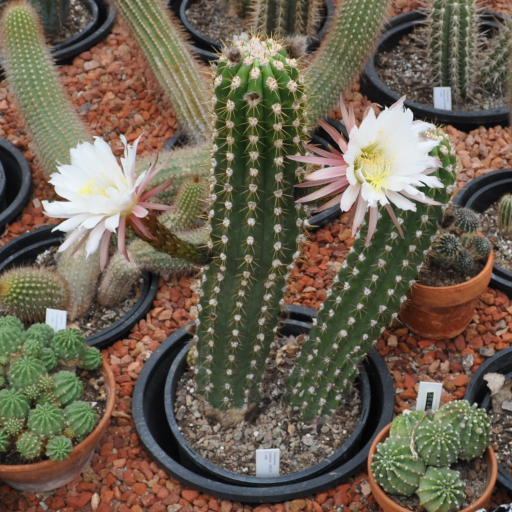
Plant Overview
Known as the Argentine Giant Cactus, this stunning succulent is famous for producing some of the largest and most fragrant flowers in the cactus world. Often called the "White Torch," it starts its life as a humble, low-growing cluster before expanding into a massive, sprawling presence. It is a desert showstopper that waits for the sun to set before revealing its true glory.
🔍 How to Identify
- 🌵 Growth Habit: Unlike tall saguaros, this cactus grows in low, clumping mounds. The stems are cylindrical and light green, often leaning or laying along the ground as they age.
- ⚔️ Spines: It is heavily armed with clusters of straight, golden-to-brown spines. The central spines are notably longer and sharper than the radiating side spines.
- 🌸 The Bloom: The flowers are the "wow" factor—massive, funnel-shaped white blossoms that can reach up to 8 inches in diameter. They emerge from the sides of the stems on long, fuzzy tubes.
🏡 In Your Garden
- ☀️ Sun Seeker: This cactus craves intense light to fuel its heavy blooming cycle. While it survives in partial shade, it may become "leggy" and refuse to flower without at least 6 hours of direct sun.
- 🏜️ Drainage is King: Because it grows in rocky, arid regions of Argentina, it has a very sensitive root system. It is prone to rot if kept in standard potting soil; a gritty, mineral-heavy mix is essential for its longevity.
- ❄️ Surprising Hardiness: While it looks tropical, the Argentine Giant is surprisingly frost-tolerant compared to other cacti, capable of surviving short dips into freezing temperatures if the soil is kept bone-dry.
⚠️ Safety & Toxicity
- 🌵 Physical Hazard: The spines are long, stiff, and capable of puncturing thick gardening gloves. Always use "cactus tongs" or wrapped carpet scraps when moving or transplanting.
- 🐾 Pet & Child Safety: While not considered chemically toxic if a small piece is nibbled, the physical danger of the spines makes it a high-risk plant for high-traffic areas where pets or children play.
✨ Fun Fact
The Argentine Giant is a "night-owl." Its massive white flowers typically open at dusk and only last until the following morning. They produce a heavy, sweet perfume—similar to jasmine or citrus—specifically designed to attract nocturnal hawkmoths for pollination.

Detailed Care Instructions
To grow Echinopsis Candicans (also known as the Argentine giant cactus or Easter lily cactus), follow these steps:
- Climate and Sunlight: Echinopsis Candicans prefer warm climates and plenty of sunlight. Find a location that receives full sun exposure for at least 6 hours a day.
- Soil: Use well-draining soil or cactus potting mix. It should allow excess water to drain quickly. Avoid heavy clay or compacted soils.
- Container or Ground Planting: Echinopsis Candicans can be grown in containers or directly in the ground if your climate permits. If planting in a container, ensure it has drainage holes.
- Planting: Dig a hole that is slightly wider and deeper than the plant's root ball. Gently place the plant in the hole and cover the roots with soil. Pat the soil lightly to settle it around the plant.
- Watering: Water your Echinopsis Candicans regularly but sparingly. Overwatering can lead to root rot. Allow the soil to dry out slightly between waterings. During the growing season (spring and summer), water more frequently, decreasing frequency in winter.
- Fertilizer: Apply a balanced, slow-release fertilizer formulated for cacti and succulents once or twice a year during the growing season. Follow the package instructions for the appropriate amount.
- Pruning: Prune any dead or damaged stems or branches. Trim to maintain a desired shape and size. Be cautious of the cactus' spines and wear protective gloves.
- Pests and Diseases: Echinopsis Candicans are generally resistant to pests and diseases. However, mealybugs and scale insects can sometimes infest them. Check the plant regularly for signs of pests and treat accordingly using insecticidal soap or neem oil.
- Winter Care: In cooler climates, Echinopsis Candicans may require protection during winter. Bring container-grown plants indoors or provide frost protection to prevent damage from freezing temperatures.
- Propagation: Propagate Echinopsis Candicans through stem cuttings. Allow the cuttings to dry out for a few days before planting them in well-draining soil. Keep the soil lightly moist until roots develop.
Remember, Echinopsis Candicans is a slow-growing plant, so be patient with its growth. With proper care and attention, it will flourish in your garden or as a potted plant.

Place in a bright room that is sun drenched almost all day. Or directly in a south-facing window.

To water this plant, it is important to first take note of the environmental factors such as temperature and humidity. The best time to water is during the morning or early afternoon, and only once the soil is completely dry. When watering, make sure to avoid getting water on the leaves, as this can promote fungal growth. Use lukewarm water and make sure to saturate the soil completely, allowing water to drain through the bottom of the pot. Do not let the plant sit in standing water for too long. During the winter months, it is important to reduce watering frequency and allow the soil to dry out slightly more between waterings.
To fertilize your plant, you will need a balanced fertilizer with equal parts nitrogen, phosphorus, and potassium. It is best to fertilize during the growing season, which is typically spring and summer. Mix the fertilizer into the soil according to the package instructions, and water the plant immediately after fertilizing. Avoid fertilizing during the winter months when the plant is dormant.
The best soil to use for this plant is a well-draining, sandy soil mix with a pH of around 6.5 to 7.5. It should not be too rich in nutrients as this can lead to over-fertilization and damage to the plant. Adding perlite or sand to the soil mix can improve drainage and prevent waterlogging, which can be harmful to the plant's roots. The soil should also be free of any pathogens or fungi that can cause disease in the plant. It's important to avoid using heavy, clay-like soils or those that are too alkaline or acidic. This plant prefers a soil that mimics its natural habitat in arid regions, which is a sandy loam with high drainage and low fertility.
To propagate this plant, you can use stem cuttings. To begin, select a healthy stem that is at least 6 inches long and has no sign of disease or damage.
Next, cut the stem at a 45-degree angle using sharp, sterile scissors or a knife. Be sure to make a clean cut through the stem with no frayed edges or splinters.
Remove any lower leaves from the stem, leaving only a few at the top. These leaves will help the cutting to photosynthesize and develop roots.
Next, dip the cut end of the stem into a rooting hormone powder to encourage the development of roots. Shake off any excess powder and plant the stem cutting in a well-draining soil mix.
Water the cutting gently and place it in a warm, bright location with indirect sunlight. Keep the soil moist but not waterlogged and avoid overwatering.
Over time, the cutting should develop a root system and start to grow foliage. Once the plant has established itself, you can gradually introduce it to brighter light and drier conditions.
With proper care and attention, your propagated Echinopsis Candicans plant should thrive and grow into a healthy and beautiful specimen.








