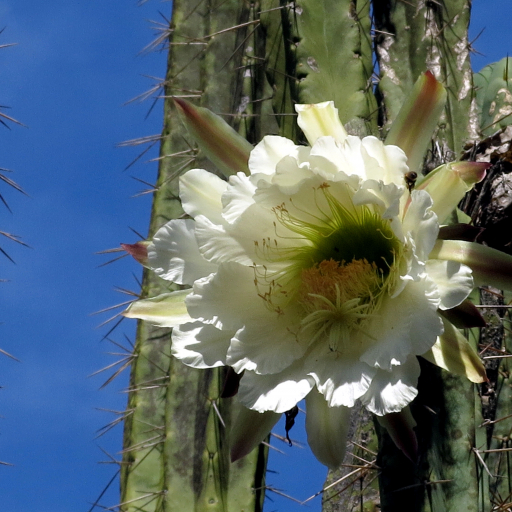
Plant Overview
Known as the Peruvian Torch, this majestic columnar cactus is a sentinel of the high Andes mountains. Cloaked in a distinctive frosted-blue hue, it has been revered for centuries in South American spiritual practices for its sacred properties. It is a fast-growing, hardy giant that brings a sense of ancient, desert architecture to any collection.
🔍 How to Identify
- 🌵 The Blue Hue: Look for a matte, glaucous (waxy) blue-green skin that distinguishes it from its greener relative, the San Pedro.
- 🦴 Prominent Ribs: The trunk typically features 6 to 9 rounded, wide ribs with deep horizontal notches just above the spine clusters.
- ⚔️ Honey Spines: It boasts long, sharp spines (up to 4 inches) that transition from a honey-brown color to a weathered grey as the plant ages.
🏡 In Your Garden
- 🏔️ Mountain Roots: Originating from high-altitude slopes, this cactus demands "gritty" soil that mimics rocky terrain. It hates "wet feet," so ensure your pot has excellent drainage to prevent root rot.
- ☀️ Sun and Shade: While it craves bright light to maintain its vibrant blue color, young plants can "sunburn" or turn yellow if moved from a dark corner to intense afternoon sun too quickly.
- 💧 Drought Strategy: It follows a "soak and dry" cycle. In the winter, it enters a dormant phase and requires almost no water at all, surviving on the moisture stored in its thick columns.
⚠️ Safety & Toxicity
- ⚔️ Physical Hazard: The spines are exceptionally stiff and sharp. They can easily puncture skin, denim, or pet paws. It is best placed in a low-traffic area or a raised planter.
- 🧪 Alkaloid Content: This species contains various alkaloids. If ingested by pets or curious children, it can cause severe gastrointestinal upset, vomiting, and neurological symptoms.
- 🐾 Pet Warning: Keep away from curious chewers; the physical injury from the spines is the primary risk, followed by chemical toxicity.
✨ Fun Fact
This cactus is a "night owl." Its flowers are massive, white, and highly fragrant, reaching up to 10 inches in diameter—but they only open at night and usually wither by the time the sun is high the next morning.

Detailed Care Instructions
To help grow an Echinopsis Peruviana plant, also known as Peruvian torch cactus, you can follow these steps:
- Choose the Right Location: Echinopsis Peruviana thrives in bright sunlight, so find a location where it can receive full sun for at least 6-8 hours a day. It is best grown outdoors, but if you live in a colder climate, you can grow it indoors near a sunny window.
- Soil Preparation: Use well-draining soil with a pH level between 6 and 7. A good potting mix for cacti and succulents can be used. If planting outdoors, ensure the soil is sandy and amended with organic matter to enhance drainage.
- Planting: If planting in a pot, choose one that has drainage holes. Fill the pot with the prepared soil mix, leaving some space for the cactus. Gently place the Echinopsis Peruviana in the pot, ensuring it is upright, and cover the roots with soil.
- Watering: Echinopsis Peruviana requires infrequent but deep watering. Allow the soil to dry out between waterings to prevent rotting. In the growing season (spring and summer), water the plant thoroughly and then wait for the soil to dry before watering again. Reduce watering during the dormant period (fall and winter).
- Feeding: Fertilize the plant once a month during the growing season with a cactus-specific fertilizer. Follow the instructions on the fertilizer packaging for the correct dosage.
- Temperature and Humidity: Echinopsis Peruviana prefers warm temperatures between 70-85°F (21-29°C) during the growing season. It can tolerate cooler temperatures in the winter but should be protected from frost. Maintain average humidity levels around the plant, but it can tolerate dry air.
- Pruning and Propagation: Pruning is unnecessary for Echinopsis Peruviana unless you need to remove damaged or diseased parts. Propagation is usually done through stem cuttings, which should be allowed to dry for a few days before sticking them in a well-draining potting mix.
- Pest and Disease Control: Echinopsis Peruviana can be susceptible to pests like mealybugs, aphids, and spider mites. Regularly inspect the plant and treat any infestations with insecticidal soap or other appropriate remedies. Ensure proper air circulation around the plant to prevent the growth of fungal diseases.
Remember that Echinopsis Peruviana grows slowly, so be patient and provide consistent care for the plant to flourish.

Place in a bright room that is sun drenched almost all day. Or directly in a south-facing window.

To water this plant, wait until the soil is dry to the touch before watering it. Use room temperature water to avoid shocking the roots. Water the soil slowly and deeply, making sure the water penetrates to the bottom of the pot. Avoid getting water on the foliage, as this can cause damage or rot. During the winter months, reduce watering frequency to allow the plant to naturally go into a state of dormancy.
To fertilize this plant, use a balanced fertilizer with an N-P-K ratio of 10-10-10 or 20-20-20. Apply the fertilizer once every four weeks during the growing season, which is typically from early spring to late summer. Dilute the fertilizer to half strength and water the plant thoroughly before and after applying the fertilizer. Avoid applying fertilizer to dry soil or to a plant that has not been watered recently. Remember to always follow the instructions on the fertilizer packaging and do not over-fertilize as this can damage the plant.
Echinopsis Peruviana plant requires a well-draining soil mix that can retain some moisture but also allows excess water to drain away. The soil should be slightly acidic with a pH range of 5.5-6.5. It is ideal to use a soil mix that contains a balance of organic matter and inorganic minerals. A suitable soil mix can be made by combining equal parts of coarse sand, perlite, and peat moss. This soil mix provides good drainage, aeration, and moisture retention for the plant's roots. It is also important to ensure that the soil mix is free of pests and diseases that could harm the plant. Before planting, it is recommended to amend the soil with slow-release fertilizers to provide necessary nutrients and promote healthy growth.
To propagate this plant, take a cutting from the stem with a sterile, sharp knife. Allow the cutting to dry for several days or until a callus forms over the cut end. Plant the cutting in well-draining soil and water sparingly, allowing the soil to dry out between waterings. Keep the cutting in a warm, brightly lit area but avoid direct sunlight. Root growth should begin within a few weeks, and new growth will appear shortly after.








