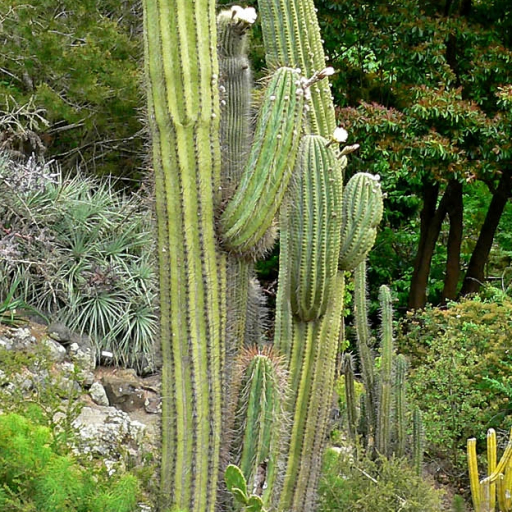
Plant Overview
Often called the "Argentine Saguaro," Echinopsis terscheckii is a majestic giant that dominates the high-altitude landscapes of the Andes. While it looks strikingly similar to the iconic Saguaro of the American Southwest, this cactus is a rugged mountaineer from Argentina and Bolivia. It is a slow-growing, long-lived sentinel that brings an ancient, architectural presence to any arid landscape.
🔍 How to Identify
- 🌵 Columnar Growth: It starts as a single, thick green pillar but eventually develops a tree-like habit with massive branches, reaching heights of up to 30 feet in its natural habitat.
- ⚔️ Golden Spines: The plant features 8 to 14 deep vertical ribs lined with large, sturdy spines that range from pale yellow to a weathered brownish-grey.
- 🌸 Moonlit Blooms: During late spring, it produces enormous, funnel-shaped white flowers. These blooms open at night to attract nocturnal pollinators and can grow up to 8 inches wide.
🏡 In Your Garden
- 🏔️ Mountain Hardiness: Because it hails from high altitudes, this cactus is significantly more cold-tolerant than many other columnar species. It can handle light frosts, provided the soil remains bone-dry during the winter months.
- ☀️ Light & Space: It craves full, direct sun to maintain its structural integrity. In the garden, it needs "breathing room"—avoid planting it too close to walkways where its formidable spines might snag passersby.
⚠️ Safety & Toxicity
- 🧤 Physical Hazard: The primary safety concern is its long, sharp spines. These can cause deep puncture wounds and are difficult to remove if they break off in the skin.
- 🐾 Pet & Child Safety: While the plant is not known to be highly toxic if accidentally ingested, the physical danger of the spines makes it a "look but don't touch" specimen. It should be kept out of reach of curious pets and toddlers.
✨ Fun Fact
In its native Andean habitat, Echinopsis terscheckii is considered a "nurse plant." Its shade and the moisture it retains help smaller, more delicate desert plants survive the harsh sun during their vulnerable early stages of growth!

Detailed Care Instructions
To grow Echinopsis terscheckii, also known as the Argentine saguaro cactus, you can follow these steps:
- Choose a suitable location: Echinopsis terscheckii prefers full sun, so pick a spot in your garden that receives at least 6-8 hours of direct sunlight per day. Additionally, ensure that the soil is well-draining.
- Prepare the soil: The cactus requires a well-draining soil mixture to thrive. You can mix regular potting soil with perlite or sand to improve drainage. Avoid using a mixture that retains too much moisture, as this can cause root rot.
- Plant the cactus: If you are growing Echinopsis terscheckii from seeds, sow them in the prepared soil mix. Cover the seeds gently with a thin layer of soil. For established plants, carefully remove them from their containers and plant them at the same depth they were previously growing.
- Watering: Water your Echinopsis terscheckii sparingly. It is a drought-tolerant cactus, so deep waterings every few weeks during the growing season should be sufficient. Reduce watering during winter when the plant is dormant.
- Fertilizing: Feed the cactus once a month during the growing season with a balanced cactus fertilizer. Follow the instructions on the fertilizer packaging for proper dosage.
- Pruning: Echinopsis terscheckii generally does not require much pruning. However, you can remove any dead or decaying portions of the plant to maintain its health and appearance.
- Protect from frost: If you live in an area with cold winters, ensure that you protect the cactus from frost. Cover it with a frost cloth or move it to a sheltered location if temperatures drop significantly.
- Monitor for pests and diseases: Keep an eye out for common cactus pests such as mealybugs or spider mites. If infestations occur, treat the affected plants with a suitable insecticidal soap or neem oil.
By following these steps, you should be able to successfully grow Echinopsis terscheckii and enjoy its beautiful, columnar growth and stunning flowers.

Place in a bright room that is sun drenched almost all day. Or directly in a south-facing window.

To water this type of plant, it is important to consider its natural habitat and watering needs. Echinopsis Terscheckii plants are desert species, which means they are adapted to dry and arid environments. However, they do require regular watering during their growing season, which typically occurs in the spring and summer months.
When watering, it is recommended to thoroughly drench the soil, allowing the excess water to drain out of the bottom of the pot or container. It is important not to let the soil stay waterlogged, as this can lead to root rot and other problems. After watering, allow the soil to dry out slightly before watering again, as this will help prevent overwatering.
During the winter months, when the plant is dormant, watering should be reduced. Only water when the soil is completely dry to the touch, and be careful not to water the plant too much as this can lead to damage or death.
In addition to watering, it is also important to provide proper drainage and aeration for the plant. This can be achieved by using a well-draining soil mix, and by ensuring that the pot or container has drainage holes in the bottom. Properly caring for the plant will help it thrive and grow healthy over time.
To fertilize this cactus plant, mix a water-soluble fertilizer with water according to the package instructions. Apply the fertilizer mixture to the soil around the base of the plant, taking care not to get it on the plant itself. Repeat every 2-4 weeks during the growing season, reducing frequency in the fall and winter. Avoid fertilizing when the plant is stressed or experiencing extreme temperature fluctuations.
When planting Echinopsis Terscheckii, it is important to use well-draining soil that is nutrient-dense and slightly acidic. The soil should be loose and airy with good moisture retention to prevent waterlogging. The ideal pH level of soil for Echinopsis Terscheckii should be between 6.0 and 7.0. It is recommended to use a mixture of peat moss, sand, perlite, and organic compost to create a suitable growing medium for the plant. Avoid using heavy clay or compacted soil as it can lead to root rot and poor growth. The plant prefers loose, well-draining soils that allow roots to breathe and grow. Rich soil with sufficient nutrients is crucial for maintaining healthy and robust Echinopsis Terscheckii growth.
To propagate this plant, you first need to select a mature and healthy specimen. Then, carefully remove a few branches or offsets from the main plant using a sharp and sterile blade. Make sure to cut neatly and at a slight angle to minimize damage to the parent plant.
Next, allow the cuttings to dry and callus over for a day or two. This will help prevent rot and infection when you plant them.
Prepare a well-draining soil mix with a balanced blend of sand, perlite, and peat moss. Then, plant the cuttings upright or at a slight angle in their pots, burying the base of each one deep enough to hold them securely in place.
Water the newly planted cuttings lightly and cover them with a clear plastic bag or a cloche to create a humid environment and retain moisture. Place them in a bright and warm spot, but away from direct sunlight or heat sources.
Over the next few weeks, keep the soil moist but not waterlogged, and monitor the cutting for signs of growth. Once they start developing roots and new buds, you can remove the cover and gradually acclimate them to more light and drier conditions.
With proper care and patience, your young plants should thrive and grow into mature specimens of their own.








