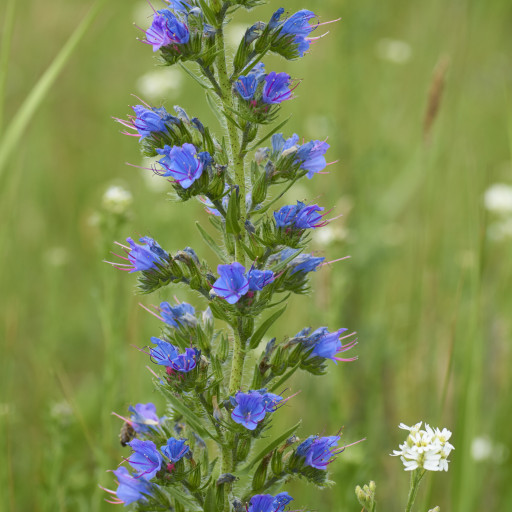
Plant Overview
Often called "Viper’s Bugloss" or "Blueweed," this striking wildflower is a masterpiece of the dry meadow. Its dramatic transition from pink buds to electric blue blossoms makes it a favorite for cottage gardens and pollinator sanctuaries alike. Legend says the plant could heal snake bites, a myth born from its uniquely "spotted" stems and seeds that look like tiny serpent heads.
🔍 How to Identify
- 🌸 Color-Shifting Blooms: The funnel-shaped flowers are a visual treat, starting as a soft pink or purple in the bud before opening into a vivid, glowing cerulean blue.
- 🌵 Bristly Texture: The entire plant is covered in stiff, white hairs (setae) that give it a rough, sandpaper-like feel and a slightly silvery sheen in the sunlight.
- 🐍 Speckled Stems: Look closely at the stalks; they are covered in small dark spots at the base of the hairs, which many historically compared to the scales of a viper.
🏡 In Your Garden
- ☀️ The Sun-Seeker: This plant is the ultimate survivor for "problem" spots. It thrives in poor, rocky, or sandy soil where more delicate flowers might wither, making it perfect for xeriscaping.
- ⚓ Deep Roots: It develops a formidable taproot very early in its life. While this makes it incredibly drought-resistant, it also means the plant hates being moved. Once it's planted, it's best to leave it where it stands.
- 🐝 The Pollinator Pub: It is world-renowned among beekeepers. Because the nectar is hidden deep within the flower tube, it is protected from evaporation, allowing bees to feast even during the hottest, driest parts of the day.
⚠️ Safety & Toxicity
- 🚫 Skin Irritant: Those stiff bristles aren't just for show; they can cause significant skin irritation or a prickly rash for gardeners with sensitive skin. Always wear gloves when weeding around them.
- 🐾 Toxicity: The plant contains pyrrolizidine alkaloids, which are toxic to liver health if ingested. While humans rarely eat it, it is a known hazard for horses and cattle if it invades hayfields, and it should be kept away from curious pets.
✨ Fun Fact
The name "Bugloss" comes from the Greek bous (ox) and glossa (tongue), referring to the rough, tongue-like texture of the leaves. In the Victorian "Language of Flowers," giving someone Viper's Bugloss was actually a sign of falsehood or irony!

Detailed Care Instructions
To grow Echium vulgare (also known as viper's bugloss or blueweed), follow these steps:
- Choose a suitable location: Echium vulgare prefers full sun but can tolerate some shade. Ensure the soil is well-draining and nutrient-rich.
- Prepare the soil: Before planting, loosen the soil using a garden fork or tiller. Incorporate organic matter such as compost or well-rotted manure to improve soil fertility and drainage.
- Planting: Sow the seeds directly into the prepared soil in early spring or early fall. Scatter the seeds and lightly press them into the soil, ensuring they are not covered too deeply.
- Watering: Keep the soil lightly moist during germination. Once the plants are established, they are drought-tolerant and do not require frequent watering. However, water deeply during extended dry periods.
- Mulching: Apply a layer of organic mulch around the plants to suppress weeds, conserve moisture, and maintain a consistent soil temperature.
- Pruning: Echium vulgare does not require much pruning. However, if you want to control its size or shape, prune it back after flowering to promote bushier growth.
- Fertilizing: Most soils provide sufficient nutrients for Echium vulgare. However, if your soil is poor, you can apply a balanced slow-release fertilizer according to the package instructions.
- Pests and diseases: Echium vulgare is generally resistant to pests and diseases. However, keep an eye out for slugs, snails, or aphids, and treat them accordingly if present.
- Propagation: Echium vulgare can also be propagated by division. Dig up the plant in early spring, carefully divide it into smaller clumps, and replant them at the same depth.
- Enjoy the blooms: Echium vulgare produces striking blue or purple flowers on tall spikes, attracting pollinators like bees and butterflies. Enjoy the colorful display throughout the summer months.
Remember to check if Echium vulgare is considered invasive in your area before growing it.

Place in a bright room that is sun drenched almost all day. Or directly in a south-facing window.

To properly water this plant, it is important to consider its specific needs. Echium Vulgare requires moderate watering, but it is important to not overwater as this can harm the plant. Before watering, it is important to check the soil moisture level by touching the soil with your finger. If the top inch of soil feels dry to the touch, then it is time to water the plant.
When watering, it is important to water at the base of the plant rather than from above. This is because the leaves of Echium Vulgare are hairy, and watering from above can cause the leaves to rot. Additionally, the plant prefers to be watered in the morning rather than in the evening, as this allows the moisture to evaporate throughout the day and can prevent fungal diseases.
The amount of water needed for Echium Vulgare will vary depending on factors such as the size of the plant, the type of soil, and the climate in which it is growing. As a general rule, it is better to underwater than to overwater, and to let the soil dry out a bit between waterings. This will allow the roots to breathe and reduce the risk of root rot.
To fertilize this plant, use a balanced fertilizer with an NPK ratio of 10-10-10. Apply the fertilizer in early spring before new growth appears, and again in mid-summer. Water the plant well before and after fertilizing to prevent root burn. Avoid over-fertilizing as this can cause the plant to become leggy and weak.
The ideal soil for the Echium Vulgare plant is well-draining and moderately fertile. It should have a pH level ranging from 6.5 to 7.5. The soil should have a good mix of organic matter that can retain moisture and allow proper aeration. A sandy-loam soil works best for this plant, although it can also thrive in sandy soil. It is essential to ensure that the soil stays consistently moist, especially during hot periods, to prevent the plant from drying out. Additionally, it is crucial to avoid waterlogging the soil as this can cause root rot, which can be fatal to the plant. Adding fertilizers such as pelleted chicken manure or blood, fish, and bone meal can help enhance the soil's nutrition for optimal growth.
To propagate this plant, begin by collecting seeds in the late summer or early autumn when they have ripened. Then, prepare the soil by loosening it to a depth of about 6 inches and removing any debris. Scatter the seeds over the soil, lightly pressing them into the soil to ensure good contact, and then cover with a thin layer of soil. Keep the soil moist but not waterlogged and place the pot or tray in an area with plenty of bright, indirect light. Germination should occur within two weeks.
Once the seedlings have emerged and become established, you will need to thin them out to ensure they have enough light and nutrients to grow. Ideally, you should aim for a spacing of around 12 inches between plants.
Alternatively, you can propagate this plant using cuttings. To do this, take a cutting of around 4 inches from a healthy plant in the early summer months. Remove the bottom leaves and dip the cut end in rooting hormone powder. Then plant the cutting in moist, well-draining soil and keep it out of direct sunlight while it roots. After about a month, it should be well rooted and can be moved into a spot with more light.
Propagation by division is another option. This involves dividing an established plant into smaller parts. Dig up the plant and separate the roots into smaller sections, ensuring that each section has some stems and leaves. Repot each section into a container with moist, well-draining soil, and keep it out of direct sunlight until it establishes.
Common pests of the viper's bugloss include Spider mites, aphids, whiteflies. Make a habit of checking your viper's bugloss frequently for pests so that any infestations can be caught and managed early.








