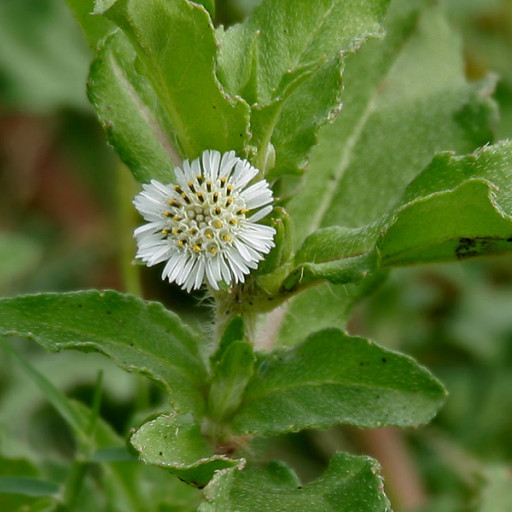
Plant Overview
Commonly known as the False Daisy or Bhringraj ("King of Hair"), Eclipta prostrata is a moisture-loving herb that feels right at home in damp ditches or soggy garden corners. While some gardeners view it as a persistent weed, it holds a legendary status in traditional Ayurvedic and Chinese medicine. It is a humble-looking crawler that hides incredible vitality behind its small, starry white flowers.
🔍 How to Identify
- 🌼 The Flowers: Tiny, white, composite flower heads (about 6–8mm wide) that look like miniature, fringed daisies with very thin petals.
- 🍃 The Foliage: Long, lance-shaped leaves with slightly serrated edges, arranged in opposite pairs along the stem.
- 🌱 The Stem: Usually reddish or dark green and covered in fine, stiff hairs that give the plant a slightly rough, sandpaper-like texture.
🏡 In Your Garden
- 💧 Thirst for Water: This plant is a true "water-lover"—it thrives in muddy soil and is often found near ponds, marshes, or poorly drained areas. If you are cultivating it for herbal use, ensure the soil stays consistently moist.
- 🌾 Resilient Spreader: Its name "prostrate" refers to its habit of crawling along the ground. It can easily root at the nodes where the stem touches the earth, making it an excellent, albeit aggressive, groundcover for wet spots where other plants might drown.
⚠️ Safety & Toxicity
- ✅ Generally Safe: Eclipta prostrata is considered non-toxic to humans and has been consumed as a potherb in various cultures for centuries.
- 🐾 Pet Safety: There are no records of this plant being toxic to cats, dogs, or horses. However, since it grows in wet areas, be mindful of any runoff or pesticides that might have collected on the leaves if your pet decides to take a nibble.
✨ Fun Fact
When the leaves of the False Daisy are crushed, the clear sap reacts with air and turns a deep, dark black. Because of this unique property, it has been used for centuries as a natural dye for hair and even as a traditional ingredient for tattooing!

Detailed Care Instructions
| Humidity | High |
| Lighting | Part Sun |
| Difficulty | Medium |
| Hibernation | Cold Period |
| Hardiness Zones | 10 - 12 |
To grow Eclipta Prostrata plant, also known as False Daisy or Bhringraj, you can follow these steps:
- Climate and soil requirements: Eclipta Prostrata is a warm-season herb that thrives in tropical and subtropical regions. It requires full sun or partial shade. The plant prefers moist, well-drained soil with a pH between 5.5 and 8.
- Propagation: Eclipta Prostrata can be propagated through seeds or stem cuttings. Seeds can be sown directly into the prepared soil during the spring. If using stem cuttings, take 4 to 6 inch long cuttings and place them in a well-draining potting mix. Keep the soil moist until roots develop.
- Planting: Plant the seeds or rooted cuttings in the prepared soil or pots. If planting multiple plants, space them around 12 to 18 inches apart to give them room to grow.
- Watering: Keep the soil moist but not waterlogged. Regular watering is important, especially during dry periods. However, make sure not to overwater as it can lead to root rot.
- Fertilization: Eclipta Prostrata doesn't require much fertilizer. Apply a balanced, organic fertilizer once in early spring and again in mid-summer. Follow the recommended dosage on the package.
- Pruning: Regular pruning can help the plant maintain a compact and bushy shape. Pinch off the top growing tips to encourage branching and bushiness. Also, remove any dead or diseased parts of the plant.
- Harvesting: Harvest the leaves and stem of Eclipta Prostrata when they are young and tender. You can take cuttings as needed for medicinal purposes or hair care, but be careful not to over-harvest and damage the overall health of the plant.
- Pests and diseases: Eclipta Prostrata is generally not susceptible to many pests or diseases. However, keep an eye out for common garden pests like aphids or spider mites. If necessary, use organic pest control methods like neem oil or insecticidal soap.
Remember that Eclipta Prostrata is considered an invasive plant in some regions, so be cautious and check local regulations before growing it in your area.

Place in a window with dappled sun or a spot in the middle of a room. Or directly in a window facing west or east.
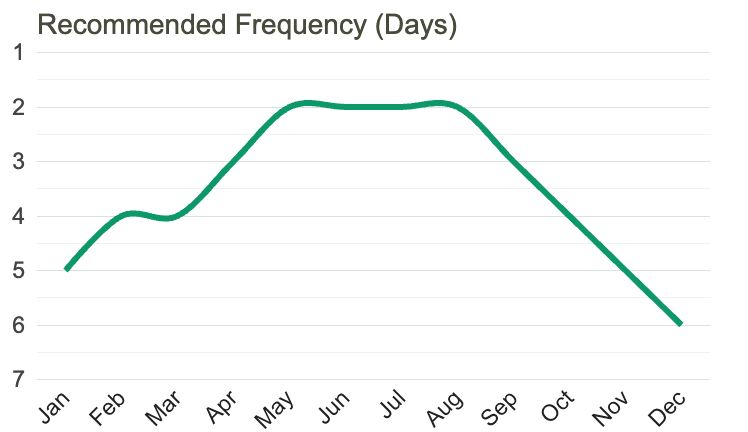
To water this particular plant, it is important to understand its individual water needs. Eclipta Prostrata requires a consistent level of moisture, but it does not tolerate standing water or overly saturated soil. Therefore, the plant should be watered more frequently during the growing season, particularly during hot and dry weather, and less frequently in the winter or during periods of cooler temperatures. When watering, it is best to avoid getting the foliage wet, as this can promote disease. Instead, direct the water at the soil level, taking care not to overwater. One way to check if the plant needs water is to stick a finger into the soil up to the first knuckle. If the soil is dry, it is time to water. If it still feels moist, wait a day or two before checking again. Additionally, it is important to use well-draining soil, as this will help prevent waterlogging and root rot.
To fertilize the plant, apply a balanced fertilizer with equal amounts of nitrogen, phosphorus, and potassium during the growing season. Use a diluted solution and follow the package instructions for the correct ratio to avoid over-fertilization. Apply the fertilizer every two weeks for optimal growth. During the winter months, reduce the frequency of fertilization to avoid damaging the plant.
For optimal growth and health of this particular plant, it is recommended to use a well-draining soil that is rich in organic matter. The soil should have a pH level between 6.0 to 7.5, which is slightly acidic to neutral. Additionally, it is important to ensure that the soil is not waterlogged as this can lead to root rot and negatively impact the overall growth of the plant. Incorporating a slow-release fertilizer into the soil during planting can also help provide the necessary nutrients for proper development.
Propagation of this plant can be done through stem cuttings. First, select a healthy stem from the plant and cut it at an angle using a sharp knife or pair of scissors. Remove any leaves from the lower half of the stem.
Next, dip the cut end of the stem in rooting hormone powder to promote root growth. Place the stem cutting into a container filled with a well-draining soil mix.
Keep the container in a warm and humid location, and water the soil regularly to keep it moist. After a few weeks, the stem cutting should begin to develop roots and new growth.
Once the new plant has grown a few inches in height, it can be transplanted into a larger pot or directly into the ground. Keep the plant well-watered and provide it with plenty of sunlight to promote healthy growth.








