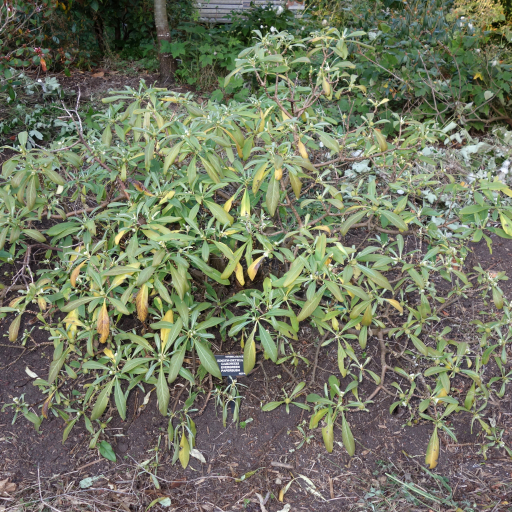
Plant Overview
Known as the Nepalese Paper Bush, Edgeworthia gardneri is a sensory masterpiece from the high altitudes of the Himalayas. This architectural shrub is beloved for its "winter magic," blooming when most of the garden is still asleep. Its golden, honey-scented flower clusters are so fragrant they can perfume an entire courtyard, while its remarkably flexible branches hold a secret history in the world of ancient papermaking.
🔍 How to Identify
- 🌼 The Blooms: Features dense, rounded clusters of tiny, tubular flowers that are creamy white on the outside and vibrant lemon-yellow within.
- 🍃 The Foliage: Unlike its cousin E. chrysantha, this variety is often semi-evergreen; its long, lance-shaped leaves are a soft, matte green with a silvery underside.
- 🎋 The Stems: The branches are incredibly supple and cinnamon-brown. You can literally tie a thin branch into a loose knot without it snapping, a testament to its strong internal fibers.
🏡 In Your Garden
- 💧 The "Goldilocks" Soil: This plant thrives in "woodland" conditions—think rich, humic soil that stays moist but never soggy. It has a sensitive root system that hates "wet feet" during the winter.
- ☀️ Sheltered Serenity: Because it originates in mountain forests, it prefers a spot sheltered from harsh, drying winds. It loves dappled sunlight or morning sun; intense afternoon heat can cause the soft leaves to wilt dramatically.
- ✂️ Low Maintenance: It has a naturally beautiful, rounded habit and rarely needs pruning. In fact, it's best to leave the shears away, as it grows slowly and "bleeds" sap if cut heavily.
⚠️ Safety & Toxicity
- 🌿 Low Risk: Edgeworthia gardneri is generally considered non-toxic to humans and common household pets.
- 🧪 Skin Sensitivity: Like many members of the Thymelaeaceae (Daphne) family, the sap contains compounds that may cause mild skin irritation or contact dermatitis in sensitive individuals. It is always wise to wear gloves when pruning or handling broken branches.
✨ Fun Fact
The inner bark of this plant is so strong and durable that it has been used for centuries to produce "Himalayan bark paper" (Lokta paper). This paper is so resistant to insects and decay that it is the traditional choice for printing sacred religious texts and official government documents in Nepal!

Detailed Care Instructions
To grow Edgeworthia gardneri plants, follow these steps:
- Choose the right location: Edgeworthia gardneri prefers partial shade or filtered sunlight. Select a spot in your garden that receives morning sun or dappled shade throughout the day.
- Soil preparation: Prepare well-draining soil with organic matter, such as compost or well-rotted manure. This not only improves drainage but also enriches the soil with nutrients.
- Planting: Dig a hole slightly larger than the root ball of the Edgeworthia plant. Place the plant in the hole and backfill with soil, pressing gently to remove air pockets. Ensure that the plant is at the same level as it was in its previous container or nursery.
- Watering: Water the plant thoroughly after planting and keep the soil consistently moist. Edgeworthia gardneri likes moist soils, but avoid waterlogging as it may cause root rot.
- Mulching: Spread a layer of organic mulch, such as bark chips or leaf litter, around the base of the plant. Mulching helps to retain soil moisture, suppresses weed growth, and moderates soil temperature.
- Fertilizing: Apply a slow-release balanced fertilizer in spring to promote healthy growth. Follow the product instructions for the recommended dosage.
- Pruning: Prune your Edgeworthia gardneri plant in late spring or immediately after flowering. Remove any dead, damaged, or diseased branches. You can also lightly prune to shape the plant if desired.
- Protecting from extreme weather: In cold climates, protect the plant from frost by covering it with a frost blanket or moving it to a sheltered location. In hot climates, protect the plant from intense afternoon sun.
- Regular care: Monitor the plant for pests and diseases. Treat any issues promptly to prevent them from spreading. Additionally, regularly check soil moisture and water as needed, especially during hot and dry periods.
By following these steps and providing your Edgeworthia gardneri plant with the right conditions, you can successfully grow and enjoy this beautiful plant in your garden.
The best way to water this particular plant is to make sure the soil remains moist, but not overly wet. It is important to water deeply and thoroughly, allowing the water to soak down to the root system. Avoid watering the leaves and stems of the plant, as this can cause disease and damage. One way to ensure that the soil is adequately moist is to touch the top layer of soil with your fingers. If it feels dry, it is time to water the plant. However, if it feels moist, wait another day or two before watering. Also, be sure to water the plant regularly, especially during the growing season, as the plant will require more water during this time. Finally, it is important to avoid overwatering, as this can cause root rot and other problems.
To provide adequate nutrition for this plant, you should fertilize it in the late winter or early spring. Use a slow-release fertilizer that is high in nitrogen, phosphorous, and potassium. Apply the fertilizer evenly around the base of the plant, taking care not to get it on the leaves or stems. Water the plant thoroughly after fertilizing to help the nutrients penetrate the soil. Repeat this process annually to promote healthy growth and flowering.
To ensure optimal growth and health of this particular plant species, it is recommended to use a soil mixture that is well-draining and rich in organic matter. A pH level between 5.5 and 7.0 is also ideal. This can typically be achieved by combining a high-quality potting mix with perlite or vermiculite to enhance drainage. Additionally, incorporating compost or other organic amendments into the soil can provide essential nutrients and allow for better water retention. It’s important to avoid using heavy or dense soils, as these can impede root growth and cause waterlogged conditions that may be detrimental to the plant’s health.
Edgeworthia gardneri can be propagated through both seed and stem cuttings. For seed propagation, collect the seeds in the fall and sow them in the spring after stratifying them for several weeks. The stratification process involves exposing the seeds to cool temperatures and moisture, mimicking the natural conditions they need to germinate.
For stem cutting propagation, select a healthy stem from the parent plant and make a cut just below a node. Remove any leaves from the bottom half of the stem and dip the cut end into rooting hormone. Plant the cutting in a well-draining soil mix and keep it moist and in a humid environment until roots form.
Propagation through layering is also possible with edgeworthia gardneri. Choose a healthy stem and make a small cut or notch on the underside of the branch. Bury the cut section in soil leaving the tip exposed and secure the branch to the soil with a stake or twist tie. After several months, roots should form at the cut site and a new plant can be separated from the parent.








