Plant Overview
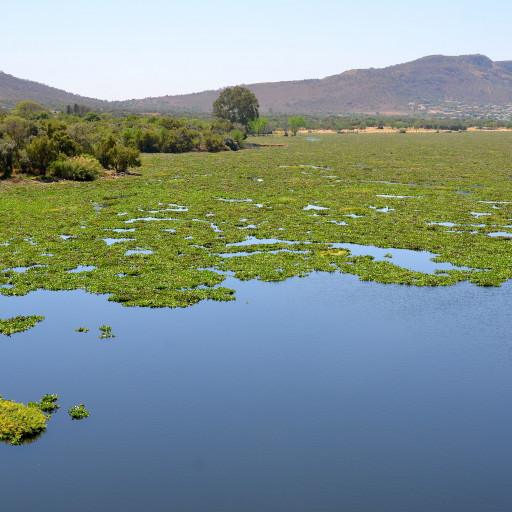
Often called the "Water Hyacinth" or the "Terror of Bengal," this floating aquatic perennial is a master of contradiction. While its delicate, lavender-blue flowers look like they belong in a royal garden, it is one of the fastest-growing plants on Earth. Originally from the Amazon basin, it has traveled the globe, adored by pond enthusiasts for its beauty but feared by ecologists for its ability to completely carpet entire lakes in a matter of weeks.
🔍 How to Identify
- ☁️ Buoyant Petioles: The leaf stalks are distinctive, swollen into spongy, air-filled bulbs that act like life jackets, keeping the plant effortlessly afloat.
- 🍃 Waxy Foliage: The leaves are thick, glossy, and rounded or heart-shaped, forming a lush green rosette that sits high above the water line.
- 🌸 Showy Blooms: It produces a central spike of 8 to 15 flowers. Each flower is a soft violet-blue with a prominent, "eye-like" yellow patch on the top petal.
- 🕸️ Feathery Roots: Beneath the surface, the plant trails long, dark, feathery roots that look like underwater plumes, designed to suck nutrients directly from the water.
🏡 In Your Garden
- ☀️ Sun Seeker: This plant is a solar-powered engine. It requires full, direct sun to produce those iconic flowers; in shaded ponds, it will grow more leaves but fewer blooms.
- 🌊 Water Purifier: It is famous for its "hungry" roots. It absorbs heavy metals and excess nutrients from the water, which can help keep pond water clear, but be careful—it can also deplete oxygen if it covers the entire surface.
- ✂️ Population Control: Because it reproduces via "runners" (stolons), a single plant can quickly become twenty. In a home pond, you must regularly thin out the colony to ensure fish and other plants have room to breathe.
⚠️ Safety & Toxicity
- 🐾 Pet Warning: The Water Hyacinth is considered toxic to dogs, cats, and horses.
- 🤢 The Risk: If ingested, it contains calcium oxalate crystals and other irritants that can cause oral irritation, drooling, vomiting, or digestive upset in pets.
- 🚫 Eco-Safety: Never, ever release this plant into local rivers or wild lakes. It is a highly aggressive invasive species that can clog waterways and destroy local fish populations.
✨ Fun Fact
In some parts of Southeast Asia and Africa, the stems of the Water Hyacinth are dried and woven into highly durable furniture, bags, and rugs! It is a brilliant example of turning an "invasive pest" into a sustainable resource.

Detailed Care Instructions
To grow Eichhornia crassipes, also known as water hyacinth, you can follow these steps:
- Obtain water hyacinth plants: You can get water hyacinth plants from a local gardening store or online plant nurseries. Additionally, you may find them growing in natural bodies of water such as ponds or lakes. However, be cautious when obtaining plants from the wild as they can be invasive in some areas.
- Choose a suitable location: Water hyacinth requires full sunlight to thrive, so select an area that receives at least 6-8 hours of direct sunlight per day. If growing indoors, place them near a bright window.
- Prepare a planting container: Water hyacinth can be grown in a container or in natural bodies of water. If using a container, select a large container with no drainage holes or use a pond. Make sure the water depth is at least 12-24 inches.
- Fill the container with water: Fill the container with clean, non-chlorinated water. You can use tap water that has been left to sit for 24 hours to allow any chlorine to evaporate.
- Plant the water hyacinth: Gently place the water hyacinth plants on the water's surface. The plants should float freely without being tangled or overcrowded. Avoid submerging the leaves and flowers.
- Feed the plants: Water hyacinths are heavy feeders. To provide nutrients, you can add aquatic plant fertilizer tablets to the water according to the instructions on the package. This will help promote healthy growth.
- Maintain water conditions: Maintain a temperature of 50-86°F (10-30°C) for optimal growth. Additionally, check the water level regularly and ensure it doesn't go below the plant's roots.
- Control algae and pests: Regularly remove any algae or debris that accumulates on the water's surface. Additionally, monitor for any pests or diseases and take appropriate measures to control them.
- Regularly divide and thin: As water hyacinth plants multiply, they can overcrowd the water surface. To control their growth, regularly divide and thin out the plants. This can be done by gently pulling apart the daughter plants from the main plant and relocating them or discarding the excess.
- Harvest excess plants: If you find that your water hyacinth population is too large, you can harvest the excess plants and use them in composting or as a natural mulch. Ensure you dispose of them responsibly and follow any local regulations.
Remember to check your local regulations before growing water hyacinth, as it is considered an invasive species in some regions.

Place in a bright room that is sun drenched almost all day. Or directly in a south-facing window.
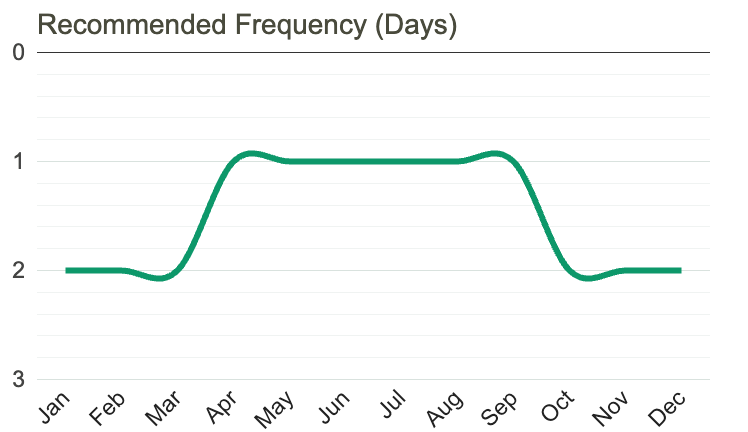
The plant requires regular watering to maintain its healthy growth. One should gently pour water around the base of the plant to avoid disturbing the plant's roots. Ensure that you water the plant enough to saturate its roots completely. The water should be well-draining, and one should avoid overwatering the plant to prevent root rot. Additionally, one should ensure that they water the plant in the morning when temperatures are cooler to prevent evaporation. This is important as the plant needs enough water to survive, but too much water can be equally damaging as well.
To fertilize this plant, use a balanced fertilizer with equal amounts of nitrogen, phosphorus, and potassium. Apply the fertilizer at a rate of one teaspoon per gallon of water once per week during the growing season. Avoid over-fertilizing, as this can lead to excessive growth and instability in the plant. Additionally, be sure to monitor the water quality, as poor water quality can affect the plant's ability to absorb nutrients.
The ideal soil for this plant should be rich in nutrients and organic matter. It should have good drainage properties but also be able to retain moisture. It is recommended to use a mixture of peat moss, vermiculite, and perlite to create a well-draining yet moisture-retaining medium. The soil pH should be slightly acidic, around 6.0-6.5. Avoid using heavy clay soils as they can become waterlogged and suffocate the roots. The plant prefers a nutrient-rich environment, so it is recommended to use a slow-release fertilizer or add compost regularly. Furthermore, it would be helpful to avoid using a soil that may contain any harmful chemicals or pollutants that can negatively affect the growth and health of the plant.
The propagation of this plant can be done through separating the plantlets that grow on the mother plant or by dividing the roots of an established plant. The plantlets are removed from the mother plant by gently pulling them away and planting them in a new container, ideally filled with nutrient-rich soil and aquatic medium. To propagate via root division, the established plant is removed from its pot or pond and the roots are carefully separated, ensuring that each division has both roots and leaves. These new plants are then planted in their new container or pond and should be kept well-watered until they become established. It's important to note that extreme care should be taken while handling Eichhornia Crassipes as it is an invasive species that can quickly overtake natural water bodies.








