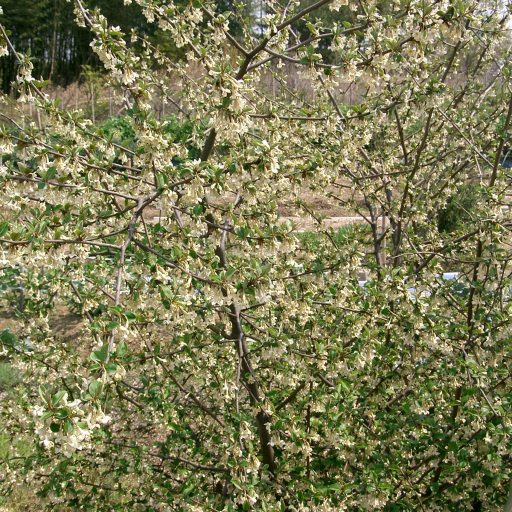
Plant Overview
Known as the Goumi Berry or Cherry Silverberry, this hardy shrub is a hidden gem of the "forest garden" world. Hailing from East Asia, it is prized by permaculture enthusiasts not just for its tart, jewel-like fruits, but for its incredible ability to "heal" the soil around it. Whether it's feeding your family or the plants next to it, the Goumi is a hardworking addition to any landscape.
🔍 How to Identify
- 🍃 The Silver Lining: The leaves are a deep, matte green on top, but if you flip them over, they reveal a stunning, shimmering silvery-white underside covered in tiny scales.
- 🔔 Fragrant Bells: In mid-spring, the plant produces clusters of creamy-white, bell-shaped flowers that emit a sweet, heavy fragrance capable of perfuming an entire garden.
- 🍒 Speckled Gems: The fruit is a small, elongated red berry held on a long stalk. Most distinctively, the berries are "dusted" with tiny silver or brown specks, giving them a metallic shimmer.
🏡 In Your Garden
- 🌱 The Soil Builder: Unlike most garden plants, the Goumi is a "nitrogen fixer." It works with special bacteria in its roots to take nitrogen from the air and put it into the soil, acting as a natural fertilizer for its neighbors.
- 💪 Tough as Nails: It is exceptionally wind-resistant and salt-tolerant, making it a perfect choice for coastal gardens or as a "thicket" or hedge to protect more delicate plants.
- ✂️ Patience for Flavor: While the berries look ripe when they turn red, they are very astringent (pucker-inducing) until they are fully soft and slightly translucent. Wait until they almost fall off the branch for the best sweetness.
⚠️ Safety & Toxicity
- ✅ Safe & Edible: The berries are non-toxic and highly nutritious, packed with Vitamin C and Lycopene. They are safe for children and curious pets.
- 🐾 Wildlife Magnet: Be aware that birds love these berries as much as humans do; if you want a harvest, you may need to share or use light netting.
- 🐕 Pet Friendly: There are no known toxicities for dogs or cats, making it a safe choice for a "browsing" garden.
✨ Fun Fact
The Goumi berry is one of the few fruiting plants that can thrive in "dead" soil. Because it creates its own fertilizer, it is often used in land reclamation projects to jumpstart ecosystems where nothing else will grow!

Detailed Care Instructions
To successfully grow Elaeagnus Multiflora, follow these steps:
- Selection and planting: Choose a well-draining location with full sun to partial shade. Elaeagnus Multiflora is adaptable to a wide range of soil types but prefers slightly acidic to neutral soil. Dig a hole twice as wide and deep as the root ball. Place the plant in the hole, making sure the top of the root ball is level with the surrounding soil. Fill the hole with soil and gently firm it around the base of the plant.
- Watering: After planting, water the Elaeagnus Multiflora thoroughly. Keep the soil consistently moist, but not soggy, for the first year. Once established, the plant is more drought-tolerant but will still benefit from regular watering, especially during dry periods.
- Mulching: Apply a layer of organic mulch, such as bark chips or straw, around the base of the plant. Mulching helps retain moisture, suppress weeds, and protect the roots from extreme temperatures.
- Pruning: Prune Elaeagnus Multiflora in early spring before new growth emerges. Remove any dead or damaged branches and shape the plant as desired. This will help maintain its size, shape, and overall health.
- Fertilizing: Feed the plant with a balanced fertilizer in early spring and again in early summer. Follow the package instructions for application rates. Avoid over-fertilizing, as it can lead to excessive vegetative growth at the expense of fruit production.
- Pest and disease control: Elaeagnus Multiflora is relatively resistant to most pests and diseases. However, keep an eye out for aphids, scales, and spider mites. If these problems occur, treat them with appropriate insecticides or soapy water.
- Propagation: Elaeagnus Multiflora can be propagated by seed, cuttings, or layering. Collect ripe fruits, remove the seeds, and sow them in pots or directly in the ground. Cuttings can be taken in late winter or early spring and rooted in well-draining soil. Layering involves bending a low-hanging branch to the ground, securing it, and covering the buried portion with soil so it can form roots.
By following these steps, you should be able to successfully grow Elaeagnus Multiflora and enjoy its edible fruits.

Place in a bright room that is sun drenched almost all day. Or directly in a south-facing window.

Watering instructions for a plant belonging to the Elaeagnus Multiflora species may include the recommendation to water the plant deeply and infrequently, allowing the soil to dry out slightly between watering sessions. It may be important to water the plant at its base rather than overhead, as this can prevent foliage damage and reduce the risk of fungal growth. It may also be helpful to mulch around the base of the plant, as this can help to retain moisture in the soil and regulate temperature. Factors such as the plant's age, soil type, and environmental conditions may also influence watering instructions, and it may be necessary to adjust the frequency and amount of watering accordingly.
To fertilize this plant, use a balanced fertilizer with equal amounts of nitrogen, phosphorus, and potassium. Apply the fertilizer in early spring before the plant begins to actively grow. Use a slow-release fertilizer or apply small amounts of fertilizer every two weeks during the growing season. Be careful not to apply too much fertilizer, as this can cause the plant's leaves to turn yellow and may stress the plant. Water the plant well after fertilizing to help the nutrients soak into the soil.
Elaeagnus Multiflora plant prefers soil that is well-draining and has a slightly acidic to neutral pH level. The ideal soil should be rich in nutrients and organic matter, allowing for proper root growth and development. It is recommended to amend the soil with compost or aged manure before planting to provide the necessary nutrients for the plant. The plant also prefers a soil that is consistently moist but not waterlogged. Soil with good drainage will prevent the roots from becoming waterlogged and rotting. Additionally, it is important to avoid using heavy, clay-like soils that can compact and restrict root growth. Overall, providing a well-draining soil with adequate nutrients and organic matter is essential to the growth and success of the Elaeagnus Multiflora plant.
There are a few ways to propagate this plant species. One method is through softwood cuttings, taken from the current year's growth in the early summer. Cuttings should be about 4-6 inches long with a few leaves, and planted in a well-draining soil mix. Keep the soil consistently moist and in a bright, indirect light until roots have developed.
Another method is through layering. Select a low-growing branch and make a small wound in the bark where it touches the ground. Cover the wound with soil and secure it in place with a U-shaped wire. New roots should develop where the wound was made, and once they have established, the rooted branch can be cut away from the parent plant and transplanted.
Finally, Elaeagnus Multiflora plants can also be propagated through seed. Collect the berries in late summer or autumn when they are ripe, and remove the seeds from the fruit. Soak them in water for a few days to soften the seed coat, then plant them in a well-draining soil mix. Keep the soil consistently moist and in a bright, indirect light until they have germinated.








