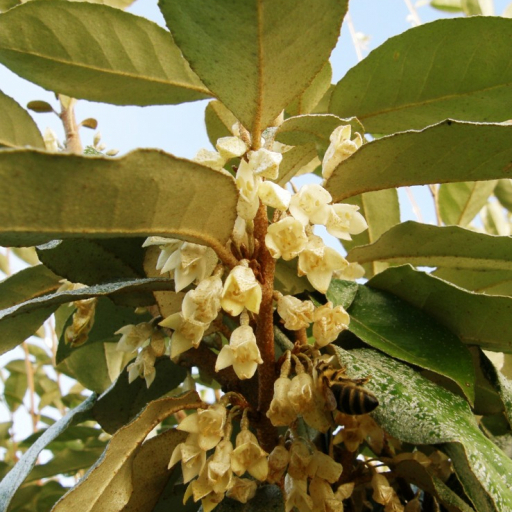
Plant Overview
Known as the "Ebbing’s Silverberry" or "Oleaster," this hybrid shrub is the ultimate garden workhorse. It is often called the "bulletproof hedge" because it thrives in conditions that would wither other plants—from salty coastal winds to deep shade. While it looks like a simple green shrub from a distance, its true magic is revealed up close through its metallic foliage and a fragrance that can perfume an entire garden.
🔍 How to Identify
- 🍃 Metallic Foliage: The oval, leathery leaves are a deep olive green on top but feature a stunning, shimmering silver underside that catches the light when the wind blows.
- 🍂 Autumn Flowers: Unlike most plants, it blooms in late autumn. The flowers are tiny, cream-colored, and bell-shaped, often tucked away and hidden beneath the dense leaf canopy.
- ✨ Speckled Stems: Look closely at the young twigs; they are covered in tiny, rust-colored or silvery scales, giving the branches a unique, textured "dusted" appearance.
🏡 In Your Garden
- 🌱 Soil Improver: This plant is a "nitrogen fixer." It has a symbiotic relationship with soil bacteria that allows it to take nitrogen from the air and store it in its roots, actually improving the soil quality for its neighbors.
- 🌬️ Coastal Champion: It is exceptionally salt-tolerant. Because its leaves are coated in a waxy, scaly layer, it can withstand heavy salt spray and battering winds, making it the premier choice for seaside privacy screens.
⚠️ Safety & Toxicity
- ✅ Safe Status: Elaeagnus × ebbingei is considered non-toxic to humans, cats, and dogs.
- 🍒 Edible Berries: The small, orange-red berries produced in the spring are edible and rich in vitamins. However, they are extremely astringent (they will make your mouth pucker!) unless they are fully, darkly ripe.
✨ Fun Fact
The fragrance of the tiny autumn flowers is so powerful that many gardeners call it the "Incense Bush." You will often smell the plant from across the yard long before you actually see the small, hidden blossoms.

Detailed Care Instructions
| Humidity | Normal |
| Lighting | Full Sun |
| Difficulty | Easy |
| Hardiness Zones | 7 - 9 |
To grow Elaeagnus x ebbingei (also known as Ebbing's silverberry or oleaster), follow these steps:
- Choose a suitable location: The plant prefers full sun to partial shade. It can tolerate a wide range of soil types but does best in well-draining soil.
- Prepare the planting area: Clear the area of any weeds or grass. Loosen the soil with a garden fork or tiller and add organic matter like compost to improve fertility and drainage.
- Planting: Dig a hole that is wide and deep enough to accommodate the root ball of the plant. Place the plant in the hole, ensuring that the top of the root ball is level with or slightly higher than the surrounding soil. Backfill the hole with soil, firming it gently around the plant.
- Watering: Water the plant thoroughly after planting to help establish the roots. During the first year, provide regular deep watering to ensure the plant has enough moisture.
- Mulching: Apply a layer of organic mulch around the base of the plant but leave some space around the stem to prevent rot. Mulch helps retain moisture, suppresses weeds, and insulates the roots.
- Pruning: Regular pruning is not necessary for Elaeagnus x ebbingei, but you can remove any dead or damaged branches. Light pruning can be done to maintain shape and size if desired.
- Fertilizing: Apply a balanced fertilizer in early spring to promote growth. Follow the instructions on the fertilizer packaging for proper dosage.
- Pests and diseases: The plant is generally resistant to pests and diseases. Monitor for any signs of infestation or disease and take appropriate action if needed.
- Maintenance: Regularly remove any weeds around the plant to reduce competition for nutrients and water. Keep an eye out for any signs of stress or nutrient deficiencies and adjust care accordingly.
Remember to check the specific care instructions for your particular variety of Elaeagnus x ebbingei, as some cultivars may have slightly different requirements.

Place in a bright room that is sun drenched almost all day. Or directly in a south-facing window.

The recommended way to water this plant is by using a watering can or hose with a gentle spray nozzle. It is important to water thoroughly and deeply, but not to the point of creating waterlogging or flooding. Allow the soil to dry out slightly between waterings, and avoid watering during periods of heavy rain or extreme heat. It is best to water in the early morning or late afternoon to limit evaporation. When watering, direct the water towards the base of the plant and avoid splashing the leaves.
For this particular plant, it is recommended to fertilize it once a year in early spring with a slow-release, balanced fertilizer. Use a fertilizer with a N-P-K ratio of about 10-10-10. Avoid over-fertilizing as it can burn the roots and cause damage to the plant. Make sure to water the plant thoroughly before and after applying fertilizer.
For Elaeagnus X Ebbingei plants, it is recommended to use a well-draining soil that is rich in nutrients and organic matter. The ideal soil pH should be slightly acidic to neutral, ranging from 5.5 to 7.5. The soil should also be able to retain moisture, but not become waterlogged, as waterlogged soils can lead to root rot and other plant diseases. Additionally, it is important to regularly amend the soil with compost or other organic material to maintain its fertility and structure. Overall, the soil should be able to provide the necessary nutrients and conditions for the plant to thrive and grow strong.
To propagate this plant, take cuttings of about 4-6 inches in length from the parent plant in early summer or late fall. Remove the leaves from the lower half of the cutting and dip the cut end of the stem in rooting hormone. Plant the cutting in a pot with a mixture of half perlite and half peat moss, water thoroughly and put it in a bright, but not direct, light. Keep the soil moist but not waterlogged and cover the pot with a plastic bag to maintain humidity. After about 4-6 weeks, the cutting should root and begin to grow. Gradually acclimate the new plant to outdoor conditions by increasing the amount of time it spends outside each day until it is ready to be planted in the garden.
Common pests of the ebbinge's silverberry include Thrips. Make a habit of checking your ebbinge's silverberry frequently for pests so that any infestations can be caught and managed early.








