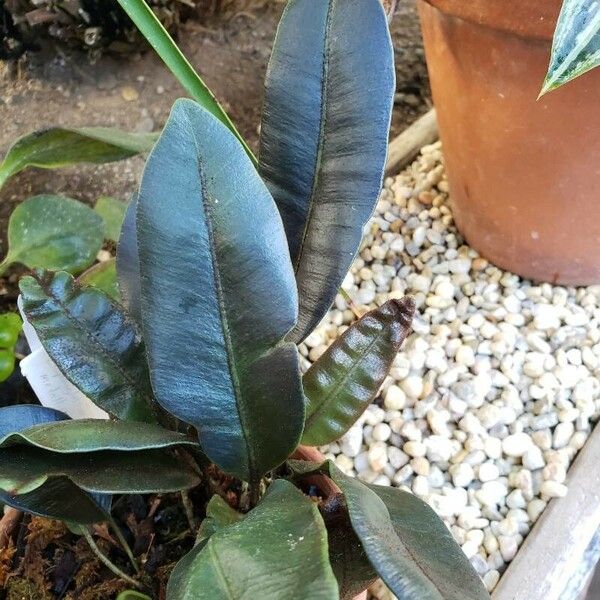
Plant Overview
The Elaphoglossum metallicum, often called the "Metallic Tongue Fern," looks like a botanical treasure forged in a silversmith’s workshop. Native to the high-altitude cloud forests of Central and South America, this rare beauty is famous for its shimmering, iridescent blue sheen that seems to glow in low light. In its natural habitat, it clings to mossy tree trunks, drinking in the mountain mists.
🔍 How to Identify
- 🌿 The Foliage: Unlike typical lacy ferns, this species has simple, undivided fronds that are long and tongue-shaped (the name Elaphoglossum actually translates to "deer tongue").
- ✨ Iridescent Sheen: The most striking feature is the metallic, blue-silver luster on the surface of the leaves, which shifts and changes depending on the angle of the light.
- 📏 Texture & Structure: The leaves are thick, leathery, and stiff, growing from a creeping rhizome that is often covered in small, dark scales.
🏡 In Your Garden
- ☁️ Cloud Forest Vibes: This plant is an epiphyte, meaning it naturally grows on trees rather than in the ground. In a home setting, it thrives in a very airy, orchid-like mix of sphagnum moss and bark rather than traditional potting soil.
- 💧 Humidity is Key: Because it hails from misty mountains, it is notorious for being "finicky" in dry indoor air. It is best suited for a terrarium or a room with a high-quality humidifier, as its metallic glow will fade if the plant becomes dehydrated.
⚠️ Safety & Toxicity
- 🟢 Status: Generally considered non-toxic.
- 🐾 Details: While there are no recorded reports of high toxicity to cats, dogs, or humans, the leathery texture of the leaves can be difficult to digest. It is always best to keep exotic ferns out of reach of curious nibblers to avoid stomach upset.
✨ Fun Fact
The blue "metallic" color isn't caused by a pigment like most plant colors; it is "structural color." The plant has specialized cells that act like tiny prisms, reflecting blue light to help it photosynthesize more efficiently in the deep, dark shadows of the forest floor!

Detailed Care Instructions
Elaphoglossum metallicum, also known as the shiny tongue fern, is a unique and attractive plant that can be grown successfully indoors as a houseplant. Here are some tips on how to grow Elaphoglossum metallicum:
- Light: Elaphoglossum metallicum prefers bright, indirect light. Place your plant near a window where it can receive plenty of natural light, but avoid direct sunlight as this can scorch its delicate leaves.
- Water: Keep the soil consistently moist but not waterlogged. Water the plant when the top inch of soil feels dry to the touch. Avoid letting the soil dry out completely, as this can cause the plant to wilt and decline.
- Humidity: Elaphoglossum metallicum thrives in high humidity levels. To create a humid environment for your plant, you can place a humidifier near the plant, group it with other plants to create a microclimate, or place a tray of water near the plant to help increase humidity.
- Temperature: Keep your Elaphoglossum metallicum in a warm, humid environment. Ideal temperatures for the plant range between 60-80°F (15-27°C).
- Soil: Plant Elaphoglossum metallicum in a well-draining potting mix that is rich in organic matter. A mix of peat moss, perlite, and pine bark is a good option for this plant.
- Fertilization: Feed your Elaphoglossum metallicum with a balanced, liquid houseplant fertilizer once a month during the growing season (spring and summer). Follow the instructions on the fertilizer package for proper dilution and application.
- Repotting: Repot your Elaphoglossum metallicum every 1-2 years to refresh the soil and provide more space for the plant to grow. Choose a slightly larger pot with drainage holes to prevent waterlogging.
With proper care and attention to its specific needs, Elaphoglossum metallicum can thrive and grow into a beautiful and healthy plant.

Place in a window with dappled sun or a spot in the middle of a room. Or directly in a window facing west or east.

Elaphoglossum Metallicum should be watered regularly to keep the soil consistently moist, but not waterlogged. It is important to avoid letting the plant sit in water as this can lead to root rot. The best method is to water the plant at the base, directly onto the soil, rather than spraying the leaves. The plant may benefit from occasional misting to increase humidity, especially in dry climates. It is important to allow the top inch of the soil to dry out slightly between waterings to prevent overwatering. Additionally, using room temperature water is recommended to avoid shock to the plant's roots.
To fertilize the Elaphoglossum Metallicum plant, use a balanced liquid fertilizer diluted to half strength. Apply the fertilizer once a month during the growing season, from spring to fall. Be sure to water the plant thoroughly before and after fertilizing to prevent root burn. Avoid over-fertilizing, as this can harm the plant.
Elaphoglossum metallicum is a fern species that thrives in well-draining soil. It prefers a soil mixture that is rich in organic matter, such as peat moss or compost, to provide essential nutrients for healthy growth. A soil mix with good aeration, such as perlite or sand, is also beneficial to prevent waterlogging and ensure oxygen reaches the plant's roots. Additionally, adding a small amount of coarse bark or pine bark nuggets can help improve drainage and create a suitable growing environment for Elaphoglossum metallicum. Avoid using heavy or compacted soils that can lead to root rot and limit the plant's growth.
Elaphoglossum metallicum can be propagated through various methods such as spore propagation or division of the rhizome.
To propagate through spores, collect mature spores from the fronds of the plant and place them on a moist and sterile growing medium, such as peat moss or a mixture of peat moss and sand. Keep the growing medium moist and place it in a warm and humid environment. Over time, the spores will germinate and grow into new plants.
To propagate through division of the rhizome, carefully remove a portion of the rhizome that has both roots and leaves attached. Plant the rhizome in a well-draining soil mixture and keep it moist. Place the new plant in a warm and humid environment to encourage growth.
Both methods of propagation may take some time to establish, but with proper care and maintenance, you can propagate Elaphoglossum metallicum successfully.
Common pests of the elaphoglossum metallicum include Scale insect, mealybugs, spider mites, thrips. Make a habit of checking your elaphoglossum metallicum frequently for pests so that any infestations can be caught and managed early.








