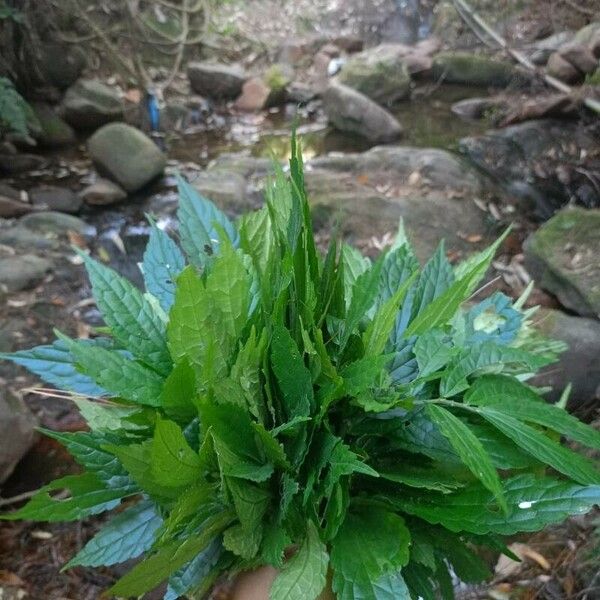
Plant Overview
Often referred to as the Lizard Plant or False Nettle, Elatostema lineolatum is a captivating, low-growing perennial that looks like it stepped straight out of a prehistoric rainforest. Native to the humid, shaded regions of tropical Asia, it is prized by indoor gardeners for its unique "fishbone" foliage and its ability to turn a dim corner into a lush, emerald grotto.
🔍 How to Identify
- 🌿 Asymmetrical Leaves: The most striking feature is the "lopsided" base of the leaves; they are noticeably uneven where they meet the stem, a classic trait of the Elatostema genus.
- 🪚 Serrated Margins: The leaf edges are sharply toothed or notched, giving the plant a rugged, wild appearance that contrasts beautifully with soft-leaved ferns.
- 📏 Linear Patterns: Fine, pale veins often create a subtle "lined" effect across the dark green surface, which is how the plant earned its botanical name, lineolatum.
🏡 In Your Garden
- ☁️ The Humidity Hero: This plant is an obligate humidity lover. Because it evolved on the misty floors of tropical ravines, it is a perfect candidate for terrariums or "wardian cases" where moisture is trapped in the air.
- 💧 Moisture Consistency: Unlike succulents, this plant lacks a "storage tank." It hates drying out completely. If the soil becomes parched, the soft stems will collapse quickly, though they often "resurrect" once watered.
- 🌱 Spreading Growth: It has a creeping, decumbent habit. Instead of growing tall, it prefers to sprawl horizontally, making it an excellent groundcover for shaded tropical garden beds or wide, shallow indoor bowls.
⚠️ Safety & Toxicity
- 🟢 Generally Safe: Elatostema lineolatum is not considered toxic to humans and lacks the painful stinging hairs found on many of its "true nettle" relatives.
- 🐾 Pet Caution: While not listed as a high-risk plant for pets, it is always best to keep foliage out of reach of curious nibblers, as ingesting fibrous plant material can cause mild digestive upset in cats or dogs.
✨ Fun Fact
Despite being a member of the Nettle family (Urticaceae), Elatostema species have largely evolved to be "stingless." They have traded the chemical defense of stinging hairs for a specialized growth habit that allows them to thrive in deep shade where few other plants can compete!

Detailed Care Instructions
Elatostema lineolatum, often referred to as one of the "Asian Jewel Weeds," is a beautiful and relatively low-maintenance plant that can be a great addition to your indoor garden or a shaded outdoor garden. Here are some steps and tips to help you grow this plant:
Requirements
- Light:
- Indirect sunlight: Elatostema lineolatum thrives in bright, indirect sunlight. Direct sunlight can be too harsh and may cause the leaves to scorch.
- Shade: If grown outdoors, find a spot with partial to full shade.
- Indirect sunlight: Elatostema lineolatum thrives in bright, indirect sunlight. Direct sunlight can be too harsh and may cause the leaves to scorch.
- Temperature:
- Ideal temperature range is between 60°F (15°C) and 75°F (24°C).
- Protect the plant from frost and extreme heat.
- Ideal temperature range is between 60°F (15°C) and 75°F (24°C).
- Humidity:
- Prefers high humidity levels.
- Indoor plants can benefit from occasional misting or a humidifier.
- Prefers high humidity levels.
- Soil:
- Use well-draining potting soil.
- A mix for tropical plants or a combination of peat, pine bark, and perlite can be ideal.
Planting and Care
- Use well-draining potting soil.
- Planting:
- Choose a pot with drainage holes to prevent waterlogging.
- Fill the pot with the appropriate soil mix and make a small hole for the plant.
- Place the plant in the hole, backfill with soil, and lightly press the soil around the base of the plant.
- Choose a pot with drainage holes to prevent waterlogging.
- Watering:
- Keep the soil consistently moist but not soggy.
- Water when the top inch of soil feels dry.
- Avoid letting the plant sit in standing water.
- Keep the soil consistently moist but not soggy.
- Feeding:
- Use a balanced, water-soluble fertilizer every 4-6 weeks during the growing season (spring to early autumn).
- Reduce feeding in the winter when the plant's growth slows down.
- Use a balanced, water-soluble fertilizer every 4-6 weeks during the growing season (spring to early autumn).
- Pruning:
- Prune the plant to maintain its shape and remove any dead or yellowing leaves.
- Pruning can encourage bushier growth.
- Prune the plant to maintain its shape and remove any dead or yellowing leaves.
- Propagation:
- Elatostema lineolatum can be propagated through stem cuttings.
- Cut a healthy stem with several leaves.
- Remove the lower leaves and place the cutting in water or directly into moist soil.
- Keep the cutting in a warm, humid place until roots develop.
Troubleshooting
- Elatostema lineolatum can be propagated through stem cuttings.
- Yellowing Leaves:
- This can be a sign of overwatering or poor drainage. Check the soil moisture and drainage system.
- This can be a sign of overwatering or poor drainage. Check the soil moisture and drainage system.
- Leaf Drop:
- Sudden changes in temperature or light conditions can cause leaf drop.
- Ensure the plant is in a stable environment.
- Sudden changes in temperature or light conditions can cause leaf drop.
- Pests:
- Keep an eye out for common houseplant pests like spider mites, aphids, and mealybugs.
- Treat with insecticidal soap or neem oil if needed.
By following these guidelines, you should be able to successfully grow and maintain an Elatostema lineolatum plant. Enjoy the lush, green foliage it brings to your space!
- Keep an eye out for common houseplant pests like spider mites, aphids, and mealybugs.

Place in a dark room with little light, like a dark bedroom or a spot far away from a window or directly in a north-facing window.

Elatostema lineolatum is a tropical plant that requires careful attention to its watering needs. Here's a guide:
1. **Frequency**: Water the plant regularly to keep the soil consistently moist but not waterlogged. The specific frequency will vary based on the environment but generally aim for 1-2 times per week.
2. **Soil**: Ensure that the plant is potted in well-draining soil. A mix designed for tropical plants or one with good components like peat moss, perlite, and pine bark can be beneficial.
3. **Watering Method**:
- **Top Watering**: Pour water onto the soil surface until it starts to drain out of the bottom. Make sure the excess water drains completely to prevent root rot.
- **Bottom Watering**: Place the plant pot in a shallow tray filled with water for about 15 minutes. This allows the plant to absorb moisture from the bottom up. Remove the pot from the tray once the soil surface feels moist.
4. **Water Quality**: Use lukewarm, distilled, or rainwater if possible. Tap water can be used if it is left to sit out overnight to allow chlorine and other chemicals to dissipate.
5. **Environment**: Maintain high humidity levels around the plant. This can be achieved by misting the leaves regularly, placing a humidity tray with pebbles and water beneath the plant, or using a room humidifier.
6. **Seasonal Adjustments**:
- **Growing Season**: In spring and summer, the plant may require more frequent watering due to higher temperatures and active growth.
- **Dormant Season**: In fall and winter, reduce watering frequency, allowing the soil to slightly dry out between waterings but never to completely dry.
7. **Monitoring**: Keep an eye on the plant for signs of underwatering (wilting, dry soil) or overwatering (yellowing leaves, soggy soil). Adjust your watering schedule accordingly.
By following these steps, you can ensure that your Elatostema lineolatum remains healthy and well-hydrated.
Elatostema lineolatum is a tropical plant that thrives in well-draining, nutrient-rich soil. Here are some fertilizing instructions for this plant:
- Type of Fertilizer: Use a balanced, water-soluble fertilizer with an N-P-K ratio of around 20-20-20 or a similar variant. You can also use a slow-release granulated fertilizer if you prefer less frequent applications.
- Frequency: During the growing season (spring and summer), fertilize once every two to four weeks. In the fall and winter, reduce the frequency to once every six to eight weeks as the plant's growth slows down.
- Dilution: Follow the manufacturer's instructions for dilution rates. If using a water-soluble fertilizer, typically you will mix it with water at half the recommended strength for houseplants to avoid over-fertilizing.
- Application: Water the plant thoroughly before applying fertilizer to ensure that the nutrients are evenly distributed and absorbed without shocking the roots. Apply the fertilizer solution directly to the soil, avoiding contact with the leaves to prevent burning.
- Signs of Overfertilization: Watch for signs such as yellowing leaves, browning leaf tips, or a white crust on the soil surface. These indicate that you might be using too much fertilizer, and you should flush the soil with water to remove excess salts.
- Organic Options: If you prefer organic methods, you can use compost tea, fish emulsion, or a well-balanced organic liquid fertilizer, following the same frequency and dilution guidance.
Remember, balance is key when fertilizing. Overfertilization can be just as harmful as underfertilization, so always err on the side of caution and monitor your plant’s response.
Elatostema lineolatum is a tropical plant that requires specific soil conditions to thrive optimally. Here’s a detailed guide on the soil requirements:
- Well-Draining Soil: The plant does not tolerate waterlogged conditions, so the soil should be well-draining to prevent root rot. A mix that allows excess water to drain quickly is ideal.
- Soil Composition: A combination of potting soil, peat moss, and perlite or sand is often recommended. This mix ensures that the soil retains some moisture but also drains well. A typical ratio could be 2 parts potting soil, 1 part peat moss, and 1 part perlite or coarse sand.
- Moisture Retention: While good drainage is essential, the soil should also retain enough moisture to keep the plant hydrated. The inclusion of peat or coco coir helps with moisture retention without making the soil soggy.
- Nutrient-Rich: The plant benefits from nutrient-rich soil. Adding compost or a balanced slow-release fertilizer can provide necessary nutrients. Organic matter like well-decomposed leaf mold can also be beneficial.
- pH Level: The soil should be slightly acidic to neutral, with a pH range of approximately 5.5 to 7.0. This pH range ensures that essential nutrients are available to the plant.
- Texture: The soil should be light and airy, allowing for good root penetration and growth. Avoid heavy, clayey soils that can compact and restrict root growth.
- Maintenance: Regularly check the soil for compactness and aerate it if necessary. Over time, organic components like peat can break down and compact, reducing drainage efficiency.
By adhering to these soil requirements, the Elatostema lineolatum plant should have the right environment to grow healthily and vibrantly.
Propagating Elatostema lineolatum involves a few straightforward steps. This plant can be propagated through stem cuttings, which is generally the most effective method. Here’s a detailed guide:
Step-by-Step Guide to Propagating Elatostema lineolatum
- Choosing the Right Time:
- The best time to propagate is during the plant’s active growing season, typically in spring or early summer.
- The best time to propagate is during the plant’s active growing season, typically in spring or early summer.
- Selecting a Cutting:
- Choose a healthy, non-flowering stem with several leaves.
- Use a clean, sharp knife or pruning shears to take a cutting that is about 4-6 inches long.
- Choose a healthy, non-flowering stem with several leaves.
- Preparing the Cutting:
- Remove the leaves from the lower half of the cutting, leaving a few leaves at the top.
- If you wish, you can dip the cut end into rooting hormone powder to encourage root development, though this step is optional.
- Remove the leaves from the lower half of the cutting, leaving a few leaves at the top.
- Preparing the Pot:
- Fill a small pot with a well-draining soil mix. A mixture of peat and perlite or a commercial potting mix designed for indoor plants can work well.
- Fill a small pot with a well-draining soil mix. A mixture of peat and perlite or a commercial potting mix designed for indoor plants can work well.
- Planting the Cutting:
- Make a small hole in the soil with a pencil or your finger.
- Insert the cutting into the hole and gently firm the soil around it to hold it in place.
- Water the soil lightly to settle it around the cutting.
- Make a small hole in the soil with a pencil or your finger.
- Providing the Right Conditions:
- Place the pot in a location with bright, indirect light.
- Maintain high humidity around the cutting to prevent it from drying out. This can be achieved by covering the pot with a clear plastic bag or placing it in a propagator.
- Ensure good air circulation to prevent mold and mildew.
- Place the pot in a location with bright, indirect light.
- Caring for the Cutting:
- Keep the soil consistently moist but not waterlogged. Overwatering can lead to rot.
- Check the cutting regularly for signs of new growth, which indicates successful rooting.
- Keep the soil consistently moist but not waterlogged. Overwatering can lead to rot.
- Transplanting:
- Once the cutting has established roots and shows significant new growth, it can be transplanted to a larger pot or directly into the garden.
- Gradually acclimate the new plant to normal humidity levels by removing any covering over time.
Tips for Success
- Once the cutting has established roots and shows significant new growth, it can be transplanted to a larger pot or directly into the garden.
- Sterilize Tools:
- Always use sterilized tools to make the cuts to prevent the spread of disease. This can be done by wiping them with rubbing alcohol.
- Always use sterilized tools to make the cuts to prevent the spread of disease. This can be done by wiping them with rubbing alcohol.
- Ideal Temperature:
- Keep the cutting at a temperature between 68-75°F (20-24°C) for optimal rooting conditions.
- Keep the cutting at a temperature between 68-75°F (20-24°C) for optimal rooting conditions.
- Monitoring Pests:
- Keep an eye out for common pests like aphids and spider mites, and treat them promptly to prevent them from causing damage to the cutting.
By following these steps, you should have a good chance of successfully propagating your Elatostema lineolatum and enjoying its beauty in more locations around your home or garden.
- Keep an eye out for common pests like aphids and spider mites, and treat them promptly to prevent them from causing damage to the cutting.







