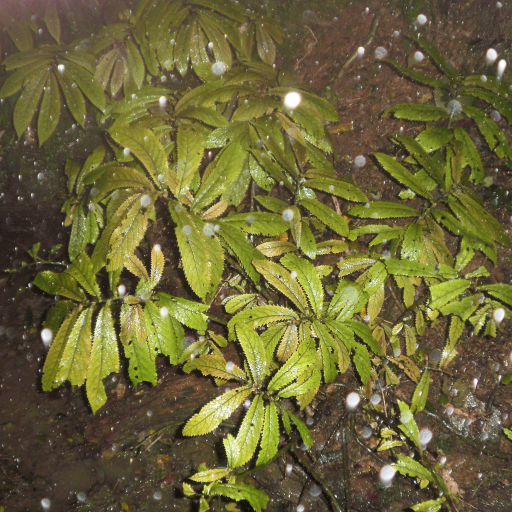
Plant Overview
Known affectionately as Parataniwha or the New Zealand Begonia, this lush forest dweller is a master of the shadows. It is famous for its striking, quilted foliage that looks like it belongs in a prehistoric tropical jungle rather than the temperate gullies of New Zealand. In Māori tradition, its name translates to "Home of the Taniwha," suggesting it grows in the damp, mystical places where water spirits reside.
🔍 How to Identify
- 🍃 Rugose Texture: The leaves are heavily "rugose"—meaning they have a deeply wrinkled, puckered surface that gives them a rich, three-dimensional appearance.
- 🎨 Dramatic Color: The foliage isn't just green; it often displays a stunning palette of bronze, purplish-red, and deep olive, especially when grown in heavy shade.
- 📐 Asymmetrical Shape: Much like a true Begonia, the base of each leaf is lopsided (uneven), and the edges are sharply toothed, giving the plant a jagged, wild look.
🏡 In Your Garden
- 💧 The Moisture Lover: Parataniwha is naturally found near waterfalls and stream banks. In a garden setting, it requires a spot that never fully dries out. It is a "resurrection" plant of sorts—it will wilt dramatically if thirsty but bounces back quickly once watered.
- 🌑 Deep Shade Specialist: This is the perfect solution for those "problem" dark corners of the yard. It thrives in low-light conditions where most other plants would fail, though it needs protection from heavy frost.
⚠️ Safety & Toxicity
- ✅ Safe Status: Elatostema rugosum is generally considered non-toxic to humans and common household pets.
- 🛡️ Brittle Stems: While it isn't poisonous, the plant is physically delicate. Its succulent-like stems snap very easily, so it should be planted away from high-traffic areas where pets or children might step on it.
✨ Fun Fact
Despite its common nickname, Parataniwha isn't related to Begonias at all! It actually belongs to the Urticaceae (Nettle) family. However, unlike its stinging cousins, it has completely lost its "bite" and is entirely smooth to the touch.

Detailed Care Instructions

Place in a dark room with little light, like a dark bedroom or a spot far away from a window or directly in a north-facing window.

1. Check the soil moisture: Before watering your Elatostema rugosum plant, make sure to check the soil moisture level. You can do this by inserting your finger 1-2 inches into the soil to feel if it is dry or moist.
2. Water thoroughly: Once you have confirmed that the soil is dry, water your plant thoroughly. Use a watering can or spray bottle to evenly distribute the water, making sure that all parts of the soil are well-moistened.
3. Avoid overwatering: Elatostema rugosum plants are sensitive to overwatering, so it is important to avoid watering too frequently. Allow the soil to dry out slightly before watering again, and make sure that the soil has good drainage to prevent water from pooling around the roots.
4. Use room temperature water: When watering your plant, use room temperature water that has been allowed to stand for several hours. This will allow any chlorine or other chemicals in the water to dissipate, which can be harmful to the plant.
5. Consider the humidity: Elatostema rugosum plants thrive in high humidity environments, so it can be helpful to mist the leaves with a spray bottle regularly. You can also place a humidity tray filled with water underneath the plant to increase the moisture in the air.
6. Monitor for signs of over or under watering: Keep an eye on your plant for signs of over or under watering. Overwatering can cause the leaves to become yellow and droopy, while under watering can cause the leaves to dry out and curl up. Adjust your watering schedule accordingly to ensure that your plant remains healthy and happy.
When cultivating the Elatostema Rugosum plant, it is recommended to plant it in well-draining soil that is rich in nutrients. The soil should be moist but not waterlogged. The pH level of the soil should be slightly acidic, preferably between 5.5 and 6.5. It is best to use a mixture of peat moss, perlite, and vermiculite to improve soil porosity and drainage. Adding organic matter such as compost or leaf litter can also improve soil quality and provide nutrients for the plant. It is important to avoid using heavy or clay-like soils, as they can hold too much moisture and suffocate the roots.








