Plant Overview
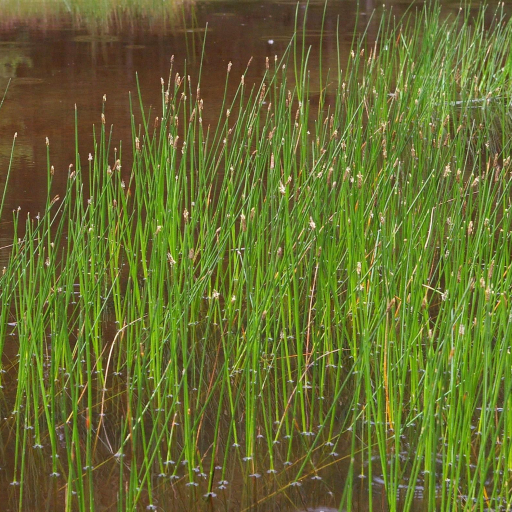
Often called the Common Spike-rush or "Creeping Spike-rush," this slender aquatic perennial is nature’s minimalist masterpiece. Found throughout the Northern Hemisphere, it looks like a collection of bright green knitting needles standing upright in the mud. In the wild, it acts as a vital "stitching" agent, holding pond banks together and providing a playground for dragonflies and tadpoles.
🔍 How to Identify
- 🌾 The "Leafless" Look: What look like leaves are actually smooth, cylindrical, bright green stems that perform all the plant's photosynthesis.
- 🪶 The Spikelet: Each stem is topped with a single, small, brown-to-yellowish cone-shaped flower head (the spikelet) that resembles a tiny spear point.
- 📜 Basal Sheaths: If you look at the very bottom of the stem, you’ll see papery, reddish-brown tubes where the leaves would be—they’ve evolved into simple protective sheaths.
🏡 In Your Garden & Habitat
- 💧 The Marginal Zone: This plant thrives in "the wet feet" zone. It is happiest in shallow water (up to 4 inches deep) or consistently boggy mud at the edge of a pond.
- 🛡️ Erosion Expert: Because it spreads via aggressive underground runners (rhizomes), it is excellent for stabilizing loose soil near water, though in small garden ponds, it’s best kept in a submerged pot to prevent it from taking over.
- 🐸 Wildlife Hotel: It provides essential vertical structure for aquatic insects to climb out of the water when they are ready to transform into winged adults.
⚠️ Safety & Toxicity
- ✅ Safe & Non-Toxic: Eleocharis palustris is generally considered non-toxic to humans, dogs, cats, and horses.
- 🌾 Skin Contact: While not poisonous, the dried stems can become somewhat stiff and pokey, so wear gloves if you are clearing out large amounts of old growth to avoid minor scratches.
✨ Fun Fact
Even though it looks like a blade of grass or a tiny reed, the Common Spike-rush is actually a member of the Sedge family (Cyperaceae). You can tell because "sedges have edges," and while these stems are round, their internal structure and flower arrangement give away their secret botanical identity!

Detailed Care Instructions
To grow Eleocharis Palustris, also known as dwarf hairgrass, you can follow these steps:
- Choose the right substrate: Dwarf hairgrass prefers nutrient-rich substrate like aquatic soil or laterite gravel, which provides essential nutrients for growth.
- Provide proper lighting: Ensure the tank has moderate to high lighting conditions. Use full-spectrum aquarium lights or LED lights suitable for plant growth to provide adequate light for the plant.
- Planting: Carefully divide the dwarf hairgrass into small clumps. Plant each clump into the substrate, making sure to bury the roots gently. Space the clumps about an inch apart to allow for proper growth and spread.
- CO2 supplementation: Although not necessary, providing additional CO2 can accelerate the growth of dwarf hairgrass. You can use CO2 injection systems or liquid carbon supplements available in the market.
- Fertilization: Regularly fertilize the substrate with a liquid aquarium fertilizer rich in macro and micronutrients. This will help provide the necessary nutrients for growth.
- Maintenance: To encourage faster growth, maintain a temperature between 70-83°F (21-28°C) and a pH level between 6-7. Trim the hairgrass regularly to prevent overgrowth and maintain a desired height.
- Water circulation: Ensure sufficient water circulation in the aquarium to prevent algae growth. This can be achieved by using a good quality aquarium filter or adding a powerhead for better water flow.
- Patience: Dwarf hairgrass grows slowly, so it requires patience. Keep a regular maintenance routine and monitor the plant's health until it establishes and starts spreading.
Remember, every aquarium setup is unique, so adjust the conditions accordingly based on your specific tank requirements.

Place in a bright room that is sun drenched almost all day. Or directly in a south-facing window.

The specific watering requirements for this plant will depend on a variety of factors, including the size of the plant, the soil in which it is growing, and the climate in which it is located. Generally speaking, however, it is important to keep the soil around the roots moist but not waterlogged. Overwatering can cause the plant to wilt and die, while underwatering can cause the leaves to yellow and the soil to become dry and dusty. To water the plant, it is recommended to gently apply water to the soil around the base of the plant, taking care not to water the leaves or stems directly. This can be done using a watering can or hose with a gentle spray nozzle. It is also important to avoid letting water sit in the saucer or potting tray beneath the plant for extended periods of time, as this can lead to waterlogged soils. Overall, maintaining a consistent watering schedule and monitoring the moisture levels of the soil is key to ensuring the health and vitality of this plant.
To properly fertilize the Eleocharis Palustris plant, you can follow the instructions below:
- Choose a liquid fertilizing solution that is specifically formulated for aquatic plants. Ensure that the fertilizer contains essential macro and micronutrients needed for healthy growth.
- Dilute the liquid fertilizer according to the manufacturer's instructions. Usually, a recommended ratio is around 1 teaspoon of fertilizer per 5 gallons of water.
- Before adding the fertilizer, perform a water change of about 25% to 30% of the aquarium water. This will help remove any accumulated waste or debris that may hinder nutrient absorption.
- Slowly pour the diluted fertilizer into the aquarium, distributing it evenly across the water surface rather than applying it directly on the plants. This allows for better nutrient dispersion.
- Monitor the growth of the Eleocharis Palustris plant regularly. If you notice signs of poor growth, yellowing leaves, or nutrient deficiency symptoms, consider adjusting the nutrient dosage or frequency of fertilization.
- It is recommended to fertilize the Eleocharis Palustris plant once a week or every two weeks, depending on the individual plant's needs and growth rate. Over-fertilizing can lead to algae growth and harm the overall balance of the aquatic ecosystem.
Remember, each aquarium environment is unique, so it's important to assess the specific needs of your Eleocharis Palustris plant and adjust the fertilization routine accordingly.
The ideal soil for the Eleocharis Palustris plant is a nutrient-rich substrate with good drainage and water retention capabilities. The soil pH should fall within the range of slightly acidic to slightly alkaline, and it should be slightly moist but not waterlogged.
The plant also benefits from a moderate supply of nutrients, including nitrogen, potassium and phosphorus. In addition, the substrate should be free of any contaminants or pollutants that could harm the plant or compromise its growth.
Overall, an adequate soil for the Eleocharis Palustris plant is one that supports healthy root development, provides ample nutrients, drainage and water retention, and is free of any harmful contaminants or pollutants.
To propagate Eleocharis Palustris plant, you can follow these steps:
- Select a healthy and mature plant as the parent plant for propagation.
- Prepare a suitable growing medium, such as a mixture of sand and aquatic soil or a nutrient-rich substrate. Rinse the medium with water to remove any impurities.
- Take a sharp and clean pair of scissors or gardening shears.
- Identify the suitable section of the parent plant for propagation. Look for portions of the plant that have healthy growth and are free from any signs of disease or damage.
- Using the scissors or shears, carefully cut a section of the parent plant. Make sure to include both the shoots and the roots.
- Trim the roots of the propagated section to an appropriate length based on the desired propagation method. If you plan to anchor the plant in the substrate, leave the roots longer, or if you want to float the plant, trim the roots shorter.
- If propagating through "runners," examine the parent plant for runners extending horizontally from the base. Gently detach these runners from the parent plant and make sure they have some roots and shoots attached.
- If you choose to propagate through "division," separate the parent plant into two or more parts, ensuring that each divided portion has sufficient roots and shoots.
- Plant the propagated sections, whether through runners or division, into the prepared growing medium or substrate. Make sure the roots are buried in the substrate, and the shoots are above the surface of the water.
- Place the newly propagated plants in a suitable aquatic environment, such as a fish tank, pond, or water garden. Ensure the water parameters are suitable for Eleocharis Palustris, with appropriate light levels and temperature.
- Maintain the propagated plants by regularly monitoring their growth and providing suitable conditions. Add fertilizers or nutrients as needed to support their development.
- Over time, the propagated Eleocharis Palustris plants will establish themselves and grow, creating a beautiful and vibrant aquatic environment.
Remember to research and adapt the specific propagation methods based on the unique requirements of Eleocharis Palustris to ensure successful propagation.








