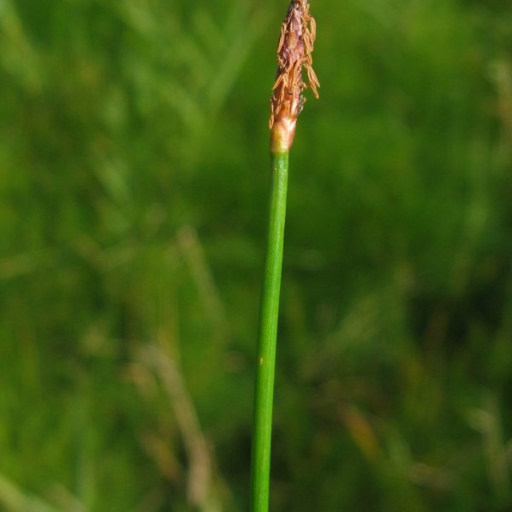
Plant Overview
Often called the One-glumed Spike-rush, this elegant sedge is the minimalist of the wetland world. Thriving in salty marshes and soggy meadows across the Northern Hemisphere, it creates a delicate, grass-like haze over the water's edge. It is a resilient survivor that bridges the gap between land and sea, often acting as a pioneer species in muddy environments.
🔍 How to Identify
- 🌿 Slender Stems: The plant consists of thin, leafless, upright green stems that reach about 10–60 cm in height, appearing almost like flexible green wires.
- 🌾 The "One-Glume" Spike: At the very tip of each stem sits a single, chestnut-colored flower head. Its defining feature is the single large scale (glume) at the base that almost entirely encircles the stem.
- 📏 Creeping Growth: It spreads via horizontal underground runners (rhizomes), allowing it to form dense, tufted mats that stabilize soft mud.
🏡 In Your Garden
- 💧 Thirst for Mud: This is a true "water lover" and cannot survive in standard garden soil. It requires "wet feet" at all times, making it ideal for the shallow margins of a wildlife pond or a dedicated bog garden.
- 🌊 Salt Tolerance: Unlike many other freshwater rushes, this species is remarkably tolerant of brackish (slightly salty) water. It is a perfect choice for coastal gardeners dealing with salt spray or tidal influence.
- 🌱 Natural Filtration: In a pond setting, it acts as a natural filter, absorbing excess nutrients from the water and providing a safe hiding spot for tadpoles and small aquatic insects.
⚠️ Safety & Toxicity
- ✅ Safe Status: Eleocharis uniglumis is generally considered non-toxic and safe for environments shared with pets and children.
- 🌾 Smooth Edges: Unlike some sedges that have microscopic "teeth" on their leaves that can cause paper-cut-like injuries, the stems of the One-glumed Spike-rush are smooth to the touch.
✨ Fun Fact
The name Eleocharis is a combination of two Greek words: heleos (marsh) and charis (grace), literally translating to "The Grace of the Marsh."

Detailed Care Instructions
To grow Eleocharis Uniglumis plants, you can follow these steps:
- Choose the right substrate: Eleocharis Uniglumis prefers a nutrient-rich substrate. You can use aquarium soil or a blend of nutrient-rich substrate and sand.
- Planting: Separate the Eleocharis Uniglumis into small clumps. Plant these clumps into the substrate, spacing them a few inches apart. Make sure to bury the roots slightly into the substrate.
- Lighting: Provide moderate to high lighting for the plants to grow well. LED lights with a color temperature around 6500K are recommended to promote healthy growth.
- Fertilizer: Use a liquid fertilizer or root tabs specifically designed for aquatic plants to provide essential nutrients. Follow the dosage instructions on the fertilizer package.
- CO2 supplementation: Eleocharis Uniglumis benefits from carbon dioxide (CO2) supplementation. You can use a CO2 injection system or liquid carbon supplements to provide the necessary CO2.
- Water conditions: Maintain a temperature between 68-82°F (20-28°C) and a pH level between 6.0-7.5. Ensure good water circulation and avoid stagnant water.
- Maintenance: Regularly trim the Eleocharis Uniglumis to maintain its desired height and prevent it from overshadowing other plants. Remove any dead or decaying portions to keep the plant healthy.
- Propagation: Eleocharis Uniglumis naturally spreads and forms dense mats through runners. To propagate, simply allow the runners to grow and establish new plants. You can then separate these new plants and replant them in other areas of the aquarium.
By following these steps, you should be able to grow Eleocharis Uniglumis successfully in your aquarium.

Place in a bright room that is sun drenched almost all day. Or directly in a south-facing window.

Eleocharis Uniglumis is a freshwater aquatic plant that belongs to the Cyperaceae family. It is commonly found growing in marshes, wetlands, and along the edges of ponds and lakes. Here are some details on how to water this plant effectively:
1. Watering frequency: Eleocharis Uniglumis should be submerged in water throughout its growing season. Maintain a consistent water level to ensure the plant's survival and growth.
2. Water depth: The plant prefers shallow water depths. The ideal water level should be around 4-6 inches (10-15 cm) deep, covering the roots and the lower portion of the stems.
3. Substrate condition: The plant benefits from a fertile substrate. Ensure that the substrate is well-drained to prevent waterlogging and root rot. Regularly monitor the substrate's moisture levels to avoid drying out.
4. Water quality: Eleocharis Uniglumis thrives in clean water conditions. Use dechlorinated or purified water to provide optimal growing conditions. Avoid using water with high levels of chlorine, heavy metals, or other harmful chemicals.
5. Light requirements: This plant prefers bright but indirect lighting conditions. Provide it with moderate to high levels of light to support healthy growth. If growing indoors, consider using artificial aquarium lights specifically designed for aquatic plants.
6. Nutrient supplementation: Eleocharis Uniglumis benefits from regular nutrient supplementation. Add aquatic plant fertilizers according to the manufacturer's instructions or opt for a substrate rich in nutrients. This will ensure the plant receives essential nutrients for healthy growth.
7. Water temperature: Maintain a suitable water temperature range for Eleocharis Uniglumis. It typically thrives in temperatures between 68-82°F (20-28°C). Avoid temperature extremes to prevent stress or damage to the plant.
8. Water circulation: Adequate water circulation is beneficial for Eleocharis Uniglumis' health. Use a water pump or filter to create gentle water movement without causing excessive disturbance or uprooting the plant.
9. Watering techniques: When adding or changing the water in the tank, do it gradually to avoid sudden changes in water parameters. Slowly pour water in a way that minimizes disturbance to the plant and surrounding substrate.
10. Regular monitoring: Keep an eye on the plant's overall health and vitality. Monitor the leaves for any signs of discoloration, wilting, or decay. Adjust the watering routine or make necessary changes to the tank conditions if any issues arise.
It's essential to research and follow specific care guidelines for Eleocharis Uniglumis based on its common names as well to ensure the best care for the plant.
To fertilize the Eleocharis Uniglumis plant, follow these instructions:
- Choose a balanced liquid fertilizer specifically formulated for aquatic plants. Check the label to ensure it contains essential nutrients like nitrogen, phosphorus, and potassium.
- Dilute the fertilizer according to the manufacturer's instructions. Typically, a ratio of one part fertilizer to four parts water is recommended.
- Prior to applying the fertilizer, ensure the plant is rooted in a substrate or soil. If necessary, gently anchor the plant to the substrate using your fingers or tweezers.
- Carefully pour the diluted fertilizer solution near the base of the plant, taking care to avoid direct contact with the leaves.
- Monitor the plant's growth and response to the fertilization regime. If you notice any signs of nutrient deficiency or excess (such as yellowing leaves or algae growth), adjust the fertilization schedule accordingly.
- It is advisable to perform regular partial water changes to prevent an excess buildup of nutrients in the aquarium. This will help maintain a healthy nutrient balance for the Eleocharis Uniglumis plant and other aquatic inhabitants.
Remember to always read and follow the specific instructions provided on the fertilizer packaging for best results.
Eleocharis uniglumis is a plant that belongs to the family Cyperaceae. When choosing soil for this particular plant, it is important to consider its natural habitat and requirements. Eleocharis uniglumis typically grows in wet or marshy environments, such as wetlands or along the edges of lakes and ponds. Therefore, the ideal soil for this plant should be highly moisture-retentive and able to hold water for prolonged periods.
The soil type should be a mix that provides good drainage while retaining moisture. A suitable soil composition would consist of a fine-grained substrate, such as loam or sandy loam, mixed with organic matter such as peat moss or compost. This combination enables the soil to retain moisture while allowing excess water to drain away, preventing waterlogging that could harm the plant's roots.
Additionally, adding clay to the soil mix can help enhance water retention and create a stable substrate for the Eleocharis uniglumis to anchor its roots. This type of soil mixture will provide the necessary conditions for the plant to flourish and mimic its natural habitat.
It is important to note that Eleocharis uniglumis is not a particularly demanding plant and can adapt to a range of soil conditions. However, providing it with a well-draining but moisture-retentive soil will help optimize its growth and overall health. Regularly monitoring the soil moisture levels and adjusting watering accordingly is also essential for maintaining the plant's well-being.
Eleocharis uniglumis is a water plant that can be propagated through various methods. Here are the detailed steps on how to propagate it:
- Preparing the plant: Start by selecting a healthy and well-established Eleocharis uniglumis plant. Ensure that it has a strong root system and is free from any diseases or pests.
- Division: One of the commonly used methods to propagate this plant is through division. Carefully remove the plant from its current container or pond, taking care not to damage the roots. Gently separate the plant into smaller sections by dividing it at the root junctions.
- Planting the divided sections: Once the plant has been divided, each section can be replanted to create new individual plants. Make sure to provide each new plant with sufficient space to grow and develop.
- Planting in substrate: When replanting the divided sections, it is important to provide a suitable substrate for the new plants. Eleocharis uniglumis prefers nutrient-rich soil or a mixture of sand and gravel. Plant the sections in the substrate, ensuring that the roots are adequately covered but keeping the green shoots above the surface.
- Water conditions: Eleocharis uniglumis is an aquatic plant that requires proper water conditions for successful propagation. Maintain a consistent water temperature, typically around 68-82°F (20-28°C). The water should be clean and free from pollutants to promote healthy growth.
- Lighting: Adequate lighting is crucial for the healthy growth of Eleocharis uniglumis. It prefers moderate to high light intensity. Use full-spectrum aquarium lights or natural sunlight if growing the plants in an outdoor pond.
- Fertilization: Regular fertilization is necessary to provide the plants with essential nutrients. Use a liquid or slow-release fertilizer formulated for aquatic plants, following the instructions on the product label. Avoid over-fertilization, as it can lead to algae growth and harm the plants.
- Maintenance: Once the new plants are established, regular maintenance is essential for their proper growth. Trim any dead or decaying leaves regularly to promote new growth. Maintain consistent water conditions and keep the substrate clean from debris.
By following these steps, you can successfully propagate Eleocharis uniglumis plants and create a vibrant aquatic environment.








