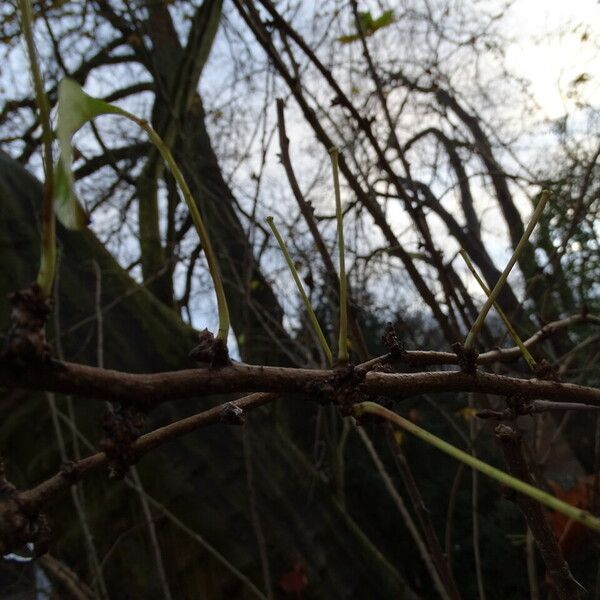
Plant Overview
Known in traditional circles as Wu Jia Pi or the Five-Finger Bark, Eleutherococcus nodiflorus is a resilient, deciduous shrub native to the mountainous regions of East Asia. A distant cousin to the famous Ginseng, this plant is celebrated in folklore and herbalism for its "bone-strengthening" bark. It possesses a wild, rambling habit that makes it look like a cross between a climbing vine and a rose bush.
🔍 How to Identify
- 🖐️ Leaf Shape: The most striking feature is the "palmate" leaf, which typically consists of five (sometimes three) serrated leaflets radiating from a single point, resembling an open hand.
- 🌿 The Stems: Look for long, arching branches that are often armed with small, downward-curving prickles or thorns, especially near the leaf bases.
- 🌼 Flowers & Fruit: It produces modest, umbrella-like clusters (umbels) of tiny greenish-yellow flowers at the nodes. These eventually transform into small, round, ink-black berries in late summer.
🏡 In Your Garden
- 🧗 Growth Habit: This is a "scrambler." In a garden setting, it needs plenty of room to spread or a sturdy fence to lean on. It is remarkably hardy and can tolerate the dappled shade of larger trees, mimicking its natural woodland habitat.
- 🌱 Soil Nuance: While it isn't picky about soil quality, it thrives best in well-drained, loamy earth. It is particularly sensitive to "wet feet"; stagnant water around the roots can lead to rapid decline, so ensure your planting site doesn't collect puddles.
⚠️ Safety & Toxicity
- 🩹 Physical Hazard: The primary risk with this plant is its sharp prickles. Always wear thick gardening gloves when pruning or moving the branches to avoid painful scratches or skin irritation.
- 🐾 Pets & Children: While the bark is used medicinally in controlled doses for humans, the raw berries and foliage should not be consumed by pets or children. Ingestion may cause digestive upset. Always consult a professional before using any part of the plant for medicinal purposes.
✨ Fun Fact
In China, the bark of this plant is a key ingredient in "Wu Jia Pi Jiu," a famous medicinal aromatic liquor that has been produced for centuries. It was historically believed to help travelers and laborers endure damp, cold environments by "expelling wind and dampness" from the body!

Detailed Care Instructions
Eleutherococcus Nodiflorus, also known as the nodding five-finger, is a species of shrub native to North America. Here are some tips on how to grow this plant:
- Choose the right location: Eleutherococcus Nodiflorus prefers full sun to partial shade and well-draining soil. It can tolerate a variety of soil types, including sandy, loamy, and clay soils.
- Planting: Dig a hole that is slightly larger than the plant's root ball and place the plant in the hole at the same depth as it was in its nursery container. Fill in the hole with soil and tamp it down gently to remove air pockets.
- Watering: Keep the soil evenly moist, but not waterlogged. Water the plant regularly, especially during dry periods. Avoid overwatering as this can lead to root rot.
- Fertilizing: Feed the plant with a balanced fertilizer in the spring to promote healthy growth. Follow the instructions on the fertilizer package for the proper dosage.
- Pruning: Prune Eleutherococcus Nodiflorus in the spring to remove any dead or damaged branches. This will help promote new growth and maintain the plant's shape.
- Mulching: Apply a layer of mulch around the base of the plant to help retain moisture and suppress weed growth. Keep the mulch a few inches away from the plant's stem to prevent rot.
- Pests and diseases: Keep an eye out for pests such as aphids, spider mites, and scale insects, as well as diseases like powdery mildew and leaf spot. Treat any infestations promptly with insecticidal soap or fungicides.
By following these tips, you can successfully grow Eleutherococcus Nodiflorus in your garden or landscape.

Place in a window with dappled sun or a spot in the middle of a room. Or directly in a window facing west or east.

When watering this plant, it is important to ensure that the soil is evenly moist, but not waterlogged. Allow the top inch of soil to dry out slightly before watering again. This plant prefers well-draining soil, so avoid overwatering which can lead to root rot.
When watering, water at the base of the plant to avoid getting the foliage wet, as this can potentially lead to fungal diseases. Water in the morning to allow any excess moisture to evaporate throughout the day and prevent the plant from sitting in soggy soil overnight.
Monitor the plant regularly for signs of stress such as wilting or yellowing leaves, as this may indicate it needs more water. Adjust your watering schedule as needed based on the plant's specific needs and environmental conditions.
To fertilize Eleutherococcus nodiflorus plant, apply a balanced, slow-release fertilizer in early spring before new growth begins. Use a fertilizer with equal parts nitrogen, phosphorus, and potassium. Follow the instructions on the fertilizer package for the correct application rate. Water the plant thoroughly after fertilizing to help the nutrients penetrate the soil and reach the plant's roots. Repeat the fertilization process every 4-6 weeks during the growing season to promote healthy growth and flowering. Avoid over-fertilizing as it can cause nutrient imbalances and harm the plant.
Eleutherococcus Nodiflorus plants prefer well-draining soil that is rich in organic matter. A mixture of loamy soil and peat moss can provide the optimal growing conditions for this plant. It is important to avoid heavy, compacted soils as they can impede root development and water drainage. Additionally, a slightly acidic pH level between 5.5 and 6.5 is recommended for Eleutherococcus Nodiflorus plants to thrive. Adding perlite or sand to the soil mixture can also improve drainage and aeration, promoting healthy root growth and overall plant health.
To propagate Eleutherococcus nodiflorus, you can do so through division or stem cuttings.
To propagate through division, carefully remove the plant from its pot or garden bed. Gently separate the roots into smaller clumps, making sure each division has a good amount of roots attached. Replant the divisions in individual pots or a new location in the garden.
To propagate through stem cuttings, choose a healthy, non-flowering stem and cut it at a 45-degree angle just below a leaf node. Remove any leaves from the lower half of the cutting. Dip the cut end in rooting hormone to promote growth, then plant the cutting in a well-draining soil mix. Cover the cutting with a plastic bag or dome to create a humid environment and place it in a warm, bright location. Keep the soil moist but not waterlogged until roots begin to form.
Both methods of propagation should be done in the spring or early summer when the plant is actively growing. With proper care and attention, your Eleutherococcus nodiflorus plant should establish itself and continue to grow successfully.








