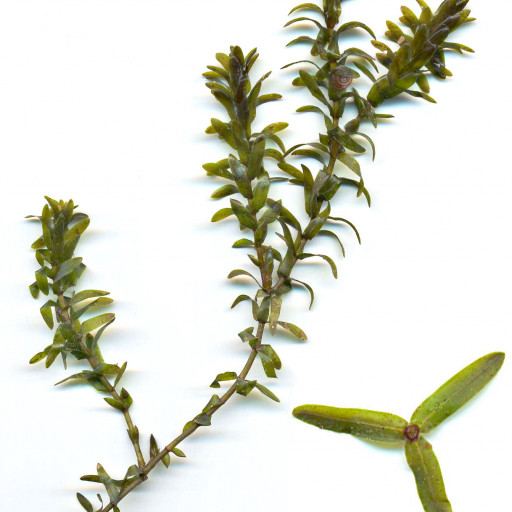
Plant Overview
Known widely as the American Waterweed or simply Anacharis, Elodea canadensis is the silent powerhouse of the freshwater world. Native to North America, this submerged aquatic perennial is famous for its ability to pump massive amounts of oxygen into the water, making it a favorite for both goldfish bowls and natural ponds. While it looks delicate, it is a vigorous survivor that can grow entirely underwater, creating lush, emerald "forests" for small fish to hide in.
🔍 How to Identify
- 🌿 Whorled Leaves: The most distinct feature is its leaves, which almost always grow in tight circles (whorls) of three along the stem.
- ✨ Translucent Texture: The leaves are thin, bright green, and slightly translucent; if you hold them up to the light, they look like stained glass.
- 💧 Submerged Habit: Unlike lilies, Elodea stays completely underwater, though it may occasionally send tiny, three-petaled white flowers to the surface on thread-like stalks.
🏡 In Your Garden & Pond
- 🌬️ The Oxygenator: This plant is prized for "bubbling" oxygen during the day, which helps keep pond water clear and prevents stagnant odors.
- ✂️ Rapid Growth: Because it lacks a complex root system, it draws nutrients directly from the water through its leaves. This means it grows incredibly fast—if your pond has high nutrient levels, be prepared to prune it back regularly to prevent it from taking over.
- 🦠 Algae Competitor: By rapidly consuming nitrates and phosphates, Elodea acts as a natural filter, starving out "pea soup" algae and keeping your water crystal clear.
⚠️ Safety & Toxicity
- ✅ Safe Status: Non-toxic. It is perfectly safe for humans, dogs, and cats. In fact, many pond fish and turtles find it to be a delicious snack.
- 🚫 Environmental Warning: Never "dump" Elodea into local wild waterways. It is highly invasive outside its native range (especially in Europe and Australia), where it can clog boat propellers and choke out native species. Always compost excess trimmings away from water sources.
✨ Fun Fact
If you look at an Elodea leaf under a microscope, you can actually see the green chloroplasts racing around inside the cells! This movement is called "cytoplasmic streaming," and it’s a classic experiment used in biology classrooms worldwide to show that plants are alive and moving on the inside.

Detailed Care Instructions
To grow Elodea Canadensis, also known as Canadian waterweed, you can follow these steps:
- Obtain a live Elodea Canadensis plant from a local nursery or an online supplier.
- Choose a suitable container: Elodea Canadensis can be grown in an aquarium, a pond, or a fish tank. Ensure the container is clean and free from chemicals that may harm the plant.
- Add water: Fill the container with clean, fresh water. Chlorine-free water or tap water left to sit out for 24 hours before use is preferred.
- Planting the Elodea Canadensis: Gently place the Elodea Canadensis stems into the container. Make sure the stems are completely submerged in the water. You can anchor the stems by pushing them into the substrate or using small weights.
- Provide proper lighting: Elodea Canadensis requires bright light to grow well. Place the container in a location where it will receive adequate sunlight or use a fluorescent or LED light set up specifically for aquatic plants.
- Maintain proper water conditions: Elodea Canadensis prefers cooler water temperatures ranging from 10-25 degrees Celsius (50-77 degrees Fahrenheit). Ensure the water is not too warm, stagnant, or excessively dirty. Regularly monitor and maintain proper water quality by performing water changes and adding appropriate aquatic plant fertilizers if necessary.
- Control growth: Elodea Canadensis is known to grow rapidly, and excessive growth can cause it to overtake the container. Regularly trim excess growth to maintain a balanced aquarium or pond ecosystem and prevent overcrowding.
- Monitor for pests and diseases: Keep an eye out for any signs of pests or diseases such as algae, snails, or rotting stems. Remove any affected leaves or plants promptly to prevent further spread.
- Oxygenate the water: Elodea Canadensis is highly efficient at oxygenating the water. However, if you have other aquatic life in the container, ensure there is enough surface agitation or implement an air pump to maintain oxygen levels.
With proper care and attention to water quality and lighting, Elodea Canadensis should grow well and can be a beautiful addition to your aquatic setup.

Place in a bright room that is sun drenched almost all day. Or directly in a south-facing window.

To water this plant, you should first check the soil moisture level by touching the top layer of soil. If it feels dry, you can water it. Use a watering can or a gentle stream of water from a hose to avoid damaging the delicate stems. Allow the water to penetrate the soil and drain out of the pot's drainage holes. Avoid overwatering as it can cause root rot. Water this plant consistently, preferably once a week or when the soil surface feels dry to the touch.
To fertilize this aquatic plant, you will need to use a specialized aquarium fertilizer. Use a liquid or tablet fertilizer that contains essential nutrients such as nitrogen, phosphorus, and potassium. Follow the instructions on the label to determine the appropriate dosage for your aquarium size. Be careful not to over-fertilize, as this can lead to algae growth and harm the plant. It is recommended to fertilize once or twice a week for optimal growth.
Elodea Canadensis is an aquatic plant that requires a specific type of soil to thrive in an aquarium environment. This species of plant can be grown in a variety of soils, but it requires a substrate that is rich in nutrients and has a firm texture that can support its root system.
The best soil type to use with Elodea Canadensis is a nutrient-rich aquatic soil that is specifically designed for use in aquariums. This type of substrate has a high organic content, which provides micronutrients and trace minerals that are essential for plant growth. It also has a firm texture that allows the roots to anchor securely and form a solid foundation.
In addition to using the right substrate, it is also essential to maintain proper water conditions in the aquarium. This includes maintaining adequate levels of pH, temperature, and lighting. Proper water care will help Elodea Canadensis thrive and grow into a healthy and vibrant specimen that will add beauty and life to any aquarium setting.
Elodea Canadensis is a type of aquatic plant commonly used in aquariums and ponds. To propagate this plant, take a cutting with scissors or pruners, making sure to cut just above a healthy node. Place the cutting into a separate container filled with freshwater and keep it in a sunny location. The cutting should start to grow within a few weeks, at which point it can be transplanted into a larger aquarium or pond. It is also possible to propagate Elodea Canadensis by dividing the plant at the roots and replanting the sections.








