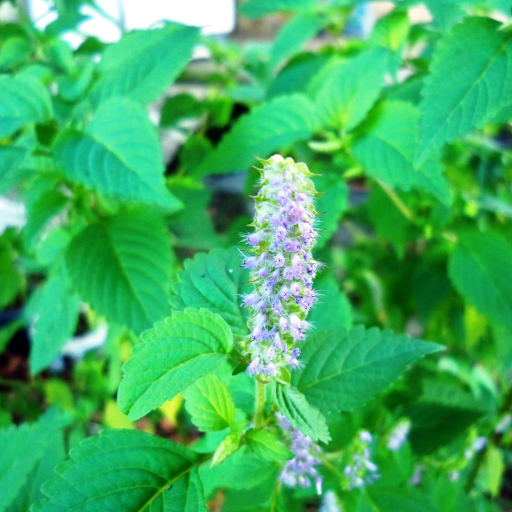
Plant Overview
Often called the Vietnamese Balm or "Kinh Giới," Elsholtzia ciliata is a fragrant aromatic powerhouse from the mint family. While it looks like a common weed to the untrained eye, it is a prized culinary herb in Southeast Asian kitchens, celebrated for its unique lemon-meets-lavender scent. It is a hardy traveler, having migrated from its native Asian lands to become a charming (though sometimes pushy) guest in North American and European landscapes.
🔍 How to Identify
- 🌿 Square Stems: True to its mint family heritage, the plant features distinct, four-angled stems that are typically covered in fine, downy hairs.
- 🍃 Serrated Foliage: The leaves are egg-shaped with sharp, saw-toothed edges and deep veins, releasing a strong citrusy aroma when crushed.
- 💜 "Toothbrush" Flowers: The most iconic feature is the flat, one-sided flower spike. The tiny purple or lavender blooms grow only on one side of the stem, resembling a miniature, fuzzy hairbrush.
🏡 In Your Garden
- ☀️ Sun & Drainage: This plant isn't picky about soil quality, but it demands "wet feet" protection; it thrives in full sun and well-draining earth.
- 🌱 The Great Escape artist: Because it produces thousands of tiny seeds, Elsholtzia ciliata can easily jump from your garden bed into your lawn. If you want to keep it contained, be sure to harvest the flower spikes before they turn brown and drop their seeds.
- 🐝 Pollinator Magnet: While it can be aggressive in its growth, it is a favorite for honeybees and butterflies, making it a great choice for a "wild" corner of a pollinator garden.
⚠️ Safety & Toxicity
- ✅ Safe & Edible: This plant is non-toxic and widely used as a fresh herb in salads, soups, and tea.
- 🐾 Pet Note: It is generally considered safe for pets, though, as with any aromatic mint, eating large quantities can occasionally cause mild digestive upset in cats or dogs.
✨ Fun Fact
📜 A Scent of Many Names: In Vietnam, it is frequently confused with "Vietnamese Perilla" (Tía Tô), but they are different species. Elsholtzia ciliata is unique because its flavor profile is a complex chemical cocktail that mimics lemon, mint, and a hint of earthy cumin all at once!

Detailed Care Instructions
To grow Elsholtzia ciliata plant, also known as Vietnamese Balm or Kinh Gioi, you can follow these steps:
- Planting: You can propagate Elsholtzia ciliata from seeds or cuttings. If using seeds, sow them in well-draining soil or seed-starting mix. Keep the seeds moist until they germinate, which usually takes around 1-2 weeks. If using cuttings, take a 4-6 inch stem cutting from a mature plant and place it in a container filled with moist soil.
- Soil and Sunlight: Elsholtzia ciliata prefers well-draining soil that is rich in organic matter. It thrives in full sun or partial shade. Choose a location for planting where it can receive at least 4-6 hours of sunlight daily.
- Watering: Water the plant regularly, keeping the soil moist but not waterlogged. Avoid overwatering, as it can lead to root rot. Allow the top inch of soil to dry before watering again.
- Fertilizing: Apply a balanced fertilizer once a month during the growing season, which is spring and summer. Follow the instructions on the fertilizer packaging for the appropriate dosage.
- Pruning: Regularly prune the plant to maintain its shape and promote new growth. Pinch off the tips of the stems to encourage bushiness. You can also trim back any dead or dry branches.
- Pests and Diseases: Elsholtzia ciliata is generally resistant to pests and diseases. However, it may occasionally attract aphids or caterpillars. Inspect the plant regularly and remove any pests manually or use organic insecticides if necessary.
- Harvesting: You can start harvesting the leaves once the plant is about 8-10 inches tall. Harvesting regularly will encourage new growth and keep the plant healthy. Use a pair of sharp scissors or pruning shears to cut the stems just above a leaf node.
Remember to research your local climate conditions and adjust the care accordingly.

Place in a bright room that is sun drenched almost all day. Or directly in a south-facing window.

To water this particular plant, it is important to ensure that the soil is moist but not waterlogged. The plant prefers consistently moist soil and should be watered regularly, especially during the growing season. It is important to pay attention to the soil moisture level and adjust watering frequency based on environmental conditions, such as temperature and humidity, as well as plant growth and development. It is also crucial to avoid getting water on the plant leaves or flowers, as this can lead to fungal diseases. The best method is to water at the base of the plant using a watering can or hose with a gentle flow. Over-watering or under-watering can cause stress to the plant, leading to stunted growth or even death.
To fertilize this plant, use a balanced fertilizer with equal parts nitrogen, phosphorus, and potassium. Apply the fertilizer once a month during the growing season, which is typically from spring to fall. Be sure to follow the instructions on the fertilizer package for the appropriate amount to use for the size of your plant. Avoid over-fertilizing, as this can harm the plant. Water the plant before and after fertilizing to prevent the roots from burning.
Elsholtzia Ciliata is a plant that prefers well-draining soil. The soil must be kept moist but should not be waterlogged. A good quality soil mix with good drainage and aeration is recommended for this plant. The soil should be rich in organic matter, such as compost or leaf mold, to provide nutrients for the plant. A pH level between 6.0 and 7.0 is ideal for the plant to thrive. It is essential to avoid using heavy soils that retain water and have a high clay content as they can lead to root rot and damage the plant. Adding sand or perlite to the soil mix increases the drainage and aeration of the soil. Overall, a loose, well-draining soil is recommended for successful growth of Elsholtzia Ciliata.
Elsholtzia Ciliata is a plant that can be propagated through a variety of methods such as seeding, dividing, stem cuttings, and layering.
For seeding, the seeds can be collected from a mature plant and sown in a mixture of potting soil and sand. The soil should be kept moist and the seedlings should be protected from direct sunlight and drafts.
For dividing, the plant can be dug up and the root system separated into smaller sections with healthy stems. These sections can then be replanted in new pots or locations.
For stem cuttings, healthy stems can be taken from the plant and cut into sections about 4-6 inches long. The lower leaves can be removed and the stem can be dipped in rooting hormone before being planted in moist potting soil. The cutting should be kept humid and out of direct sunlight until new growth appears.
For layering, a branch from the plant can be bent down and covered with soil while still attached to the parent plant. The branch should be kept moist and over time, new roots will form from the buried section. Once the roots have developed, the new plant can be separated from the parent plant and replanted.








