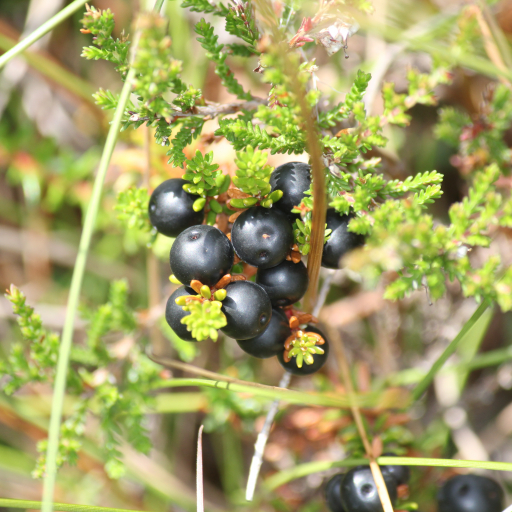
Plant Overview
Often called the "Blackberry Heath" or simply "Crowberry," Empetrum nigrum is a rugged, low-growing survivor that thrives where most plants give up. This evergreen shrub carpets the subarctic and alpine regions of the Northern Hemisphere, looking much like a cross between a miniature pine tree and a heather bush. In the wild, it forms dense, springy mats that can withstand the harshest mountain winds and freezing temperatures.
🔍 How to Identify
- 🌿 Needle-Like Foliage: The leaves are tiny, narrow, and dark green, resembling short pine needles. They have a distinctive white line on the underside and grow densely along the stems.
- 🌸 Inconspicuous Flowers: In early spring, look closely for tiny, purplish-pink flowers tucked into the leaf axils. They are quite subtle and easily missed by the casual hiker.
- 🍒 Shiny Black Berries: The most striking feature is the fruit—globular, glossy black berries that ripen in late summer and often persist through the winter.
🏡 In Your Garden
- 🏔️ The Alpine Specialist: Because it originates in acidic, peaty moors, this plant is notoriously "picky" about its soil. It requires a low pH and excellent drainage; it will struggle or rot in heavy clay or alkaline garden beds.
- ❄️ Cold Over Heat: This is not a plant for the tropics. It thrives in regions with cool summers and cold winters. It makes an excellent, low-maintenance groundcover for rock gardens or "tundra-style" landscapes where few other plants can survive.
⚠️ Safety & Toxicity
- 🟢 Generally Safe: The berries are edible and have been a vital source of Vitamin C for northern indigenous cultures (like the Inuit and Sami) for centuries. However, they are quite acidic and slightly bitter when raw.
- 🐾 Pet Friendly: There are no known toxicities for dogs or cats. However, as with any wild fruit, excessive consumption might lead to mild stomach upset due to the high fiber and acid content.
✨ Fun Fact
The name "Crowberry" isn't just a coincidence—the berries are a favorite snack for crows and other northern birds. Interestingly, the seeds actually germinate better after passing through a bird's digestive tract, making the crow a primary gardener for this species!

Detailed Care Instructions
| Humidity | High |
| Lighting | Full Sun |
| Toxicity | Poisonous |
| Difficulty | Easy |
| Temperature | 14°C - 28°C |
| Hardiness Zones | 3 - 8 |
To successfully grow Empetrum nigrum, also known as crowberry, follow these steps:
- Climate: Ensure that you live in a suitable climate for crowberries. They are native to cold temperate regions, including Arctic and sub-Arctic areas. They prefer areas with long, cold winters and cool summers.
- Soil: Crowberries grow well in acidic, well-draining soil. You can amend your soil with organic matter like compost or peat moss to improve its acidity and drainage.
- Light: Crowberries thrive in full sun to partial shade. They can tolerate some shade, especially in hotter climates, but prefer more sunlight.
- Watering: While crowberries are tolerant of drought, it is essential to keep the soil evenly moist, especially during the growing season. Avoid over-watering and ensure that the soil doesn't become waterlogged.
- Propagation: Crowberries can be propagated through seeds or cuttings. If starting from seed, stratify them by keeping them moist and cold (around 4°C or 39°F) for several weeks before planting. Sow the seeds in pots or directly in the ground in spring.
- Planting: Dig a hole slightly wider and deeper than the plant's root ball. Place the crowberry plant in the hole, making sure the top of the root ball is level with the ground. Backfill the hole with soil, gently firming it around the plant. Water thoroughly after planting.
- Maintenance: Crowberries require minimal maintenance. Prune any dead or damaged foliage, and remove weeds that compete with the plant for nutrients and water. Mulching with organic matter can help suppress weeds and retain soil moisture.
- Fertilizer: Crowberries typically do not require heavy fertilization. However, you can apply a slow-release, acidic fertilizer once a year in spring to provide adequate nutrients for growth.
Remember to check local regulations before growing Empetrum nigrum, as it may be considered invasive in some regions. It's always a good idea to consult local experts or horticulturists for specific growing advice tailored to your location.

Place in a window with dappled sun or a spot in the middle of a room. Or directly in a window facing west or east.

Empetrum Nigrum plant should be watered carefully as it prefers moist but well-drained soil. The water should not be allowed to sit on the surface of the soil for too long as it can cause root rot. It is recommended to water the plant deeply, allowing the water to penetrate the soil to the root zone. This can be achieved by watering slowly, taking care not to flood the plant. It is important to monitor the soil moisture level regularly and only water when the top inch of soil is dry. Over-watering can lead to the plant's death, so it is essential to maintain a balance in watering frequency. Adequate watering will ensure a healthy and thriving Empetrum Nigrum plant.
To fertilize this plant, use a balanced fertilizer with equal parts of nitrogen, phosphorus, and potassium. Apply the fertilizer once per year in the spring when new growth appears. To avoid damage to the plant, make sure to dilute the fertilizer according to the manufacturer's instructions, and always water the plant thoroughly after fertilizing.
Empetrum nigrum requires a well-draining acidic soil with a pH between 4.0 and 6.0. The soil should be composed of a mixture of peat moss, sand, and perlite to enhance drainage and aeration. The plant should not be fertilized heavily as it thrives in nutrient-poor environments. Watering should be done only when the soil has dried out completely to prevent waterlogging and root rot. Adding organic matter such as leaf mould or compost to the soil can improve soil structure and fertility.
Empetrum nigrum is a small shrub that can be propagated by a variety of methods. Here are some ways to propagate this plant:
- Seeds: Collect seeds from mature plants in the fall and store them in a cool, dry place until spring. Plant them in a well-draining soil mix and keep them moist. Germination can take several weeks to several months.
- Cuttings: Take cuttings from semi-hardwood or hardwood stems in late summer or fall. Remove the lower leaves and dip the cut end in rooting hormone. Plant in a well-draining soil mix and keep the soil moist. Cover the cutting with a plastic bag or dome to maintain high humidity.
- Layering: Bend a low-growing stem to the ground and bury it in the soil with the tip exposed. Anchor it in place with a small stone or wire. Roots will develop from the buried stem and a new plant will form. Once rooted, the new plant can be separated from the parent plant.
- Division: This plant can also be propagated by dividing established plants in the spring. Carefully dig up the plant and separate it into smaller sections, each with some roots and foliage. Replant each section in a suitable location.
Propagation can be a simple and rewarding way to increase your Empetrum nigrum plant collection.








