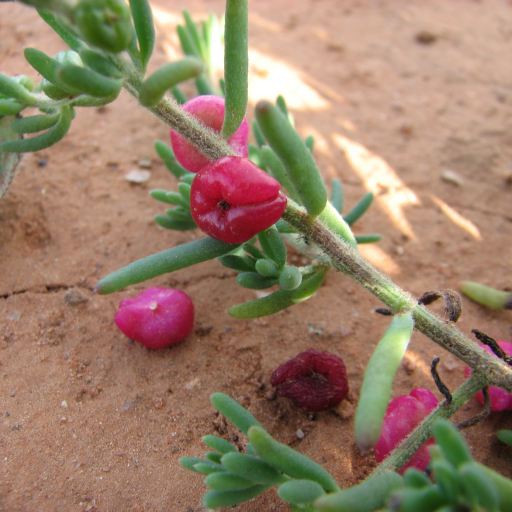
Plant Overview
Often called the Ruby Saltbush, this resilient Australian native is like a living jewel box for dry landscapes. Known for its shimmering, silvery-green foliage and tiny, translucent berries that look like glowing embers, it has survived the harshest outback conditions for millennia. It is a staple in "bush tucker" gardens, prized for its ability to thrive where other plants wither.
🔍 How to Identify
- 🌿 The Foliage: Small, cylindrical, and fleshy leaves covered in fine, woolly hairs, giving the plant a distinct blue-grey or silvery "frosted" sheen.
- 🍒 The Berries: Tiny, succulent fruits (drupes) about 5mm wide. They are the plant's standout feature, changing color as they ripen from green to bright yellow, orange, and finally a deep, ruby red.
- 🪵 Growth Habit: A low, sprawling woody shrub that usually stays under one meter in height, often forming a dense, protective mound that hugs the ground.
🏡 In Your Garden
- 🏜️ Extreme Resilience: This plant is a true "survivor" species. it is incredibly salt-tolerant and drought-resistant, making it the perfect choice for coastal gardens or xeriscaping in arid climates.
- 🐦 Wildlife Habitat: If you want to invite nature in, this is your best friend. The berries are an essential food source for native birds like silvereyes and honeyeaters, who will visit frequently to forage.
- 🌱 Soil & Stability: It performs best in well-draining soil and is often used for erosion control. Because it develops a deep taproot to find water, it dislikes being moved once it has settled into its home.
⚠️ Safety & Toxicity
- 🍴 Edible Status: The berries are safe for human consumption and have a fascinating flavor—a mix of sugary sweetness with a distinct salty finish.
- 🥬 Oxalate Warning: While the berries are a treat, the leaves contain high levels of oxalates (similar to spinach but more concentrated). They should be consumed in very small quantities or boiled thoroughly to avoid kidney irritation.
- 🐾 Pet Safety: It is generally considered non-toxic to pets; however, due to the high salt and oxalate content in the leaves, it may cause mild stomach upset if grazed upon heavily by curious dogs or cats.
✨ Fun Fact
Indigenous Australians traditionally used the Ruby Saltbush not just for food, but also as a beverage. By soaking the ripe berries in a bowl of water, they created a sweet, refreshing tea—one of the oldest "fruit punches" in history!

Detailed Care Instructions
To grow Enchylaena tomentosa, also known as ruby saltbush or native currant, follow these steps:
- Select a suitable planting location: Enchylaena tomentosa thrives in a coastal or arid climate and prefers full sun or partial shade. Ensure the soil is well-drained and not excessively fertile.
- Obtain seeds or seedlings: Obtain seeds or seedlings from a local nursery or supplier specializing in native plants. Alternatively, you can collect seeds from ripe fruits in the wild.
- Prepare the soil: Enrich the planting area with well-rotted organic matter such as compost or aged manure. Ensure the soil is loose and free from weeds.
- Sow seeds or plant seedlings: If using seeds, sow them directly in prepared soil in early spring or early fall. Cover the seeds lightly with soil and water gently. If using seedlings, dig a hole slightly larger than the root ball, place the plant in the hole, and gently firm the soil around it.
- Water regularly: Enchylaena tomentosa prefers moderate watering, allowing the top inch of soil to dry out before watering again. During dry periods, increase watering frequency and maintain consistent soil moisture.
- Mulch around the plant: Apply a layer of organic mulch, such as straw or wood chips, around the base of the plant to help retain moisture and suppress weed growth.
- Prune if necessary: Pruning is generally not required, but if desired, you can shape the plant or remove any dead or damaged branches during the dormant season.
- Protect from extreme temperatures: While Enchylaena tomentosa is tolerant of both heat and cold, young plants may need protection from extreme temperatures during their first winter. Cover them with a layer of straw or a frost cloth when necessary.
- Control pests and diseases: Enchylaena tomentosa is relatively resistant to pests and diseases. However, be on the lookout for common issues such as aphids or powdery mildew, and treat them using organic methods if necessary.
- Enjoy the harvest: Enchylaena tomentosa produces small ruby-red berries that are edible and rich in vitamin C. Harvest the ripe berries when they turn from green to red and enjoy them fresh or use them in jams, sauces, or desserts.
By following these steps, you can successfully grow Enchylaena tomentosa and enjoy its unique and attractive foliage, as well as its edible berries.

Place in a bright room that is sun drenched almost all day. Or directly in a south-facing window.

The recommended method for watering this particular plant is to give it a thorough, deep watering once a week, or more frequently if the soil becomes dry to the touch. The plant prefers well-draining soil and does not tolerate water-logged conditions, so it is important to allow the soil to dry out slightly before watering again. When watering, it is best to water at the base of the plant rather than over the leaves, as this can cause leaf damage or fungal growth. Additionally, Enchylaena Tomentosa is a drought-tolerant plant, meaning it is able to survive longer periods without water, but it should not be left completely without water for extended periods of time.
To fertilize this plant, use a balanced fertilizer with an N-P-K ratio of 10-10-10. Apply the fertilizer every three months during the growing season, beginning in early spring. Water the plant well after applying the fertilizer to help it absorb the nutrients. Avoid over-fertilizing, as this can cause salt buildup in the soil.
Enchylaena Tomentosa plant prefers a well-draining, sandy or loamy soil rich in organic matter. It requires a pH range of 6.0 to 7.0, which means a slightly acidic to neutral soil. The soil should be able to retain some moisture without becoming waterlogged. It is generally best to avoid heavy clay soils, which can become waterlogged and inhibit root growth. Adding compost or other organic materials to the soil can help improve the soil structure and increase the plant's nutrient availability. It is also important to ensure proper drainage and avoid areas prone to flooding.
Enchylaena Tomentosa is a plant that can be propagated via stem cuttings. To do this, take a healthy stem cutting from the parent plant using a sharp, sterile knife or scissors. The cutting should be around 10-15cm in length, with at least two nodes or sets of leaves. Remove any leaves from the lower portion of the stem, leaving only the top two sets.
Next, dip the bottom of the stem cutting in rooting hormone powder or gel. This will encourage root growth and increase the success rate of propagation. Plant the cutting in a small pot filled with well-draining soil, such as a mixture of sand and potting soil. Water the cutting lightly and cover the pot with a plastic bag or lid to create a humid environment.
Place the pot in a warm, bright location, but out of direct sunlight. Keep the soil moist, but not overly wet. After a few weeks, new growth should appear on the stem cutting, indicating successful propagation. At this point, the plastic cover can be removed and the new plant can be fertilized with a balanced liquid fertilizer. The plant can be transplanted into a larger pot once it has established a strong root system.








