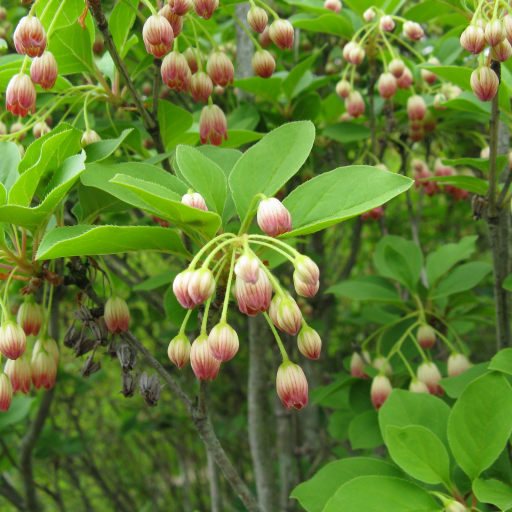
Plant Overview
Often called the "Redvein Enkianthus," this elegant Japanese shrub is a hidden gem of the woodland garden. While it belongs to the same family as Rhododendrons and Blueberries, it stands out for its refined, "quiet luxury" aesthetic. In late spring, it produces clusters of dainty, bell-shaped flowers that look like tiny pieces of hand-painted porcelain dangling from the branches.
🔍 How to Identify
- 🔔 The Flowers: Hanging clusters of creamy-yellow or light-pink bells, characterized by striking vertical red veins that give the plant its common name.
- 🍃 The Foliage: Medium-green leaves that grow in distinct "whorls" (circular clusters) at the very tips of the branches, creating a layered, architectural look.
- 🍂 Fall Transformation: One of its best features is its autumn color; the foliage turns a brilliant, fiery palette of neon orange, scarlet, and deep purple.
🏡 In Your Garden
- 🧪 Acidic Preferences: This plant is a "calcifuge," meaning it hates lime. It thrives best in acidic soil (low pH). If your Azaleas or Blueberries are happy, your Enkianthus will be too.
- 💧 Moisture Consistency: It has a shallow root system and doesn't handle drought well. It appreciates a thick layer of mulch to keep its "feet" cool and moist, especially during hot summer spells.
- ✂️ Slow & Steady: Because it grows slowly and maintains a tidy, upright habit, it rarely requires pruning. It's the perfect "set it and forget it" shrub for those who want high-impact beauty with low-effort maintenance.
⚠️ Safety & Toxicity
- 🟢 Status: Generally safe and non-toxic.
- 🐾 Details: Unlike its cousin the Rhododendron (which can be toxic), Enkianthus campanulatus has no widely recorded toxic effects on humans or pets. It is considered a safe choice for family-friendly landscapes.
✨ Fun Fact
The genus name Enkianthus is derived from the Greek words "enkyos" (pregnant) and "anthos" (flower). This refers to the way the flower buds look swollen and full just before they burst into their iconic bell shapes in the spring!

Detailed Care Instructions
To grow Enkianthus campanulatus, also known as redvein enkianthus or redvein enkianthus, you can follow these steps:
- Choose a suitable planting location: Enkianthus campanulatus prefers partial shade to full sun. Select a site with well-draining soil that is slightly acidic (pH 5.0-6.0). Ensure the location is protected from harsh winds.
- Prepare the soil: Dig a hole that is twice as wide and deep as the plant's root ball. Mix in organic matter such as compost or peat moss to improve soil fertility and drainage.
- Plant the shrub: Gently remove the plant from its nursery container and place it in the hole. Ensure the top of the root ball is level with the soil surface or slightly above. Fill the hole with the amended soil, firming it gently around the roots.
- Water thoroughly: After planting, water the shrub thoroughly to settle the soil and ensure good root-to-soil contact. Enkianthus campanulatus prefers moist but well-draining soil, so water regularly during the growing season, especially during dry periods.
- Mulch the base: Apply a layer of organic mulch, such as wood chips or shredded bark, around the base of the shrub. Mulch helps maintain soil moisture, suppress weeds, and moderate soil temperatures.
- Prune if necessary: Enkianthus campanulatus typically requires minimal pruning. However, if you need to shape or rejuvenate the plant, prune it in late winter or early spring before new growth begins.
- Fertilize sparingly: Enkianthus campanulatus doesn't require heavy feeding. However, you can apply a slow-release fertilizer formulated for acid-loving plants in early spring according to the package instructions.
- Protect from extreme conditions: Provide protection from frost and extreme temperatures, particularly in regions with cold winters. Consider applying a layer of mulch around the base of the plant and wrapping it with burlap or frost cloth during winter.
- Monitor for pests and diseases: Enkianthus campanulatus is generally resistant to pests and diseases. However, keep an eye out for common issues such as aphids, scale insects, or powdery mildew, and take appropriate measures to control them if necessary.
- Enjoy the blooms: Enkianthus campanulatus typically produces pendulous clusters of bell-shaped flowers in late spring to early summer. Enjoy the stunning red-veined, white or pink blooms that attract pollinators to your garden.
By following these steps, you can successfully grow Enkianthus campanulatus and enjoy its ornamental value in your landscape.

Place in a window with dappled sun or a spot in the middle of a room. Or directly in a window facing west or east.

Enkianthus Campanulatus plant should be watered regularly, especially during drought periods. It is important to ensure that the soil is evenly moist, but not waterlogged. Watering should be done at the base of the plant, rather than from above, to avoid wetting the foliage. The frequency of watering will depend on the soil type, weather conditions, and size of the plant, but generally, it should be done every 7-10 days during the growing season and less frequently in winter when the plant is dormant. It is best to water in the morning or evening to avoid evaporation and excess loss of water. Overwatering can lead to root rot, so it is important to ensure that the plant is not sitting in water.
To properly fertilize this plant, begin by selecting a high-quality fertilizer that is appropriate for acid-loving plants. Apply the fertilizer in the early spring, just before the growing season starts. Spread the fertilizer evenly around the base of the plant, taking care to avoid contact with the stems or leaves. Water the plant thoroughly after applying the fertilizer to help it soak into the soil. Repeat this process once or twice more during the growing season, depending on the instructions on the fertilizer packaging and the needs of the plant. Always follow the manufacturer's instructions carefully, and avoid over-fertilizing, which can harm the plant.
When growing this particular plant, it is important to use a well-draining, acidic soil. The ideal pH range for this plant is between 4.5 and 5.5. A good soil mixture for Enkianthus Campanulatus would incorporate peat moss, perlite, and vermiculite. This type of soil will provide good drainage while also retaining moisture, which is important for the health of the plant. It is also important to avoid using any soil that contains lime or other alkaline substances, as these can raise the pH level and harm the plant's growth. Finally, adding compost or organic matter to the soil can help to improve its overall health and fertility, which in turn will ensure that your Enkianthus Campanulatus grows strong and healthy.
To propagate this plant, one can use semi-hardwood cuttings in the summer. First, choose a healthy and strong stem from the parent plant. Then, make a clean cut just below the node with a sharp knife or pruning shears. Remove any lower leaves or branches and dip the cut end in a rooting hormone powder to promote root growth. Fill a small pot with a mixture of sandy soil and peat moss, and then insert the stem cutting into the soil. Water the cutting thoroughly and cover it with a plastic bag to create a humid environment. Place the pot in an area with indirect light and maintain a consistent level of moisture in the soil. After a few weeks, the cutting should start to show signs of growth, indicating it has successfully rooted. Once it has established roots and has grown to a suitable size, it can be transplanted into a larger container or into the ground.








