Plant Overview
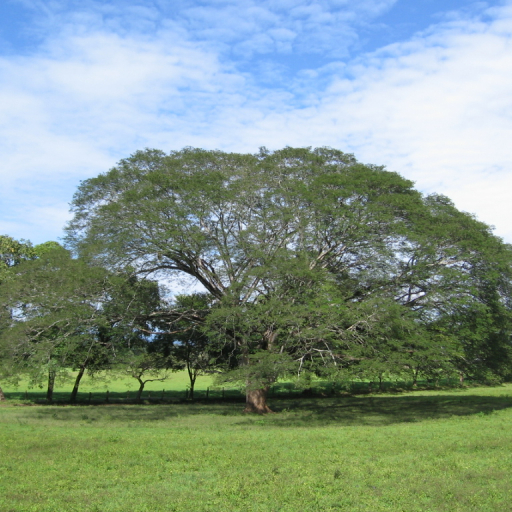
The Guanacaste tree is a majestic giant of the tropical landscape, famously known as the "Elephant Ear Tree" due to its bizarre, curled seed pods. As the national tree of Costa Rica, it is a symbol of stability and abundance, often serving as a massive, living umbrella for livestock and weary travelers. Its sprawling canopy is so wide that it frequently grows broader than it is tall.
🔍 How to Identify
- 🍃 Feathery Foliage: The leaves are bipinnate (fern-like) and delicate, giving the massive tree a surprisingly soft and airy texture.
- 👂 The "Ear" Pods: Its most iconic feature is the seed pod—a dark brown, glossy, and circular pod that curves inward, looking remarkably like a human or elephant ear.
- 🐘 Massive Crown: It possesses an unmistakable silhouette with a short, thick trunk that branches out into a wide, umbrella-shaped canopy.
🏡 In Your Garden
- 🌳 The Space Requirement: This is not a tree for a suburban backyard. It is a "legacy tree" that requires vast open space to accommodate its legendary horizontal spread and aggressive root system.
- 🧱 Root Awareness: Because of its size, the roots are incredibly powerful. They should never be planted near foundations, sidewalks, or underground pipes, as they can easily lift concrete as the tree matures.
- ☀️ Drought Resilience: While it loves tropical humidity, the Guanacaste is surprisingly drought-tolerant once established, making it a hardy choice for large estates in warmer climates.
⚠️ Safety & Toxicity
- 🐾 Pet Safety: The bark and seed pods contain saponins. While not typically lethal, they can cause mild digestive upset, drooling, or irritation if chewed on by curious dogs or horses.
- 👶 Choking Hazard: The seeds inside the "ears" are very hard and glossy. They are often used in jewelry, but they pose a significant choking hazard for small children if found on the ground.
✨ Fun Fact
🦥 A Living Fossil: Evolutionary biologists believe the Guanacaste tree is an "evolutionary anachronism." Its large, heavy pods were originally designed to be eaten and dispersed by extinct prehistoric megafauna, like the Giant Ground Sloth! Since those giants went extinct, the tree has relied on cattle and humans to help spread its seeds.

Detailed Care Instructions
| Humidity | Dry |
| Lighting | Full Sun |
| Toxicity | Poisonous |
| Difficulty | Easy |
| Temperature | 21°C - 38°C |
To grow Enterolobium Cyclocarpum (also known as the "Earpod tree" or "Guanacaste tree"), follow these steps:
- Obtain seeds: Find a reliable source for Enterolobium Cyclocarpum seeds. You may try contacting local nurseries, botanical gardens, or specialized seed suppliers.
- Germination: Soak the seeds in water for approximately 24 hours to improve germination rates. This helps soften the seed coat and allows moisture to penetrate.
- Prepare planting medium: Fill a pot or tray with well-draining soil mixture. Use a combination of potting soil, compost, and sand to create a loose and fertile mixture. Good drainage is essential for Enterolobium Cyclocarpum.
- Plant the seeds: Place the seeds about 1 inch deep into the soil mixture. Make sure there is enough space between each seed to allow for growth.
- Watering: Keep the soil consistently moist, but avoid overwatering. Watering every few days should be sufficient, but adjust according to the environmental conditions.
- Provide adequate light: Place the pots or trays in a bright location with indirect sunlight. Enterolobium Cyclocarpum trees prefer full sunlight, so gradually expose them to more sunlight as they grow.
- Transplanting: Once the seedlings are around 6-8 inches tall and have developed a strong root system, they can be transplanted into larger pots or planted in the ground. Choose a location with full sun exposure and adequate space for the tree, as Enterolobium Cyclocarpum can grow quite large.
- Maintenance: Regularly monitor and water the plants to ensure they remain adequately hydrated. Mulching around the base can help retain moisture and suppress weeds. Prune the tree as needed to maintain its shape and remove any dead or damaged branches.
- Fertilization: After the seedlings are established, you can provide them with a balanced fertilizer during the growing season to promote healthy growth. Follow the instructions on the fertilizer packaging for application rates.
- Protection: Protect the young tree from extreme weather conditions, such as strong winds or frost, as they can be vulnerable during the initial stages of growth.
Remember that Enterolobium Cyclocarpum is a slow-growing tree, and it may take several years before it reaches full maturity. Patience and consistent care will help ensure successful growth.

Place in a bright room that is sun drenched almost all day. Or directly in a south-facing window.

Enterolobium Cyclocarpum plant requires regular watering to stay healthy and thrive. You should water it deeply, allowing the water to penetrate the soil and reach the roots. Ensure that the soil is moist but not waterlogged, as this can lead to root rot and other damage. Water your plant once a week during the growing season and adjust watering frequency based on environmental conditions, such as temperature and humidity. You can use a watering can or a hose to water your Enterolobium Cyclocarpum plant, being careful not to damage the leaves or branches. Consider using filtered water or rainwater, as tap water may contain chemicals or minerals that can harm your plant over time.
To fertilize this plant, use a balanced fertilizer with an equal ratio of nitrogen, phosphorus, and potassium. Apply the fertilizer to the soil around the roots of the plant, taking care not to get any on the foliage. Water the plant thoroughly after applying the fertilizer. Repeat the fertilization once every 2-3 months during the growing season. Avoid over-fertilizing as it can cause damage to the plant.
The Enterolobium Cyclocarpum plant requires well-draining soil that retains moisture. The ideal pH range is between 6.0 to 7.5. The soil should be rich in organic matter and nutrients as the plant has a high nutrient requirement. The soil type should be loamy or sandy with good drainage to avoid waterlogging. Additionally, the plant requires regular watering, especially during the growing season, to keep the soil moist. It is also recommended to add a fertilizer containing nitrogen, phosphorus and potassium to the soil to support plant growth.
To propagate this plant, gather mature seeds from the plant. Soak the seeds for 24 hours in water to aid in germination. Seed treatment with Panchakavya or Trichoderma viride may also help with success rates. Plant the seeds in well-draining soil with a depth of about 1 inch. Water the soil until it's moist and place it in a warm location with indirect sunlight. Seeds should germinate within two to four weeks. Once the seedlings develop two leaves, they can be transplanted into their permanent location. Provide adequate sunlight and water as needed.








