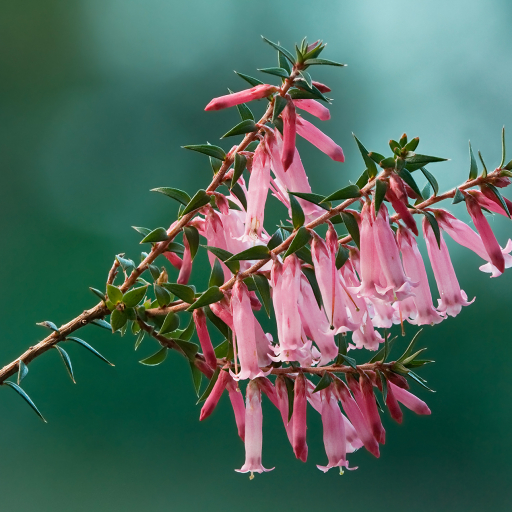
Plant Overview
Known as the Common Heath, Epacris impressa is the vibrant floral emblem of Victoria, Australia. This slender, wiry shrub is a star of the Australian bush, famously painting the landscape with splashes of bright pink, white, and red during the cooler months. Often called the "cigarette flower" by some due to its long, tubular shape, it is a favorite pit-stop for nectar-loving birds with long beaks.
🔍 How to Identify
- 🌸 The Bloom: Long, tubular flowers that look like tiny wax candles, clustered densely along the ends of the branches.
- 🌿 Leaf Texture: Small, stiff, and heart-shaped leaves that taper to a sharp, prickly point—giving the plant a "scratchy" feel if you brush against it.
- 📏 Growth Habit: A spindly, upright woody shrub that usually stays under 3 feet (1 meter) but can occasionally reach higher in protected forest settings.
- 🎨 Color Variance: Remarkably, a single colony can display three distinct color phases: pure white, pale pink, or a deep, dramatic crimson.
🏡 In Your Garden
- 💧 Root Sensitivity: This plant has very fine, delicate roots that dislike being disturbed. Once planted, try not to move it, as it "sulks" or may fail if the root ball is broken.
- ✂️ The Haircut Rule: Left alone, it can become "leggy" or sparse. For a lush garden look, give it a firm prune right after it finishes flowering to encourage new, bushy growth for the next season.
- 🧪 Soil Nuance: It thrives in acidic, sandy, or well-draining soils. Because it is an Australian native, avoid fertilizers high in phosphorus, which can be toxic to its specialized root system.
⚠️ Safety & Toxicity
- ✅ Status: Generally safe and non-toxic.
- 🌵 Details: There are no known toxic effects for humans, cats, or dogs. The primary "danger" is physical—the leaves are quite sharp and can cause minor scratches or irritation to sensitive skin if you are weeding around the base without gloves.
✨ Fun Fact
- 🥇 A Historic First: In 1958, Epacris impressa became the first-ever official floral emblem for any Australian state, beating out many other famous wildflowers for the title in Victoria.

Detailed Care Instructions
To grow Epacris impressa (common name: Common Heath), here are some steps you can follow:
- Climate: It is important to note that Epacris impressa is native to Australia and thrives in cool-temperate to sub-alpine regions. So, ensure the plant is suitable for your climate.
- Light: Epacris impressa prefers a spot with bright, indirect sunlight. It can tolerate some shade but needs a minimum of 4-6 hours of light daily.
- Soil: Choose a well-draining, acidic soil for your plant. You can create a suitable soil mix by combining equal parts of acidic compost, peat moss, and coarse sand.
- Planting: Plant your Epacris impressa in the early spring or early fall. Dig a hole slightly larger than the nursery pot and place the plant in the hole at the same depth as it was in the pot. Backfill the hole with soil and gently press it around the plant.
- Watering: Keep the soil consistently moist, but never soggy. Avoid overwatering, as it can lead to root rot. Water the plant only when the top inch of soil feels dry to touch.
- Fertilizer: Feed your Epacris impressa with a slow-release, acidic fertilizer in the spring and summer months. Follow the instructions on the fertilizer package for application rates.
- Pruning: Prune Epacris impressa after flowering to maintain its shape and promote dense growth. Remove any dead or diseased branches. Be careful not to remove too much foliage, as it may reduce flowering.
- Mulching: Apply a layer of organic mulch, such as pine needles or bark chips, around the base of the plant. Mulch helps to retain moisture, suppress weeds, and maintain a cool root environment.
- Protection: In colder climates, provide protection for Epacris impressa during frost or freezing temperatures. You can cover the plant with a frost cloth or move potted plants indoors during extreme cold spells.
- Pests and diseases: Monitor for common pests like aphids, spider mites, and scale insects. Treat any infestations promptly with an organic insecticidal soap or neem oil. Epacris impressa is generally resistant to diseases if given proper care.
Remember, growing plants can sometimes be challenging, so observe your plant regularly, make adjustments if needed, and provide overall care to ensure its healthy growth.

Place in a bright room that is sun drenched almost all day. Or directly in a south-facing window.

The plant should be watered regularly but not excessively. The soil should be kept moist but not waterlogged. It is important to ensure that the water drains well from the pot or soil. The frequency of watering will depend on factors such as temperature, humidity, and the size of the plant. It is advisable to water in the morning or evening, avoiding watering during the heat of the day, to prevent water loss from evaporation. Overwatering or underwatering can cause the plant to wilt or die. It is important to monitor the plant's moisture levels and adjust watering accordingly.
To fertilize this plant, use a well-balanced, acidic fertilizer formulated for ericaceous plants. Apply the fertilizer during the spring and summer growing season, following the manufacturer's instructions for dosage and frequency. Avoid applying too much fertilizer, as this can damage the plant's roots and lead to excessive growth. Water the plant thoroughly after fertilizing to ensure the nutrients are absorbed properly. Monitor the plant for any signs of nutrient deficiencies and adjust the fertilizer accordingly.
Epacris impressa requires acidic, well-draining soil that is rich in organic matter. A mixture of peat moss, perlite, and vermiculite is ideal for this plant. It is important to avoid using soil that contains lime or other alkaline materials, as this can damage the roots of the plant and prevent it from thriving. Additionally, the soil should be kept moist but not waterlogged, as Epacris impressa prefers moist conditions but is susceptible to root rot if it is kept too wet. Overall, the key to successful growth of Epacris impressa is to provide it with a balanced and consistent growing environment that meets its specific needs.
Epacris Impressa can be propagated through cuttings. One should choose healthy and mature stems with no sign of disease or damage. The cutting should be around 5-7cm long and should be taken from a non-flowering stem. The lower leaves should be removed, leaving only a couple of leaves at the top. The cutting should then be dipped in rooting hormone powder and planted in a well-draining soil mix. The cutting should be kept in a warm, humid and well-lit environment, but not in direct sunlight. It should be regularly watered, but care should be taken not to overwater as this can cause the cutting to rot. After a few weeks, new growth should start to appear, which means the cutting has successfully rooted. The plant can then be transplanted into a larger pot or planted directly in the garden.








