Plant Overview
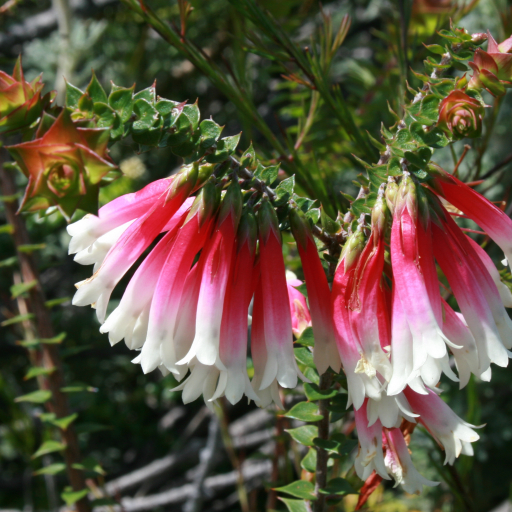
Known widely as the Fuchsia Heath, this stunning Australian native isn't actually a Fuchsia at all, but it certainly mimics their elegant, pendulous charm. Native to the rugged sandstone cliffs and coastal heaths of New South Wales, it is famous for its long, bicolored bells that serve as a vital nectar source. It is a favorite for those looking to bring a touch of wild, "Sydney-bush" aesthetic into a rockery or hanging basket.
🔍 How to Identify
- 🌺 The Flowers: Its most striking feature is the tubular, lantern-like flowers—usually a vibrant crimson-red with a contrasting white tip—that hang in neat rows along the underside of the branches.
- 🍃 The Foliage: The leaves are small, stiff, and heart-shaped, ending in a sharp, needle-like point that gives the plant a slightly prickly texture.
- 🌿 Growth Habit: It has a "scrambling" or pendulous habit, meaning it doesn't stand perfectly upright but prefers to sprawl over rocks or drape gracefully downward.
🏡 In Your Garden
- 🦅 Bird Magnet: The flower tubes are perfectly evolved for the long, curved beaks of Eastern Spinebills and other honeyeaters, making it a "must-have" for a wildlife-friendly garden.
- 🪨 Sandstone Specialist: Because it naturally grows in rocky crevices, it hates "wet feet." It requires highly porous, acidic soil and excellent drainage; it is a perfect candidate for raised beds or large pots.
- ✂️ Post-Bloom Care: Left alone, it can become quite "leggy" or sparse. A light trim after the flowering season encourages a bushier habit and more blooms the following year.
⚠️ Safety & Toxicity
- ✅ Safe for Households: Epacris longiflora is generally considered non-toxic to humans, dogs, and cats.
- 🌵 Mechanical Irritant: While not chemically poisonous, the tiny leaves are very sharp. Keep it away from high-traffic paths where the prickly foliage might scratch passing legs or curious toddlers.
✨ Fun Fact
This species holds a special place in botanical history; it was one of the very first Australian plants collected by Sir Joseph Banks and Daniel Solander when they arrived at Botany Bay on the HMS Endeavour in 1770.

Detailed Care Instructions
Growing Epacris longiflora, commonly known as fuchsia heath, can be a rewarding experience. Follow these steps to successfully grow this plant:
- Choose a suitable location: Epacris longiflora prefers a spot with partial shade or filtered sunlight. Avoid areas with strong, direct sunlight as it can scorch the leaves. Also, ensure that the location provides protection from strong winds.
- Soil preparation: This plant thrives in well-draining, acidic soil with a pH between 4.5 and 6.0. If your soil is heavy or clayey, amend it with organic matter like compost or peat moss to improve drainage.
- Planting: Dig a hole slightly larger than the root ball of the Epacris longiflora plant. Carefully place the plant in the hole, ensuring that the soil level of the pot matches the ground level. Backfill the hole with the amended soil, gently firming it around the roots.
- Watering: Keep the soil evenly moist but avoid overwatering, as Epacris longiflora doesn't tolerate waterlogged conditions. Water the plant regularly, especially during dry spells, and adjust the frequency based on the weather and soil moisture levels. Avoid watering the foliage to prevent disease.
- Mulching: Apply a layer of organic mulch, like bark chips or compost, around the base of the plant. Mulching helps conserve moisture, suppresses weed growth, and maintains a cool root environment.
- Fertilization: Epacris longiflora generally doesn't require heavy feeding but can benefit from a light application of acidic fertilizer once or twice during the growing season. Use a fertilizer specifically formulated for acid-loving plants and follow the package instructions for dosage.
- Pruning: Prune Epacris longiflora immediately after flowering to shape the plant and encourage bushier growth. Remove any dead, damaged, or crossing branches and cut back up to one-third of the plant's overall height. Avoid heavy pruning, as it can reduce flowering.
- Winter care: Protect Epacris longiflora from frost and freezing temperatures. Consider covering the plant with a frost cloth or bringing it indoors during extremely cold periods.
- Pest and disease control: Epacris longiflora is generally resistant to pests and diseases. However, keep an eye out for common garden pests like aphids and spider mites. Treat any infestation promptly using organic insecticides, insecticidal soap, or by manually removing the pests.
- Propagation: Epacris longiflora can be propagated through seed or by taking semi-hardwood cuttings in late summer or early autumn. Use a well-draining propagation mix and provide bottom heat for successful rooting.
By following these steps, you can successfully grow Epacris longiflora and enjoy its beautiful flowers. Remember to regularly monitor the plant's moisture levels, provide appropriate sun exposure, and perform necessary maintenance tasks to ensure its health and longevity.

Place in a bright room that is sun drenched almost all day. Or directly in a south-facing window.

Epacris longiflora, commonly referred to as the common heath, is a perennial plant that requires careful watering to ensure its health and vitality. Here's a detailed guide on how to water this plant effectively:
1. Soil moisture check: Before watering, it's important to check the moisture level of the soil. Insert your finger about an inch into the soil near the base of the plant. If it feels dry, it's time to water.
2. Watering method: The best way to water Epacris longiflora is deeply and slowly. Use a watering can with a narrow spout or a gentle hose attachment for a slow flow rate. Avoid using a high-pressure hose as it may damage the delicate foliage.
3. Watering frequency: As Epacris longiflora prefers well-draining soil, it's crucial not to overwater. Generally, water the plant every 7-10 days during dry periods. Adjust the frequency based on the weather conditions and the plant's moisture needs.
4. Watering technique: When watering, direct the water towards the base of the plant rather than the foliage. This helps prevent fungal diseases and ensures the roots receive adequate hydration. Avoid wetting the leaves as excessive moisture may lead to leaf spot or other issues.
5. Water quantity: Aim to provide enough water to saturate the root zone without causing waterlogging. Slowly pour the water until you see it beginning to seep out through the drainage holes at the bottom of the pot or onto the soil surface. This ensures that the roots are thoroughly moistened.
6. Time of day: It's best to water Epacris longiflora in the morning or early evening. Avoid watering during the hottest part of the day, as the excessive heat can cause rapid evaporation and potential damage to the plant.
7. Adjust for climate and season: During the hotter months or in dry climates, you may need to water Epacris longiflora more frequently. In cooler months or humid environments, reduce the watering frequency accordingly.
8. Monitor plant health: Keep an eye on the plant's overall health and adjust the watering regimen if necessary. If the plant starts showing signs of overwatering (e.g., wilting, root rot, or yellowing leaves), reduce the frequency of watering. If it exhibits signs of underwatering (e.g., drooping leaves, dry soil), increase the frequency slightly.
Remember that the watering needs of Epacris longiflora may vary depending on various factors, such as the pot size, soil type, and climate conditions. Regular monitoring of soil moisture and the plant's response to watering will help you create a suitable watering schedule for optimum health and growth.
To fertilize Epacris Longiflora, you can follow these instructions:
- Use a balanced, water-soluble fertilizer formulated for acid-loving plants.
- Dilute the fertilizer according to the package recommendations or use half the recommended strength to avoid over-fertilization.
- Apply the fertilizer during the plant's active growing season, typically in spring and summer.
- Water the plant thoroughly before applying the fertilizer to ensure the soil is moist.
- Gently pour the diluted fertilizer around the base of the plant, taking care not to splash it on the foliage.
- Avoid fertilizer contact with the stems and leaves, as this may cause burns.
- After fertilizing, water the plant again to allow the nutrients to reach the roots.
- Repeat the fertilization every 4-6 weeks throughout the growing season.
- Monitor the plant's response to the fertilizer and adjust the frequency or strength if needed.
- Always read and follow the instructions provided on the fertilizer packaging for the specific plant's needs.
Epacris Longiflora, a popular member of the Ericaceae family, requires well-draining soil that closely mimics its natural habitat. This plant thrives in a specific type of soil composition to ensure optimal growth and health. Here are some key factors to consider when selecting soil for Epacris Longiflora:
- pH Level: Epacris Longiflora prefers slightly acidic to neutral soil conditions, with a pH range of around 5.5 to 7.0. It is important to avoid soils that are either too alkaline or too acidic for this plant.
- Organic Matter: The soil should be rich in organic matter to ensure proper nutrition and moisture retention. Adding organic compost or well-rotted leaf mold can improve the soil quality and provide essential nutrients.
- Drainage: Epacris Longiflora cannot tolerate waterlogged soil, so it is crucial to ensure excellent drainage. Sandy or loamy soil types are ideal as they allow excess water to drain away effectively. Avoid heavy clay soils that can retain moisture for extended periods.
- Aeration: The soil should be well-aerated to promote root development and prevent root rot. Incorporating coarse materials like perlite, vermiculite, or sand can help improve soil structure, allowing air circulation within the root zone.
- Moisture Retention: While good drainage is crucial, the soil should also retain moisture to avoid drying out. Adding organic matter, such as peat moss or coconut coir, can enhance moisture retention without sacrificing drainage.
- Nutrient Balance: Epacris Longiflora plants require a balanced nutrient profile for healthy growth. This can be achieved by incorporating a slow-release, balanced fertilizer into the soil before planting or using a diluted liquid fertilizer during the growing season.
- Mulching: Applying a layer of organic mulch, such as wood chips or bark, around the base of the plant can help conserve moisture, suppress weed growth, and moderate soil temperature fluctuations.
Remember, it is essential to regularly monitor the moisture levels in the soil and water accordingly. Overwatering or underwatering can negatively impact the health and growth of Epacris Longiflora.
Epacris Longiflora is a woody shrub native to Australia, particularly found in the eastern parts of the country. This plant can be propagated through various methods such as cuttings, division, and seeds.
- Cuttings: To propagate Epacris Longiflora through cuttings, follow these steps:
- Select a healthy stem from the parent plant. The stem should be around 4-6 inches long with several sets of healthy leaves.
- Using a clean and sharp knife or pruning shears, make a clean cut just below a leaf node.
- Remove the lower leaves from the cutting, leaving only the top few sets of leaves.
- Dip the cut end of the cutting in a rooting hormone powder to encourage root development.
- Prepare a well-draining potting mix and place the cutting into the soil, ensuring that at least one or two nodes are buried.
- Water the cutting thoroughly and place it in a warm, bright location with indirect sunlight.
- Mist the cutting regularly to maintain humidity around the plant.
- After a few weeks, roots should start to develop. You can gently tug on the cutting to check for resistance, indicating the presence of roots.
- Once the roots are established, carefully transplant the new Epacris Longiflora plant into a larger container or directly into the ground in your desired location.
- Select a healthy stem from the parent plant. The stem should be around 4-6 inches long with several sets of healthy leaves.
- Division: This method can be used if the parent plant has multiple stems or has developed a clumping growth habit.
- Carefully dig up the parent plant, taking care not to damage the root system.
- Gently separate the clumps or stems, ensuring that each division has sufficient roots attached.
- Plant each divided section or stem into its own container or in the ground, providing adequate spacing.
- Water the newly divided plants thoroughly and keep them in a partially shaded spot until they establish themselves.
- Carefully dig up the parent plant, taking care not to damage the root system.
- Seeds: Epacris Longiflora can also be propagated from seeds, although this method can take longer to achieve mature plants.
- Collect ripe seeds from the parent plant. The seeds are typically small and black.
- Prepare a well-draining potting mix and sow the seeds on the surface.
- Lightly cover the seeds with a thin layer of vermiculite or fine soil.
- Mist the soil gently to provide moisture without oversaturating it.
- Place the container in a warm area with indirect sunlight.
- Keep the soil consistently moist but not waterlogged.
- Germination may take several weeks to a few months. Once the seedlings have developed sufficient size, transplant them into individual pots or a suitable growing location.
Remember to provide the propagated Epacris Longiflora plants with adequate care, including regular watering, proper sunlight exposure, and protection from extreme temperatures. With patience and proper maintenance, you can successfully propagate this beautiful plant.
- Collect ripe seeds from the parent plant. The seeds are typically small and black.








