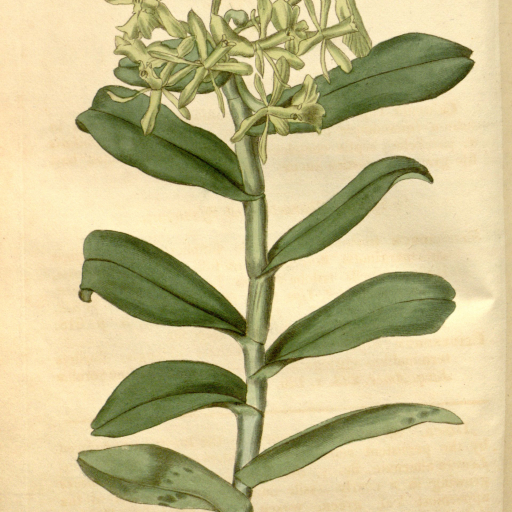
Plant Overview
Often called the Green-Clustered Orchid, Epidendrum chlorocorymbos is a subtle masterpiece of the tropical canopy. Native to the lush cloud forests of Central America and Mexico, this orchid doesn't scream for attention with neon colors. Instead, it charms collectors with sophisticated, monochromatic green blooms that look like hidden gems tucked among the foliage.
🔍 How to Identify
- 🌿 Reed-like Stems: It features slender, upright stems that resemble tall reeds, often reaching 12 to 20 inches in height, giving the plant a vertical, grassy silhouette.
- 🍃 Two-Ranked Leaves: The leaves are arranged in two neat, alternating rows along the stem; they are leathery to the touch and a deep, waxy forest green.
- 🟢 Terminal Green Clusters: The flowers emerge in a dense, umbrella-like cluster (corymb) at the very tip of the stem. Each small flower is star-shaped, ranging from lime green to a pale yellowish-emerald.
🏡 In Your Garden
- 🪵 The Epiphytic Life: Because this orchid grows on trees in the wild, it "breathes" through its roots. It will quickly perish in regular potting soil; instead, use a chunky orchid bark or sphagnum moss mix to ensure maximum drainage.
- 🌬️ Humidity & Airflow: This species thrives on "wet feet and dry ankles." It loves high humidity (60%+) and frequent misting, but it must have a gentle breeze or fan nearby to prevent moisture from stagnating and causing leaf spot.
⚠️ Safety & Toxicity
- ✅ Non-Toxic Status: Epidendrum chlorocorymbos is generally considered non-toxic to humans, cats, and dogs, making it a "pet-safe" choice for indoor collections.
- 🧤 Sap Sensitivity: While not poisonous, the sticky sap from a broken stem can occasionally cause minor skin irritation for people with highly sensitive skin. It’s best to keep the plant out of reach of toddlers who might be tempted to pull on the long, reed-like stems.
✨ Fun Fact
The name Epidendrum literally translates from Greek as "upon trees" (epi meaning upon, and dendron meaning tree). This genus was one of the first groups of orchids ever described by Linnaeus, and for a long time, almost every orchid found growing on a tree was dumped into this single category!

Detailed Care Instructions

Place in a bright room that is sun drenched almost all day. Or directly in a south-facing window.

Water-loving plants flourish in wet or sloppy soil and near ponds. The extensive root system enables these plants to absorb plenty of water. The surface of the soil should be kept moist at all times. Place your pot in a container filled with water to guarantee that plants get enough water. If the ground becomes dry, it is recommended that you water it well. Plants in smaller pots will need to be watered more frequently. Water the soil in which the plant is standing thoroughly using a watering can.








