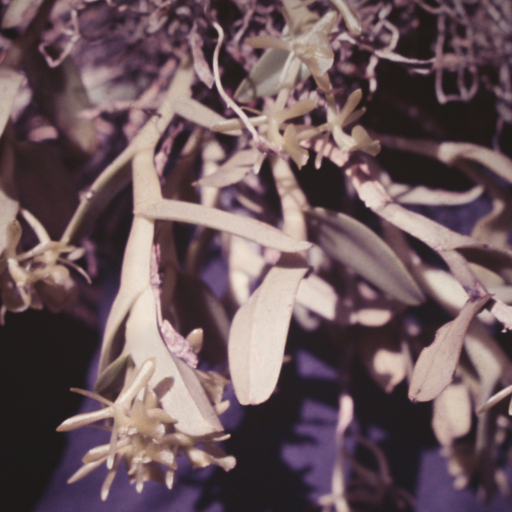
Plant Overview
Often referred to as the Umbel-like Epidendrum or simply the Green Epidendrum, this orchid is a hidden gem of the tropical Americas. Unlike its showy, neon-colored cousins, Epidendrum difforme captures the heart with its ethereal, translucent green flowers that seem to glow in the filtered light of a rainforest canopy. It is a favorite among "cool-growing" orchid collectors who appreciate subtle elegance over loud colors.
🔍 How to Identify
- 🟢 The Flowers: Produces dense, rounded clusters (umbels) of star-shaped, waxy blossoms. The petals are a consistent pale green or lime color and have a delicate, glass-like transparency.
- 🍃 The Foliage: Features fleshy, somewhat stiff, elliptical leaves that grow in an alternating pattern along a slightly flattened stem. Unlike many orchids, it does not have prominent "bulbs" (pseudobulbs).
- 👐 Growth Habit: This is an epiphytic plant, meaning it naturally anchors itself to tree branches using thick, silvery-white aerial roots rather than growing in the soil.
🏡 In Your Garden
- 🌬️ Air and Anchoring: Because it is an epiphyte, this plant hates "wet feet." It thrives best when mounted on a piece of cork bark or nestled in a very chunky, airy orchid mix. If the roots can’t breathe, the plant will quickly decline.
- 💧 The Humidity Factor: Coming from misty tropical forests, it craves high humidity. If you are growing it indoors, a gravel tray with water or a nearby humidifier is essential to prevent the leaf tips from browning.
- 🕯️ Light Nuance: It prefers dappled, bright light—think of the light that filters through a tree’s leaves. Direct afternoon sun will scorch its translucent petals and turn the leaves a stressed yellow.
⚠️ Safety & Toxicity
- ✅ Pet Friendly: Epidendrum difforme is generally considered non-toxic to cats, dogs, and horses. It is a safe choice for a "pet-safe" indoor jungle.
- 👶 Child Safety: While non-toxic, the stems can be somewhat brittle. It’s best kept on a high shelf or hanging basket to protect the plant’s structure from curious hands.
✨ Fun Fact
Epidendrum difforme is a "night-owl" of the orchid world. While it may not have a strong scent during the day, it releases a sweet, heavy fragrance once the sun goes down to attract specific nocturnal moths that act as its primary pollinators.

Detailed Care Instructions
To grow Epidendrum difforme plant, follow these steps:
- Environment: Place the plant in a warm and humid environment, as it prefers temperatures between 60-85°F (15-30°C). Provide it with partial sunlight or bright indirect light.
- Potting: Use a well-draining potting mix such as orchid bark, perlite, or sphagnum moss. Ensure the pot has drainage holes and use a pot that allows for root growth.
- Watering: Epidendrum difforme plants prefer to be moderately moist. Water the plant when the top inch of the potting mix feels dry, but avoid overwatering as it can lead to root rot. Allow excess water to drain out of the pot.
- Humidity: Maintain high humidity levels of around 50-70%. You can increase humidity by placing a tray with water near the plant, misting the leaves regularly, or using a humidifier.
- Fertilizer: Use a balanced orchid fertilizer diluted to half strength. Feed the plant every 2-4 weeks during the growing season (spring to fall) and reduce or stop fertilizing during winter.
- Repotting: Epidendrum difforme plants prefer to be slightly root-bound, so repot only when necessary, usually every 2-3 years. Repot in fresh potting mix, ensuring the new pot is slightly larger than the previous one.
- Pruning: Remove dead or damaged leaves and stems to promote healthy growth. Prune after flowering to encourage new blooms.
- Air circulation: Allow for proper air circulation around the plant to prevent fungal infections and promote overall health.
- Propagation: Epidendrum difforme plants can be propagated through division. Carefully separate the plant into smaller sections, ensuring each section has healthy roots. Plant the divided sections into separate pots with fresh potting mix.
Remember to monitor the plant closely, adjust care requirements as needed, and be patient as it may take some time for the plant to establish and bloom.
To provide proper care for your specific plant, here are guidelines on how to water it effectively:
- Choose the right container: Select a container that has drainage holes at the bottom to prevent water from pooling and causing root rot. It should be slightly larger than the current root size to allow for future growth.
- Water quality: Use room temperature or lukewarm water, preferably filtered or distilled, as impurities in tap water can adversely affect the plant's health.
- Frequency of watering: Epidendrum Difforme plants generally require a consistent moisture level, neither overly dry nor excessively wet. Water the plant when the top inch of the potting mix feels dry to the touch, which usually translates to watering every 7-10 days.
- Watering technique: Slow, gentle watering is essential to ensure even and thorough hydration. Avoid splashing or drenching the foliage, as this can lead to fungal diseases. Direct the water towards the base of the plant, allowing it to soak into the potting mix.
- Drainage: After watering, make sure to allow excess water to drain from the drainage holes. Empty the saucer or cache pot to prevent the plant from sitting in standing water, which can be detrimental to its root system.
- Adjusting watering schedule: Environmental factors like temperature, light levels, and humidity impact a plant's water requirements. During hotter months or when the plant is exposed to direct sunlight, you may need to water more frequently. Monitor the plant closely to determine if adjustments to the watering schedule are necessary.
- Humidity considerations: While Epidendrum Difforme plants can tolerate average household humidity levels, they generally appreciate higher humidity. Consider misting the foliage occasionally or placing a tray of water near the plant to increase local humidity levels. This can be especially beneficial during dry winter months when indoor humidity tends to drop.
Remember, every plant's watering needs can vary, so it is crucial to evaluate your specific orchid's condition and adjust watering accordingly. Additionally, it is always recommended to research and consult orchid care resources for further insight into the unique requirements of your Epidendrum Difforme plant.
To fertilize Epidendrum Difforme plants, follow these instructions:
- Choose a balanced, water-soluble fertilizer with a NPK ratio of around 20-20-20 or similar. This ensures equal amounts of nitrogen (N), phosphorus (P), and potassium (K), covering the essential nutrient requirements of the plant.
- Dilute the fertilizer according to the manufacturer's recommendations, typically one teaspoon per gallon of water, but adjust as needed based on the specific product and plant size.
- Water the plant thoroughly before applying the fertilizer to help prevent burn or stress on the roots.
- Pour the diluted fertilizer solution over the soil, ensuring even distribution around the plant's base. Avoid soaking the foliage to prevent damage.
- Fertilize every four to six weeks during the active growing season, typically spring through fall. Reduce or halt fertilization during the winter or dormant period, as the plant requires fewer nutrients.
- Monitor the plant's response to fertilization. If you notice signs of over-fertilization such as leaf burn or stunted growth, dilute the fertilizer further or reduce the frequency of application.
- Regularly flush the soil with plain water after a few fertilizer applications or when a buildup of salts is visible. This helps prevent nutrient imbalances and salt accumulation, providing a healthier environment for the orchid.
Remember, it's crucial to follow the product-specific instructions provided by the fertilizer manufacturer and to be mindful of the specific needs of your Epidendrum Difforme plant.
Epidendrum Difforme plants thrive in a well-draining soil mix that allows for adequate aeration and moisture retention. These orchids prefer a mixture that is slightly acidic to neutral, with a pH range of 5.5 to 7.5.
The ideal soil composition for Epidendrum Difforme plants usually consists of a combination of several organic and inorganic components. The most commonly used ingredients include:
- Orchid Bark: This is a crucial component in the soil mixture for Epidendrum Difforme plants. Orchid bark provides excellent drainage and allows for air circulation around the plant's roots.
- Sphagnum Moss: Adding sphagnum moss to the soil mix helps retain moisture, as it absorbs and holds a significant amount of water. It also allows for adequate aeration.
- Perlite: Perlite is a volcanic glass that is lightweight and porous. It aids in maintaining soil aeration by preventing the soil from becoming compacted, ensuring healthy root growth.
- Coconut Coir: Coconut coir, or coconut husk fiber, helps improve water retention in the soil mixture. It is a sustainable alternative to sphagnum moss and retains moisture without becoming waterlogged.
- Charcoal: Charcoal serves as a natural purifier, preventing the soil from becoming stagnant and eliminating the risk of root rot.
When preparing the soil mix for Epidendrum Difforme plants, it is essential to strike a balance between water retention and drainage. The soil should not become too soggy or overly dry, as either extreme can negatively impact the health and growth of the plant. Regularly monitoring the moisture levels and adjusting the watering frequency accordingly is important for ensuring optimal growth and preventing root rot.
Propagation of Epidendrum Difforme plant can be done through various methods such as division, backbulb propagation, and stem cuttings. Here's a detailed guide on each technique:
- Division: This method is best suited for mature plants with multiple pseudobulbs. Follow these steps:
- Carefully remove the plant from its pot and gently shake off excess soil.
- Locate natural divisions or separations between pseudobulbs.
- Use a clean, sharp knife or scissors to divide the plant, ensuring that each division has at least one healthy pseudobulb with roots attached.
- Dust the cut sections with a fungicide or cinnamon powder to prevent any infections.
- Plant each division in a separate pot using a well-draining orchid mix, positioning the pseudobulb just above the surface. Ensure that the roots are covered with the growing medium.
- Water the divisions lightly and place them in a warm, well-lit location, protecting them from direct sunlight.
- Carefully remove the plant from its pot and gently shake off excess soil.
- Backbulb propagation: Backbulbs are older, dormant pseudobulbs that have lost their leaves but still possess viable buds. Here's how to propagate using this method:
- Remove the backbulbs from the main plant by carefully cutting them off at the base, ensuring that some roots remain attached.
- Allow the backbulbs to dry for a few days to reduce the risk of rot.
- Plant each backbulb in a small pot with a well-draining orchid mix, burying them slightly in the growing medium.
- Place the potted backbulbs in a warm, bright location with indirect sunlight.
- Mist the medium occasionally to keep it slightly moist, but avoid overwatering.
- Remove the backbulbs from the main plant by carefully cutting them off at the base, ensuring that some roots remain attached.
- Stem cuttings: This method can be used if you have a healthy, non-flowering stem available. Follow these steps:
- Select a healthy stem with at least two nodes (areas where leaves emerge) and no signs of diseases or pests.
- Using a sharp, sterilized knife or pruners, cut the stem just below a node, ensuring it is at least 2-3 inches long.
- Remove any leaves from the lower half of the cutting to reduce moisture loss.
- Dip the cut end in rooting hormone powder or gel to encourage root growth.
- Plant the cutting in a small pot filled with well-draining orchid mix, burying the lower nodes in the growing medium.
- Place the potted cutting in a warm and humid environment, ideally in a propagator or covered with a plastic bag to maintain high humidity.
- Mist the cutting and the growing medium regularly to keep them slightly moist, but avoid overwatering.
Regardless of the propagation method used, it is important to provide the newly propagated plants with bright, indirect light, moderate humidity, and adequate airflow to promote healthy growth. It's also crucial to maintain appropriate watering practices by allowing the growing medium to slightly dry out between waterings to prevent root rot.
- Select a healthy stem with at least two nodes (areas where leaves emerge) and no signs of diseases or pests.








