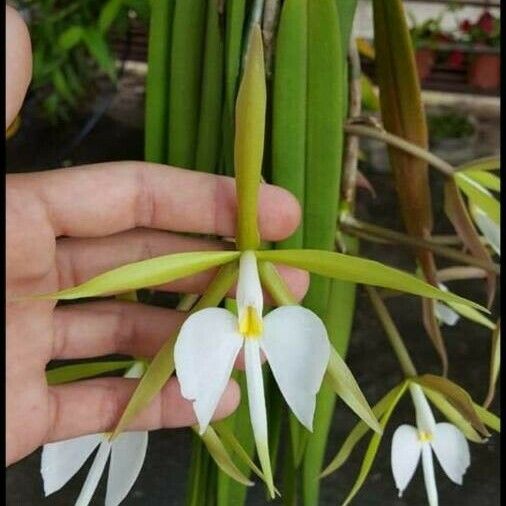
Plant Overview
Known as the "Hanging Orchid," Epidendrum parkinsonianum is a show-stopping epiphyte that seems to defy gravity. Native to the high-altitude cloud forests of Mexico and Central America, this orchid is famous for its dramatic, pendulous growth habit and its massive, star-shaped white flowers. It doesn't just grow; it cascades down from tree branches like a living waterfall of succulent green leaves.
🔍 How to Identify
- 🦎 The Leaves: Unlike upright orchids, these leaves hang straight down. They are thick, fleshy, and "channeled" (v-shaped), often reaching up to 18 inches in length with a slightly purplish tint if exposed to high light.
- 🌸 The Bloom: It produces large, waxy flowers that are typically creamy white or pale yellow. The most striking feature is the deeply three-lobed "lip" or labellum, which looks like a delicate fork.
- 🌙 The Scent: If you walk by this plant at midnight, you'll be greeted by a heavy, sweet fragrance. Because it is pollinated by moths, it saves its perfume for the nighttime.
🏡 In Your Garden
- 🧗 Mounting is Must: Because this plant grows naturally hanging upside down, it rarely survives in a traditional pot. It is happiest when mounted on a slab of cork bark or tree fern fiber, allowing its roots to breathe and its leaves to dangle freely.
- ☁️ Cloud Forest Vibes: It thrives in "intermediate" conditions—cool nights and bright, filtered morning light. It loves high humidity and frequent misting, but its roots must dry out quickly to prevent rot; imagine a misty mountain breeze passing through its roots.
⚠️ Safety & Toxicity
- ✅ Safe for All: This orchid is considered non-toxic to humans, dogs, and cats. It is a "friendly" addition to any indoor jungle or greenhouse.
- 🌵 Physical Touch: While not poisonous, the leaves are quite heavy and stiff. If the plant is mounted poorly and falls, the weight of the succulent leaves can cause bruising to the plant or anything it lands on.
✨ Fun Fact
This orchid was named after John Parkinson, a British Consul General in Mexico during the 1830s who was a passionate plant collector. Because of its unique "upside-down" lifestyle, early botanists were baffled by how to ship it back to Europe without breaking its long, brittle leaves!

Detailed Care Instructions
To grow Epidendrum parkinsonianum, you can follow these steps:
- Find a suitable location: Select a spot that receives bright indirect sunlight. This orchid prefers temperatures ranging from 60-80°F (15-27°C) and humidity levels between 50-70%.
- Choose the right growing medium: Epidendrum parkinsonianum can be grown in a mixture of coarse bark, sphagnum moss, and perlite or in specialized orchid mixtures available in gardening stores. Ensure good drainage to prevent the orchid roots from rotting.
- Potting the plant: Place the orchid in a well-draining pot with several drainage holes at the bottom. Gently nestle the roots into the potting medium, ensuring they are not crowded or cramped.
- Watering: Epidendrum parkinsonianum requires regular watering. Water the plant when the top inch of the potting medium feels dry. However, ensure the plant is not sitting in excess water. Allow any excessive water to drain out completely.
- Feeding: Fertilize the plant monthly during the growing season (spring to fall) with a balanced orchid fertilizer, following the instructions on the packaging. Reduce or stop feeding during the winter months when the plant is dormant.
- Provide proper air circulation: Orchids, including Epidendrum parkinsonianum, benefit from good air circulation. Place a small fan nearby to provide a gentle breeze.
- Maintain humidity: Orchids generally require higher humidity levels. You can increase humidity by using a pebble tray filled with water under the pot, misting the plant occasionally, or using a humidifier.
- Pruning: Remove any yellow or dead leaves or spent flower spikes carefully using sterilized pruning shears.
- Re-potting: Repot the orchid every 1-2 years when the potting medium breaks down or when the plant becomes too large for its pot. Choose a slightly larger pot and carefully transfer the plant, taking care not to damage the roots.
- Pest and disease control: Monitor the plant for pests like aphids, mealybugs, or scale insects. If noticed, treat the plant with an appropriate insecticide or use horticultural oil.
Remember, growing orchids may require some trial and error, as each plant has its own unique needs. Regularly observe the plant for signs of health or stress and make necessary adjustments in care accordingly.

Place in a bright room that is sun drenched almost all day. Or directly in a south-facing window.
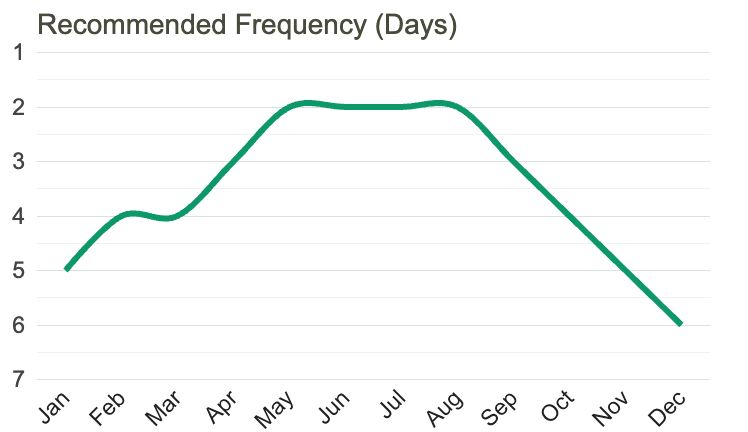
The watering requirements for the plant in question are closely tied to the environmental conditions it is subjected to. Here are some guidelines on how to water this particular plant:
1. Observe the moisture levels: Check the moisture content of the soil or growing medium regularly. Before watering, assess whether the plant needs hydration based on its appearance and how dry the soil feels to the touch.
2. Use the right watering technique: When providing water, ensure that it reaches the root zone and does not merely wet the surface or foliage. Use a watering can or a hose with a gentle spray attachment to avoid damaging the plant.
3. Consider the season: During the active growth phase, typically in spring and summer, the plant requires more water. As it enters a dormant period, usually in fall and winter, reduce the frequency of watering, allowing the growing medium to dry out slightly between waterings.
4. Water sparingly but thoroughly: Aim to water the plant deeply, allowing water to seep through the root zone. This ensures proper hydration and helps prevent waterlogged conditions. Avoid frequent shallow watering, as it may promote the growth of weak, shallow roots.
5. Understand the plant's natural environment: Consider the native habitat of this plant, as it can give you a clue about its water requirements. Some species may originate from areas that experience periodic droughts, while others may be adapted to more consistently moist conditions.
6. Adjust according to humidity and temperature: Higher temperatures and dry environments may necessitate more frequent watering, while cooler and more humid conditions may require less water. Monitor the moisture needs of the plant accordingly.
7. Implement a drainage system: Ensure that the pot or growing medium has proper drainage holes to prevent waterlogging. Excessive moisture can lead to root rot and other fungal diseases, which can harm the plant's overall health.
Always remember that individual plants may have unique requirements, and it's crucial to pay attention to specific signs of water stress or excess, such as wilting or yellowing leaves. Adjust the watering regimen accordingly to maintain the optimal moisture levels for the plant's well-being.
To fertilize the Epidendrum Parkinsonianum plant, you can follow these instructions:
- Choose a balanced fertilizer: Look for a fertilizer with an NPK ratio of 20-20-20 or similar. This means the product contains an equal ratio of nitrogen (N), phosphorus (P), and potassium (K), along with other essential nutrients.
- Dilute the fertilizer: Mix the fertilizer with water according to the package instructions. Generally, a concentration of 1/4 to 1/2 teaspoon per gallon of water is suitable for most orchids, including the Epidendrum Parkinsonianum.
- Water the plant: Ensure the plant's potting medium is slightly damp before applying fertilizer. Water it thoroughly, allowing the excess water to drain away.
- Apply the fertilizer: Pour the diluted fertilizer solution onto the potting medium until it flows through the drainage holes at the bottom of the pot. Avoid fertilizing the leaves or flowers directly.
- Frequency of application: Fertilize the Epidendrum Parkinsonianum plant every two to three weeks during the active growing season, which usually extends from spring to early autumn. Reduce or stop fertilization during winter when the plant rests.
- Flush with water occasionally: Every few months, water the plant with plain water to flush out any accumulated salts or residues from previous fertilization. This helps prevent the buildup of salts that may harm the plant.
Remember, observe the plant for any signs of overfertilization, such as yellowing or burning of the leaves. If this occurs, dilute the fertilizer or reduce the frequency of application. It is generally better to slightly under-fertilize rather than over-fertilize orchids.
Epidendrum Parkinsonianum is a striking orchid species that requires specific soil conditions to thrive. It prefers a well-draining soil mix that allows excess water to flow through and prevents waterlogging. A suitable soil mix for this plant would consist of a combination of fine to medium-grade bark chips, perlite or pumice, and sphagnum moss.
The bark chips provide excellent aeration, allowing the roots to breathe and preventing rot. They also mimic the plant's natural epiphytic habitat. Perlite or pumice helps improve drainage further, preventing water from pooling at the bottom of the pot. These materials do not retain water and aid in preventing root rot.
Sphagnum moss acts as a moisture retainer, ensuring that the roots have access to sufficient water while preventing waterlogging. It also helps in maintaining a consistent level of humidity around the roots, providing a favorable environment for growth.
It is important to note that the soil should be slightly acidic, with a pH level ranging from 5.5 to 6.5, as this plant prefers slightly acidic conditions. You can adjust the pH level by adding appropriate soil amendments like peat moss or pine bark fines.
When repotting, ensure that the roots are not damaged, and the plant is placed slightly above the soil level to promote air circulation and prevent crown rot. Regularly check soil moisture levels and water the plant only when the top inch of the soil feels dry to the touch.
By providing a well-draining soil mix with adequate aeration and moisture retention, you can create an ideal growing environment for Epidendrum Parkinsonianum, allowing it to flourish and display its magnificent flowers.
Epidendrum Parkinsonianum is a tropical orchid species that can be propagated through several methods. Here is a detailed step-by-step guide to propagate this plant:
- Select a healthy parent plant: Choose a mature and healthy Epidendrum Parkinsonianum plant from which you will be taking cuttings or seeds. Ensure that the plant is free from diseases or pests.
- Propagation by division: This is the most common method to propagate Epidendrum Parkinsonianum. Here's how to do it:
a. Carefully remove the parent plant from its pot, and gently shake off any excess substrate from the roots.
b. Inspect the plant and locate divisions or pseudobulbs that have their own set of roots.
c. Using clean and sharp pruning shears or a knife, cut the divisions away from the parent plant, ensuring that each division has enough healthy roots and pseudobulbs to sustain itself.
d. Optionally, you can dust the cut surfaces with a fungicide or a rooting hormone to protect against infections and promote root development.
e. Plant each division in a separate pot filled with well-draining orchid potting mix. Firmly press the mix around the roots to provide stability.
f. Water the newly potted divisions sparingly, keeping the potting mix evenly moist but not soggy.
g. Place the pots in a warm and bright location, avoiding direct sunlight. Maintain a temperature range of around 70-80°F (21-27°C) for optimal growth.
h. The new divisions should start producing new roots and shoots within a few weeks to a few months.
- Propagation by seed: If you have access to mature Epidendrum Parkinsonianum flowers, you can collect and germinate their seeds. However, note that seed propagation can be more challenging and time-consuming. Here are the steps:
a. Collect mature seed pods from the parent plant, which usually develop after the flowers have withered and dropped.
b. Open the seed pod carefully to extract the tiny, dust-like seeds. Sterilize the seeds by soaking them in a diluted hydrogen peroxide solution for a few minutes.
c. Prepare a suitable germination medium, such as sphagnum moss or a mixture of coconut coir and perlite, and moisten it to a damp consistency.
d. Spread the sterilized seeds thinly and evenly on the surface of the medium, ensuring they are not clumped together.
e. Cover the container with a clear plastic lid or wrap to create a mini greenhouse effect, maintaining high humidity.
f. Place the container in a warm location with indirect or filtered light, ensuring that the temperature remains around 70-80°F (21-27°C).
g. Monitor the moisture level of the medium and mist it occasionally to keep it moist but not waterlogged.
h. After a few weeks to several months, tiny seedlings should start to sprout. Once they have developed several leaves, you can carefully transplant them into individual pots.
Remember that propagating Epidendrum Parkinsonianum requires patience and care. It is essential to provide the right conditions of warmth, humidity, and light to promote successful propagation.








