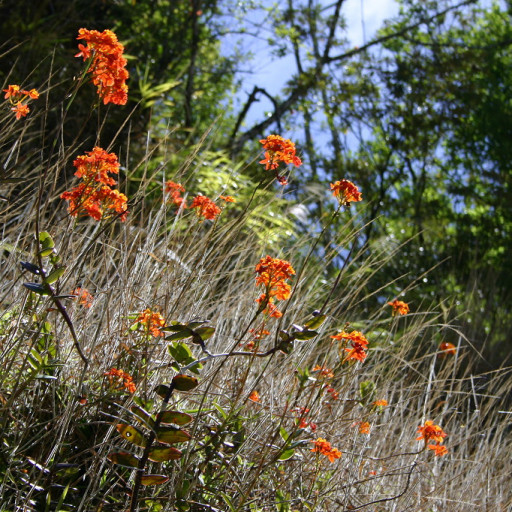
Plant Overview
Commonly known as the Fire-Star Orchid or the Reed-Stem Epidendrum, this vibrant traveler is famous for its fiery clusters of orange and red blooms. Unlike many of its cousins that hide in the canopy of the rainforest, this hardy orchid prefers to stay grounded, often found scrambling over roadsides and rocky slopes in Central America. It is a favorite for beginners because it is incredibly resilient and can produce flowers almost year-round in the right conditions.
🔍 How to Identify
- 🔥 The Flowers: Small, star-shaped blossoms appear in dense clusters at the tip of long stems, showcasing brilliant shades of orange and red with a distinctive, deeply fringed "lip."
- 🎋 Reed-like Stems: The plant looks more like a tall grass or reed than a typical orchid, with slender, stiff stems that can grow several feet tall.
- 🧶 Aerial Roots: Look for white, wiry "adventitious" roots emerging all along the length of the stem, not just at the base; these help the plant anchor itself as it spreads.
🏡 In Your Garden
- ☀️ Sun-Seeker: This orchid is a true sun worshiper. While most orchids crave dappled shade, the Fire-Star thrives in high light. If it doesn't get enough sun, the stems will become "leggy" and refuse to bloom.
- 🪴 Terrestrial Habit: Unlike epiphytic orchids that grow on trees, this species is terrestrial. It prefers a rich, well-draining potting mix or sandy soil rather than the chunky bark used for most orchids.
- ✂️ Easy Propagation: Because of those wiry roots along the stem, you can easily start a new plant by cutting a section of the stem (a "keiki") and tucking it into the soil.
⚠️ Safety & Toxicity
- 🐾 Pet Friendly: Epidendrum radicans is generally considered non-toxic to cats, dogs, and horses, making it a safe choice for a busy household.
- 🧤 Sap Sensitivity: While not poisonous, the milky sap can occasionally cause mild skin irritation or dermatitis in people with sensitive skin. It is best to wear gloves when pruning large clumps.
✨ Fun Fact
This orchid is a master of "food deception." It mimics the appearance and bright colors of nectar-rich flowers like Lantana and Asclepias (Milkweed) to trick butterflies into pollinating it, even though the orchid itself produces absolutely no nectar reward!

Detailed Care Instructions
| Lighting | Full Sun |
| Hardiness Zones | 9A - 11 |
To grow an Epidendrum Radicans plant, follow these steps:
- Choose a suitable location: Epidendrum Radicans plants thrive in bright, indirect sunlight. Place them near a window or in a well-lit area, but avoid direct sunlight, as it can burn the leaves.
- Select the right pot: Use a shallow pot or orchid pot with good drainage holes to prevent waterlogging. These plants prefer to be slightly root-bound, so choose a pot that is only slightly larger than the current root ball.
- Use well-draining soil: Orchid potting mix or a mixture of bark, perlite, and sphagnum moss works well for Epidendrum Radicans. The soil should be loose and airy to promote healthy root growth.
- Watering: Epidendrum Radicans plants prefer to slightly dry out between waterings. Water the plant thoroughly when the top layer of soil feels dry, but avoid overwatering, as it can cause root rot. Be sure to empty any excess water from the saucer beneath the pot.
- Humidity: These plants appreciate moderate humidity levels. Placing a tray of water near the plant or using a humidifier can help maintain the desired humidity.
- Fertilizing: Epidendrum Radicans require regular feeding during the growing season. Use a balanced orchid fertilizer or a fertilizer made specifically for orchids. Follow the instructions on the fertilizer packaging for the correct dosage and frequency.
- Propagation: Epidendrum Radicans can be propagated through division. When the plant has outgrown its pot, carefully divide it into smaller sections ensuring each section has roots attached. Plant these sections in separate pots, and care for them as you would a mature plant.
- Pruning: Trim any dead or damaged leaves or stems as needed to maintain the plant's appearance and health.
- Temperature: Epidendrum Radicans prefer temperatures between 60-80°F (15-26°C) during the day and slightly cooler temperatures at night.
- Winter care: During the winter months, reduce watering as the plant enters a semi-dormant period. Keep it in a slightly cooler area with reduced light, but continue to provide sufficient warmth and avoid exposure to cold drafts.
Following these steps should help you grow a healthy Epidendrum Radicans plant.

Place in a window with dappled sun or a spot in the middle of a room. Or directly in a window facing west or east.

Epidendrum Radicans plants should be watered regularly, but care should be taken not to over-water the plant as it can lead to root rot. Before watering, check the topsoil to ensure it has dried out. When you water, pour the water into the soil around the plant's roots rather than onto the leaves or flowers. Allow the soil to absorb the water, and then discard any excess water that drains out of the pot. During periods of high heat or low humidity, consider misting the plant's leaves with water to help keep the plant hydrated.
For optimal growth of this plant, it is recommended to fertilize it regularly during the growing season. Use a balanced liquid fertilizer, diluted to half strength, and apply every 2 weeks. Avoid fertilizing during the plant's dormant period. Additionally, make sure to provide adequate water and light for healthy growth.
The best type of soil for the Epidendrum Radicans plant is one that is well-draining and contains a mixture of organic and inorganic materials. The soil should have a pH range between 5.5 to 7 and be able to retain moisture without becoming waterlogged. A mix of bark, perlite, peat moss, and sphagnum moss is a good option. The plant also benefits from a regular fertilization schedule with a balanced fertilizer. It is important to avoid using soil with high levels of salt or chemical fertilizers as these can harm the plant. Additionally, the soil should be replenished every few years to ensure that it remains healthy and nutrient-rich.
Epidendrum Radicans is a plant species that can be propagated through different methods. One way to propagate this plant is through stem cuttings. It is important to use sharp and clean scissors to make a clean cut just below a node. The stem cutting should be around four inches long and have a minimum of two nodes.
After cutting, allow the stem cutting to callous over for a few days to prevent bacteria or fungal infection. Then, plant the stem cutting in a pot with well-draining soil mix. It is recommended to keep the soil slightly moist to avoid getting dry and overwatering, which can cause root rot. The pot should be kept in a warm and humid location with bright light but indirect sunlight, as full sun can cause sunburn to the new plant.
Another method to propagate Epidendrum Radicans is through division. This can be done by separating the new plantlets from the mother plant once they have grown a few inches and have their own roots. However, this method is recommended for more mature plants as younger plants might not tolerate the process.
Overall, propagating Epidendrum Radicans requires patience, attention, and care for the plant to grow successfully.
Common pests of the fire star orchid include Scale insect, mealybugs, spider mites, thrips. Make a habit of checking your fire star orchid frequently for pests so that any infestations can be caught and managed early.








