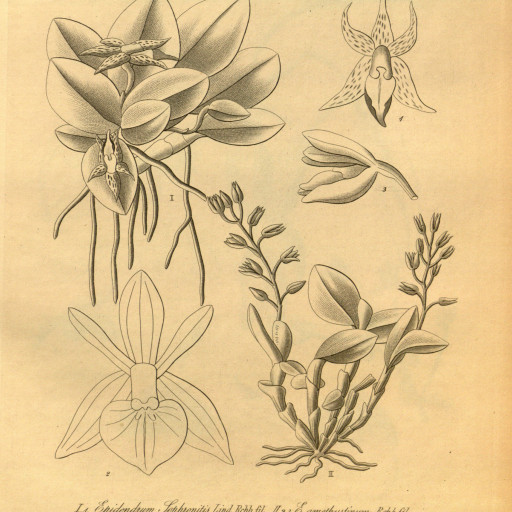
Plant Overview
Often called the "Crucifix Orchid" or the "Star Orchid," Epidendrum is one of the most diverse and resilient genera in the orchid world. These hardy plants are a far cry from their finicky tropical cousins, often found clinging to windswept cliffs or nestled in the bark of high-altitude trees across the Americas. Their name literally translates from Greek as "upon trees," reflecting their adventurous spirit and architectural beauty.
🔍 How to Identify
- 🌸 The "Crucifix" Lip: The most iconic feature is the flower's labellum (lip), which is often fringed and shaped like a tiny cross or a person with outstretched arms.
- 🎋 Reed-like Canes: Unlike the fat, bulbous stems of many orchids, common Epidendrums grow tall, slender, cane-like stems that resemble small bamboo stalks.
- ☁️ Silvery Aerial Roots: They produce thick, white, spongy roots (velamen) that often grow outside of the pot to "breathe" and pull moisture directly from the air.
🏡 In Your Garden
- ☀️ Light Seekers: Unlike the shade-loving Moth Orchid, Epidendrums are "sun-worshippers." They require very bright, indirect light to bloom; if the leaves turn a slight reddish tint, they are getting the perfect amount of "tan."
- 🪴 Tough as Nails: These plants are famous for their "keikis" (baby plantlets) that grow directly off the old flower spikes. This makes them incredibly easy to propagate—just wait for the baby to grow roots, snip it off, and you have a brand-new orchid.
⚠️ Safety & Toxicity
- ✅ Non-Toxic: Epidendrum orchids are generally considered non-toxic to humans, dogs, and cats. They are an excellent choice for a pet-friendly household.
- 🌱 Fiber Warning: While not poisonous, the stems are very fibrous and tough. If a pet decides to use the plant as a chew toy, it may cause mild mechanical irritation to the mouth or a bit of tummy upset from the fiber.
✨ Fun Fact
- 🐝 The Great Bamboozle: Many Epidendrum species are master deceivers. They produce vibrant, nectar-looking flowers that attract butterflies and bees, but they actually produce zero nectar! The insects visit out of curiosity, pollinate the flower, and leave empty-handed.

Detailed Care Instructions
To grow an Epidendrum plant, you can follow these steps:
- Select a healthy orchid species: Epidendrum plants come in various species, so choose one that suits your climate and growing conditions.
- Choose a suitable pot: Use a clay or plastic pot with adequate drainage holes for proper water drainage. Ensure the pot has ample space for root growth.
- Potting mix: Use a well-draining orchid potting mix that is specialized for orchids. Alternatively, you can create a mix of bark, perlite, and sphagnum moss.
- Planting: Carefully remove the plant from its nursery pot and gently spread out the roots. Place it in the new pot, ensuring that the plant is centered and upright. Backfill the potting mix around the roots, allowing enough space for airflow and drainage.
- Light: Epidendrum plants thrive in bright, indirect light. Place them near a window with filtered sunlight or use artificial grow lights to provide adequate brightness.
- Temperature and humidity: Epidendrum plants prefer moderate temperatures ranging from 60°F to 80°F (15°C to 27°C). They also appreciate humidity levels around 50-70%. Consider using a humidifier or placing the pot on a tray filled with water and pebbles to increase humidity.
- Watering: Epidendrums generally prefer to dry out slightly between waterings. Water the plant thoroughly when the top inch of the potting mix feels dry. Avoid overwatering, as it may lead to root rot.
- Fertilization: Feed your Epidendrum plant with a balanced orchid fertilizer, diluted to half strength, every 2-3 weeks during the growing season (spring and summer). Reduce or halt fertilization during the rest periods (fall and winter).
- Air circulation: Good air circulation helps prevent fungal diseases. Ensure that your Epidendrum plant is not placed in a stagnant location and has some airflow around it.
- Pruning: Trim back any dead or yellowing leaves or stems to maintain the plant's health and aesthetics.
- Repotting: Repot the Epidendrum plant every 2-3 years or when the potting mix starts to break down and drainage becomes compromised. Choose a slightly larger pot with fresh potting mix during repotting.
Remember to observe your plant regularly and provide care accordingly. With proper attention and care, your Epidendrum plant should grow and thrive.

Place in a window with dappled sun or a spot in the middle of a room. Or directly in a window facing west or east.

To water the plant known as Epidendrum, first check the soil moisture level by inserting your finger about an inch deep into the soil. If it is dry, then it is time to water. Use room temperature water and pour it slowly into the soil until it begins to drain out the bottom of the pot. Avoid getting water on the leaves or flowers as this can promote fungal growth. Ensure that the soil always stays slightly moist but not waterlogged. During the winter months, reduce watering frequency as the plant goes into a dormant phase.
To fertilize this orchid, use a balanced orchid fertilizer with a ratio of 20-20-20. During the growing season, fertilize once a week at half strength. During the dormant season, reduce fertilization to once a month. Always water the plant before applying fertilizer and avoid getting fertilizer on the leaves or roots.
Epidendrum plants require a well-draining soil that is rich in organic matter. It is recommended to use a loose potting mix consisting of composted bark, perlite, and sphagnum moss. The soil should have good water retention properties while also allowing excess water to drain out.
It is important to avoid using heavy, clay-based soils as these can lead to waterlogging and root rot in Epidendrum plants. Additionally, the soil should be slightly acidic with a pH range of 5.5 to 6.5.
When planting Epidendrum orchids, it is recommended to use a container with drainage holes to prevent water from pooling at the bottom of the pot. It is also important to avoid packing the soil too tightly around the roots, as this can impede airflow and lead to moisture buildup.
Regular fertilization with a balanced fertilizer can also help keep the soil nutritious for the plant. Overall, a loose, well-draining soil mix is essential for growing healthy Epidendrum orchids.
Propagating the [redacted] plant can be done through the division method. To start, prepare a new pot and potting mix. Carefully remove the plant from its current pot and gently separate the roots and stems into individual clumps. Ensure that each clump has sufficient roots and leaves for survival. Place each clump into the new potting mix, pressing down gently to cover the roots. Water the newly potted plants, and place it in a shaded and humid location until new growth appears.
Common pests of the fairy wings include Scale insect, mealybugs, spider mites, thrips. Make a habit of checking your fairy wings frequently for pests so that any infestations can be caught and managed early.







