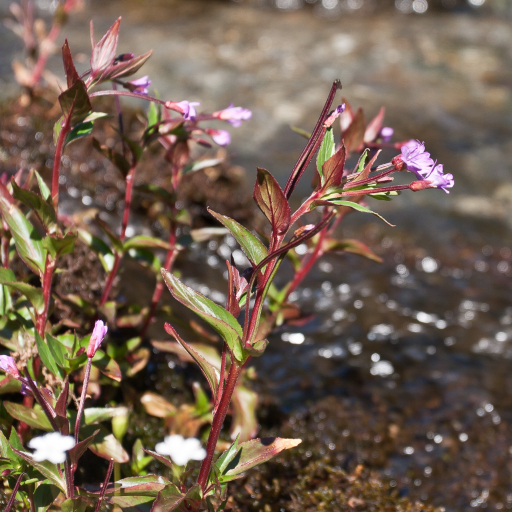
Plant Overview
The Chickweed Willowherb is a dainty mountain dweller that loves the sound of running water. Found primarily near cold springs and alpine streams, this hardy perennial looks like a cross between a common field weed and a delicate wildflower. It is a true specialist of the heights, thriving where the air is crisp and the ground is perpetually soaked.
🔍 How to Identify
- 🌸 The Blooms: Features small, trumpet-shaped flowers with four deeply notched petals. They usually display a vibrant rosy-purple or deep pink hue with a pale center.
- 🍃 Chickweed Leaves: True to its name (alsinifolium means "leaves like chickweed"), the foliage is ovate, slightly fleshy, and usually has small, blunt teeth along the edges.
- 🌱 Creeping Stems: The plant has a "decumbent" habit, meaning the stems often crawl along the wet mud or moss before curving upward to show off their flowers.
🏡 In Your Garden
- 💧 Wet Feet Only: This is not a plant for a standard flower bed. It requires "wet feet" at all times and thrives best on the edges of a garden pond, a waterfall feature, or a dedicated bog garden where the soil never dries out.
- ⛰️ Cooler Climates: Because it is an alpine native, it struggles in intense summer heat. It prefers rocky, acidic soil and a spot that mimics a mountain seep—cool, shaded, and consistently moist.
⚠️ Safety & Toxicity
- ✅ General Safety: There are no known reports of toxicity for Epilobium alsinifolium. It is generally considered safe around children and curious pets.
- 🌿 Look-alike Caution: While this specific willowherb is safe, always ensure you haven't confused it with other marsh plants if you are foraging, as some water-loving species can cause gastric upset if ingested.
✨ Fun Fact
- ❄️ Ice Age Relic: This plant is considered an "arctic-alpine" species. This means it is a botanical survivor from the last Ice Age, having retreated to high mountain peaks and the far north as the rest of the world warmed up.

Detailed Care Instructions
To grow Epilobium Alsinifolium plant, also known as Northern Willowherb, follow these steps:
- Planting: Select a suitable location for your plant. Epilobium Alsinifolium prefers full sun to partial shade and moist, well-draining soil. It thrives in wetland areas, so consider creating a damp or boggy spot for it if your garden doesn't have naturally moist soil.
- Seeds: Obtain Epilobium Alsinifolium seeds from a reputable supplier. It's best to plant them in the fall or early spring to take advantage of the natural cold stratification process. Alternatively, you can mimic this process by placing the seeds in a damp paper towel inside a plastic bag and refrigerating them for 4-6 weeks before planting.
- Preparing the soil: Clear the area of weeds and rocks. Loosen the soil using a garden fork or tiller to create a fine, crumbly texture. If the soil is compacted or heavy, mix in some organic matter like compost or peat moss to improve drainage and fertility.
- Planting the seeds: Scatter the seeds evenly over the prepared soil surface. Gently press them into the soil, making sure they are firmly in contact with the soil. Avoid burying them too deeply, as Epilobium Alsinifolium seeds require light to germinate.
- Watering: Keep the soil consistently moist but not waterlogged throughout the germination period. Avoid overhead watering, as this may dislodge the seeds. Instead, use a gentle sprinkler, soaker hose, or water from below via a saucer or tray.
- Germination and growth: Epilobium Alsinifolium seeds generally germinate within a few weeks to a couple of months. Once germinated, thin out the weaker seedlings to ensure sufficient space and resources for the stronger ones. Allow the plants to grow and establish themselves over time.
- Maintenance: Maintain consistently moist soil throughout the growing season by mulching the area around the plants. This helps retain moisture and suppress weed growth. Epilobium Alsinifolium plants generally don't require much fertilization but can benefit from a light application of balanced organic fertilizer in early spring.
- Pruning: Trim back any dead or overly dense growth in late winter or early spring. This will allow the plant to focus its energy on new growth and maintain a healthy appearance.
By following these steps, you can successfully grow Epilobium Alsinifolium and enjoy its beautiful flowers and foliage in your garden.

Place in a window with dappled sun or a spot in the middle of a room. Or directly in a window facing west or east.

Epilobium Alsinifolium is a plant that requires regular watering to ensure its healthy growth. It is important to make sure that the soil is moist, but not waterlogged, as the plant can suffer from root rot if the roots are constantly sitting in water.
To water this plant, it is recommended to check the moisture in the soil before watering. This can be done by sticking your finger into the top inch of soil – if it feels dry, then it is time to water.
When watering, it is best to pour water slowly and directly onto the soil (avoiding the leaves) until the soil is thoroughly saturated. Avoid watering the plant during the hottest part of the day as this can cause the water to evaporate quickly and potentially damage the plant.
Additionally, it is recommended to mulch around the base of the plant to help retain moisture in the soil and reduce the need for frequent watering. Finally, if the plant is grown in a container, make sure that it has drainage holes to allow excess water to escape and prevent waterlogging.
To fertilize this plant, use a balanced fertilizer with equal parts nitrogen, phosphorus, and potassium. Apply the fertilizer in the spring and again in the summer, following the manufacturer's instructions for the specific fertilizer being used. Water the plant before and after fertilizing to prevent root burn. Avoid over-fertilizing as it can damage the plant.
The ideal soil for Epilobium Alsinifolium is neutral to slightly acidic, with a pH level between 6.5 and 7.0. The soil should be well-draining and moist, but not waterlogged. It should be rich in organic matter and nutrients, including nitrogen, phosphorus, and potassium. Epilobium Alsinifolium prefers soils that are not too heavy or too light, with a texture that allows for good root penetration and aeration. Sandy loam or loamy soils are ideal. It is also important to ensure that the soil is not contaminated with pollutants or heavy metals, as Epilobium Alsinifolium is sensitive to environmental toxins.
Epilobium alsinifolium is a type of plant that can be propagated through various methods such as stem cuttings, division, or seed propagation.
Stem cuttings can be taken from healthy plants during the growing season. The stem should be around 4-6 inches long and have at least two sets of leaves. Remove any leaves from the bottom half of the stem and dip the cut end in rooting hormone. Plant the stem into a pot filled with well-draining soil and keep the soil moist until roots develop.
Division can be done during the dormant season in late fall or early spring. Carefully dig up the plant and use a sharp tool to divide the root ball into two or more sections. Replant the sections into separate pots or directly in the ground.
Seed propagation can be done during the fall season. Collect seed pods from the plant and let them dry for a few days. Once the pods are dry, gently crush them to release the seeds. Sow the seeds in a seed tray filled with well-draining soil and place in a bright location. Keep the soil moist until the seeds germinate.
Regardless of the propagation method used, it is important to provide the plant with the appropriate growing conditions such as plenty of water, sunlight, and well-draining soil.








