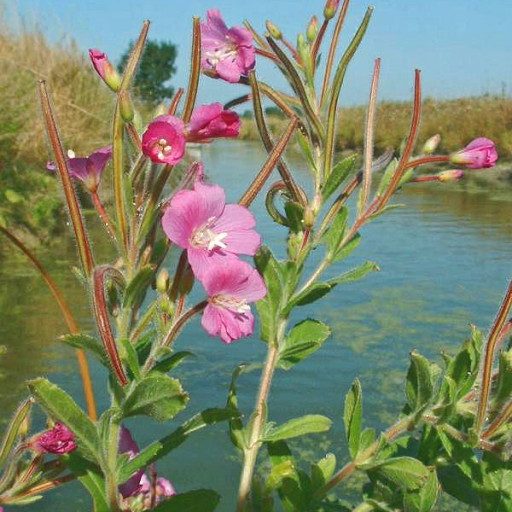
Plant Overview
Often called "Codlins and Cream" because its crushed leaves emit a scent reminiscent of stewed apples and cream, the Great Willowherb is a tall, striking wildflower. Native to Eurasia but now found across much of North America, it thrives in damp, sunny spots. While it adds a splash of vibrant magenta to riverbanks, it is a vigorous grower that can quickly take over a garden if it finds a patch of wet soil.
🔍 How to Identify
- 🌸 The Bloom: Large, rose-pink to magenta flowers with four notched petals. Look closely at the center to find a distinctive white, four-lobed stigma that resembles a tiny, fuzzy cross.
- 🌿 The Foliage: Long, lance-shaped leaves with serrated edges. A key identifying feature is that the leaves are "clasping"—they wrap slightly around the stem rather than growing on a stalk.
- ☁️ The Texture: True to its name (Hirsutum means "hairy"), the entire plant—especially the stem and leaves—is covered in soft, fine white hairs that give it a velvety feel.
🏡 In Your Garden
- 💧 The Water Seeker: This plant is an indicator of moisture. It is the perfect choice for "problem" wet areas, pond edges, or bog gardens where other plants might rot. It actually helps stabilize soil in erosion-prone damp banks.
- 🏃 A Spirited Spreader: It is a prolific self-seeder and also spreads via underground runners (rhizomes). In a small garden, you may want to keep it in a large sunken pot or deadhead the flowers before they turn into "fluff" to prevent it from colonizing your entire lawn.
⚠️ Safety & Toxicity
- ✅ Status: Generally considered non-toxic to humans and common household pets.
- 🐾 Pet Watch: While not poisonous, the dense hairs on the stems can sometimes cause mild mechanical irritation if a curious dog or cat tries to chew on it. As with any wild plant, it’s best to discourage grazing to avoid digestive upset.
✨ Fun Fact
The Great Willowherb is the favorite nursery for the Elephant Hawk-moth. Its caterpillars are massive, trunk-like creatures with "eye-spots" that make them look like tiny snakes. If you plant this in your garden, you are almost guaranteed a visit from these spectacular, pink-and-olive-green moths!

Detailed Care Instructions
To grow Epilobium hirsutum, also known as Great Willowherb or Hairy Willowherb, follow these steps:
- Choose a suitable location: Epilobium hirsutum prefers moist, fertile soils and thrives in full sun to partial shade. Ensure the soil has good drainage.
- Seed selection: Obtain Epilobium hirsutum seeds from a reputable seed supplier or collect them from mature plants. The seeds are small and numerous, so collect a sufficient amount.
- Preparing the soil: Clear any existing weeds or vegetation from the planting area. Loosen the soil and remove any large stones or debris. Epilobium hirsutum prefers slightly acidic to neutral soil, so you may need to amend it accordingly.
- Sowing the seeds: Scatter the seeds evenly over the prepared soil. Gently press them into the soil, ensuring good seed-to-soil contact. You may cover the seeds with a thin layer of compost or potting soil, but it's not necessary.
- Watering: Keep the soil consistently moist throughout the germination period, which typically takes between one and four weeks. Avoid overwatering, as this can lead to fungal diseases.
- Transplanting: Once the seedlings have grown to a suitable size, typically around 3-4 inches (8-10 cm), you can transplant them to their final growing location. Space them at least 12-18 inches (30-45 cm) apart to allow for their spreading nature.
- Maintenance: Epilobium hirsutum requires regular watering to maintain moist soil. Mulching around the plants helps conserve moisture and suppress weeds. You may trim back the plants in late fall or early spring to encourage growth.
- Winter care: Epilobium hirsutum is a hardy perennial and should survive the winter in most regions. However, if you experience extremely cold winters, you can protect the plants by applying a layer of mulch or covering them with a frost cloth.
- Division: Every few years, you may need to divide overcrowded clumps of Epilobium hirsutum to maintain their vigor. Dig up the clump, separate it into smaller sections, and replant them in suitable locations.
- Pest and disease control: Epilobium hirsutum is generally resistant to most pests and diseases. However, occasional aphid infestations or fungal issues like powdery mildew may occur. Monitor your plants regularly and take appropriate action if necessary, such as using organic pest control or treating with fungicides.
By following these steps, you can successfully grow Epilobium hirsutum and enjoy its beautiful blooms.

Place in a bright room that is sun drenched almost all day. Or directly in a south-facing window.

The Epilobium Hirsutum plant should be watered regularly, ensuring that the soil is moist but not waterlogged. It is important to avoid overwatering as this may lead to root rot. The plant prefers well-draining soil and requires watering more frequently during the hot summer months. Watering should be reduced during the winter to prevent waterlogging. It is advisable to water the plant at the base or root zone rather than over the foliage to prevent moisture-related diseases. Checking the soil moisture level regularly is important to determine the appropriate watering schedule.
To fertilize this plant, apply a balanced fertilizer in the early spring before new growth appears. Use a slow-release fertilizer with equal amounts of nitrogen, phosphorus, and potassium. Apply the fertilizer evenly around the plant, avoiding contact with the leaves or stem. Water the plant deeply after fertilizing. Repeat the process every 4-6 weeks during the growing season. Avoid excessive fertilization, as this can lead to overgrowth and reduced plant health.
The soil that is ideal for the growth of this plant is one that is rich in nutrients, well-draining, and slightly acidic. It should have a pH level between 6.0 and 7.0. The soil should be light with small particle size and have good aeration. A mix of loam and peat moss is ideal for this plant. It also requires ample moisture, so the soil should be kept consistently moist but not waterlogged to prevent root rot. The addition of organic matter such as compost or well-rotted manure can also help improve soil fertility and structure. It is important to avoid using heavy clay soils as they can impede root growth and drain poorly, leading to root rot.
To propagate this plant, you will need to follow these steps:
- Identify a healthy parent plant that you want to propagate.
- Wait until the plant has finished flowering and the seeds have developed.
- Collect the mature seeds from the plant.
- Store the seeds in a cool, dry place until you are ready to sow them.
- Choose a suitable location for sowing the seeds. The location should have well-draining, fertile soil and receive adequate sunlight.
- Sow the seeds evenly across the soil surface, making sure they are not buried too deeply.
- Water the seeds gently and consistently to keep the soil moist.
- Wait for the seedlings to develop and grow. Once they have developed their first set of true leaves, you can transplant them into individual pots or directly into the ground.
- Continue to care for the new plants by providing adequate sunlight, water, and nutrients to promote healthy growth.
- Once the plants have matured, they may begin to produce their own seeds, allowing you to propagate more plants in the future.








