Plant Overview
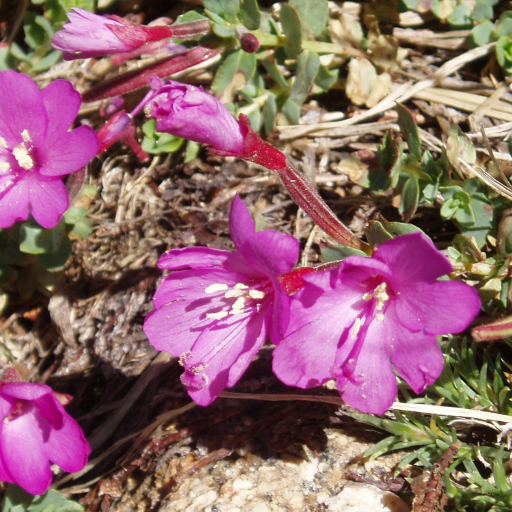
Often called the Rockfringe or Heart-leaved Willowherb, this resilient alpine beauty is a true survivor of the high peaks. Native to the rocky slopes of the Western United States, it creates stunning "fringes" of vibrant pink against the grey granite of the Sierra Nevada and Cascade ranges. It is beloved by mountain hikers for the way it transforms harsh, rocky crevices into miniature, colorful gardens.
🔍 How to Identify
- 🌸 The Petals: Each flower features four deeply notched petals that look like perfect little hearts, giving the plant its botanical name, obcordatum (meaning "reverse heart").
- 🌿 Growth Habit: It is a low-growing, mat-forming perennial. It rarely rises more than a few inches off the ground, instead spreading horizontally to hug the warm rocks.
- 🍃 The Foliage: The leaves are small, oval-to-heart-shaped, and often have a waxy, blue-green (glaucous) coating that helps the plant retain moisture in thin mountain air.
- 🎨 Color Palette: The flowers are a striking shade of rose-pink to deep magenta, which vividly contrasts with the yellow centers of their prominent stamens.
🏡 In Your Garden
- ⛰️ The Alpine Specialist: Because it originates in scree and rocky outcrops, this plant demands exceptional drainage. In a home garden, it is best suited for rock gardens, troughs, or the gaps in dry-stack stone walls.
- 💧 Hates "Wet Feet": While it enjoys consistent moisture during its short growing season, it will quickly rot if left in heavy, boggy soil. Think of its mountain home—water runs over the rocks and away, never sitting still.
- ❄️ Cold Hardiness: This plant is incredibly cold-tolerant but may struggle in humid, hot lowland summers. It craves the "chill" of high altitudes or northern latitudes to thrive.
⚠️ Safety & Toxicity
- ✅ Safe Status: Epilobium obcordatum is generally considered non-toxic to humans and common household pets.
- 🐾 Pet Friendly: There are no records of this species causing harm to cats or dogs. However, because it is an alpine specialist, it is rarely encountered by domestic pets unless planted specifically in a rock garden.
✨ Fun Fact
The name "Rockfringe" is perfectly literal—in the wild, this plant often grows in a thin, colorful line along the narrow cracks and "fringes" of massive boulders, where it finds just enough soil and moisture to survive.

Detailed Care Instructions

Some plants require more regular watering than others, which should be done every few days. It's critical to maintain the soil moist all of the time. The water requirements of the same plant placed in pots with varying sizes will differ. Because the water in the smaller pot evaporates faster than the water in the larger pot, it will require more watering. Regardless of pot size, the surface should constantly be maintained moist.








