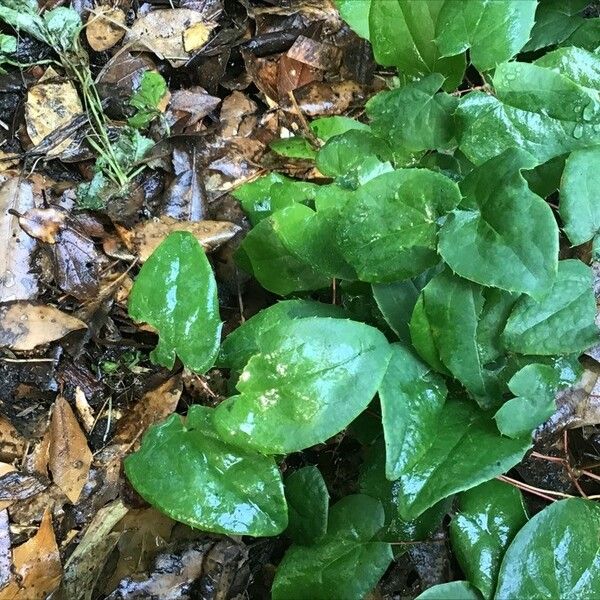
Plant Overview
Commonly known as the Two-leaf Barrenwort or simply Fairy Wings, this delicate Japanese woodland native is a master of the "dry shade" niche. It earns its name from its unique habit of producing leaflets in pairs, creating a minimalist, airy silhouette. In the gardening world, it is often treated like a living antique—elegant, slow-growing, and surprisingly tough once it finds its home.
🔍 How to Identify
- 🍃 The Leaflets: Features small, heart-shaped leaves that appear in distinct pairs. They emerge with a soft bronze or reddish tint in spring before turning a crisp, matte green.
- 🔔 The Blooms: Tiny, pure white, spurless flowers that resemble nodding bells or drops of porcelain. They hang from thin, wiry stems, appearing to "hover" above the foliage.
- 🌱 Growth Habit: A low-growing, clumping perennial that forms a neat, mounded carpet. Unlike some of its more aggressive cousins, it remains polite and stays exactly where you plant it.
🏡 In Your Garden
- 🌳 Dry Shade Specialist: This is one of the few plants that can survive in the "difficult zone" directly under large trees. It competes well with tree roots and can handle periods of drought once its root system is established.
- 🐌 Low Maintenance: It is virtually pest-free and rarely bothered by slugs or snails, which often plague other shade-loving plants like Hostas. It prefers slightly acidic, well-drained soil rich in leaf mold.
⚠️ Safety & Toxicity
- ✅ Safe Status: Epimedium diphyllum is generally considered non-toxic to humans, dogs, and cats.
- 🦌 Wildlife Resistance: Because the leaves contain certain bitter compounds, it is highly resistant to deer and rabbits. They may sniff it, but they almost never take a second bite.
✨ Fun Fact
The genus Epimedium is famously associated with the legend of "Horny Goat Weed." Folklore tells of a Chinese goat herder who noticed his flock became unusually "frisky" after grazing on these plants. While E. diphyllum is grown mostly for its beauty, its cousins have been used in traditional medicine for centuries!

Detailed Care Instructions
To grow Epimedium diphyllum, also known as Two-leaf Barrenwort, follow these steps:
- Choose a suitable location: Epimedium diphyllum prefers partial to full shade. It thrives in well-draining soil with high organic matter content.
- Prepare the soil: Improve the soil by incorporating compost or organic matter. This plant prefers slightly acidic to neutral soil with a pH range of 6.0 to 7.5.
- Propagation: The most common method to propagate Epimedium diphyllum is through division. In early spring or fall, dig up an established clump and divide it into smaller sections, ensuring that each portion has sufficient roots. Replant immediately.
- Planting: Dig a hole slightly wider and deeper than the root ball. Place the plant in the hole, ensuring that the crown (where the roots meet the stem) is level with or slightly above the soil surface. Backfill the hole with soil and firm it gently around the plant.
- Watering: Keep the plant well-watered during its establishment period. After that, water regularly but avoid overwatering. Epimedium diphyllum prefers moist, but not waterlogged, soil.
- Mulching: Apply a layer of organic mulch, such as shredded bark or compost, around the plant. This helps retain moisture, suppresses weed growth, and keeps the soil cool.
- Fertilizing: Epimedium diphyllum does not typically require heavy fertilization. However, a light application of compost or a balanced slow-release fertilizer in early spring can help promote growth.
- Maintenance: Regularly remove any dead or dried foliage to maintain a tidy appearance. In late winter or early spring, before new growth emerges, cut back the old foliage to make way for new shoots.
- Division and transplanting: After a few years, Epimedium diphyllum may become crowded or lose vigor. Repeating the division process every few years helps rejuvenate the plant and expand your stock.
- Pest and disease control: Epimedium diphyllum is generally resistant to pests and diseases. However, watch out for slugs, snails, and aphids. Regularly inspect the plants and take appropriate measures if necessary.
With proper care and maintenance, Epimedium diphyllum can provide beautiful foliage and delicate flowers in your garden.

Epimedium Diphyllum is a plant that requires regular watering in order to survive. When watering this plant, it is important to avoid over-watering, as this can lead to root rot and other problems. Instead, you should water the plant when the soil feels dry to the touch, making sure to pour water directly into the soil around the base of the plant.
To water Epimedium Diphyllum effectively, it is best to use a watering can or hose with a nozzle attachment that allows for precise control of the water flow. Aim the water at the soil, being careful not to splash the leaves or flowers of the plant.
During hot, dry weather, you may need to water your Epimedium Diphyllum more frequently to keep the soil moist. However, it is important not to let the plant sit in standing water, as this can also cause problems.
Overall, Epimedium Diphyllum is a fairly easy plant to care for, and it should thrive as long as you provide it with regular, moderate watering. With proper care, this plant can provide years of beauty and enjoyment in your garden or landscape.
To fertilize this plant, apply a slow-release, balanced fertilizer in early spring before new growth appears. Alternatively, you can apply a liquid fertilizer diluted to half-strength every two to three weeks during the active growing season. Be sure to water the plant thoroughly after fertilizing to ensure proper absorption. Avoid fertilizing in late summer or fall, as this can encourage soft growth that is more susceptible to winter damage.
Epimedium Diphyllum prefers a well-draining soil that is rich in organic matter and slightly acidic. It grows best in soils that are moist, but not waterlogged. A good soil mix for this plant would include peat moss, compost, and sand to improve drainage. It is also important to make sure the soil is loose and aerated, which can be achieved by adding perlite or vermiculite to the mix. Additionally, the soil should be amended with a slow-release fertilizer to promote healthy growth.
Epimedium Diphyllum can be propagated through division of its rhizomes in the spring when the plant is actively growing. To do this, carefully dig up the plant and separate the rhizomes into smaller pieces with clean, sharp shears. Each piece should have several healthy stems and roots attached. Ensure that the soil is well-draining and the planting depth is appropriate for the plant. Plant the divided pieces in a new location and keep them well-watered until they establish themselves. Alternatively, Epimedium Diphyllum can be propagated through seed, which can be harvested in the summer once the pods have turned brown and dried out. Sow the seeds in a well-draining potting mix and keep them moist until they germinate.








