Plant Overview
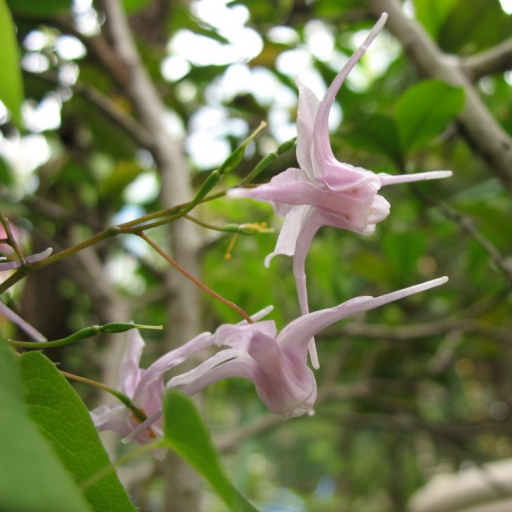
Known affectionately as "Bishop’s Hat" or "Large-flowered Barrenwort," this elegant woodland perennial hails from the cool, shaded forests of East Asia. Its intricate, spider-like blooms appear in early spring, often hovering above copper-tinted foliage like a swarm of tiny, colorful kites. While it looks delicate, it is actually one of the toughest groundcovers available for those "impossible" dry-shade spots under mature trees.
🔍 How to Identify
- 🌸 Intricate Blooms: The flowers feature four long, pointed spurs that give them a shape reminiscent of a traditional bishop's miter or a tiny jester’s hat.
- 🍃 Heart-Shaped Leaves: The foliage is elegantly heart-shaped with slightly spiny edges. In the spring, new leaves often emerge with a beautiful bronze or rosy tint before maturing to a deep green.
- 🌱 Wire-like Stems: Each leaf is held up by a thin, remarkably tough stem, creating a layered, airy canopy that stays relatively low to the ground.
🏡 In Your Garden
- ☁️ The Shade Specialist: This plant is a hero for woodland gardens. Unlike many perennials that demand constant moisture, the Epimedium grandiflorum is famously "dry shade" tolerant once its root system is established.
- 🐢 Slow but Steady: Do not expect an instant carpet. This plant grows slowly via underground rhizomes. It takes a few seasons to fill in, but once it does, it forms a long-lived, weed-smothering mat that requires almost zero maintenance.
⚠️ Safety & Toxicity
- 🛡️ Generally Safe: Epimedium is considered non-toxic to humans and most common household pets upon contact.
- 🐈 Pet Considerations: While not listed as a primary poisonous plant for cats or dogs, it contains various active alkaloids (used in traditional medicine). If a pet ingests a large amount, it may cause mild digestive upset, so it’s best to discourage chewing.
✨ Fun Fact
The genus Epimedium is the source of the famous herbal supplement "Horny Goat Weed." Legend has it that the name originated when a Chinese goat herder noticed his flock became unusually "energetic" and amorous after grazing on the leaves of these plants!

Detailed Care Instructions
| Lighting | Part Sun |
| Hardiness Zones | Max 9B |
To grow Epimedium Grandiflorum, also known as barrenwort or bishop's hat, follow these steps:
- Choose a suitable location: Select a spot in your garden that receives part shade to full shade. Epimedium Grandiflorum prefers dappled sunlight or morning sun and afternoon shade. It can also tolerate dry conditions once established.
- Prepare the soil: Epimedium Grandiflorum prefers well-draining soil that is rich in organic matter. Add some compost or well-rotted manure to improve the soil's fertility and drainage.
- Planting: Dig a hole that is slightly larger than the root ball of the plant. Place the plant in the hole, making sure it is at the same depth as it was in the pot. Gently backfill the hole with soil, firming it around the plant.
- Watering: Water the plant thoroughly after planting to help settle the soil. Afterward, water regularly, especially during dry periods. Keep the soil slightly moist but not waterlogged, as overwatering can lead to root rot.
- Mulching: Apply a layer of organic mulch around the base of the plant to help conserve moisture, suppress weed growth, and insulate the roots. Use a thin layer of mulch, as Epimedium Grandiflorum prefers a slightly drier environment.
- Pruning: Epimedium Grandiflorum is a low-maintenance plant that generally requires minimal pruning. However, you can remove any dead or damaged leaves in early spring to promote new growth and maintain a tidy appearance.
- Fertilizing: Epimedium Grandiflorum typically doesn't require much fertilization. However, you can apply a balanced, slow-release fertilizer in early spring when new growth begins.
- Division: Over time, Epimedium Grandiflorum can form dense clumps. To control its spread or propagate new plants, you can divide the clumps in early spring. Dig up the clump and carefully separate it into smaller sections, making sure each section has some roots and foliage. Replant the divided sections as desired.
- Pests and diseases: Epimedium Grandiflorum is generally resistant to pests and diseases. However, it can occasionally be affected by slugs, snails, or aphids. Monitor the plants regularly and take appropriate measures if any pests are noticed.
With proper care and adequate growing conditions, your Epimedium Grandiflorum plants should flourish and provide you with lovely foliage and delicate flowers in spring.

Place in a dark room with little light, like a dark bedroom or a spot far away from a window or directly in a north-facing window.

Epimedium Grandiflorum is a perennial plant that requires adequate water to thrive. To water this plant, you should first check the soil moisture before watering. This can be done by sticking your finger into the soil to a depth of about an inch. If the soil feels dry at this depth, it's time to water.
When watering this plant, you should aim to keep the soil consistently moist, but not waterlogged. Too much water can cause root rot, so it's important not to overwater. You can achieve this by watering deeply once a week, or more frequently during hot and dry weather.
Another important factor when watering Epimedium Grandiflorum is to avoid wetting the foliage. This can lead to fungal diseases and can damage the delicate leaves. Instead, water around the base of the plant, ensuring that the water reaches the roots.
Finally, it's important to water this plant in the morning, rather than the evening. This allows any excess water to evaporate during the day, reducing the risk of fungal diseases.
By following these guidelines, you can ensure that your Epimedium Grandiflorum plant receives the right amount of water to keep it healthy and thriving.
To ensure healthy growth of this plant, it is important to fertilize it regularly throughout the growing season. Start by applying a balanced fertilizer with equal ratios of nitrogen, phosphorus, and potassium. Use a granular or liquid fertilizer and apply it to the base of the plant, taking care not to touch the foliage.
Apply the fertilizer in early spring before new growth appears, and then continue to fertilize every 6-8 weeks until mid-summer. Avoid over-fertilizing, which can lead to excessive foliage growth and reduced flowering.
It is also a good idea to use organic fertilizers, such as compost or aged manure, as these provide slow-release nutrients and improve soil structure over time. Additionally, make sure to water the plant deeply after fertilizing to help the nutrients penetrate the soil and reach the plant's roots.
The ideal soil for Epimedium Grandiflorum plant should be well-draining and rich in nutrients. It should have a pH level between 6.0 and 7.5, which is slightly acidic to neutral. The soil should be loamy or sandy loam with good drainage, so that it can retain moisture without becoming waterlogged. It is important to avoid heavy clay soils, as they tend to hold water, which can lead to root rot. Adding organic matter, such as compost or well-rotted manure, to the soil can improve its nutrient content and help with drainage. Additionally, it is important to ensure that the soil is free from weeds and pests before planting the Epimedium Grandiflorum plant.
Propagation of this plant can be achieved through division of the rhizomes. The rhizomes should be dug up during the plant's dormancy period, which is typically in the fall or winter. The rhizomes can be divided into sections, ensuring that each section has healthy roots and at least one growth bud.
The divided rhizomes can then be planted in a planting hole, deep enough to cover the roots completely. It is important to ensure the soil is well-draining and moist. The plant should be watered regularly until it establishes itself.
In addition, this plant can also be propagated through seed. The seed can be collected from the plant after it has bloomed and developed seed pods. The seed pods should be allowed to dry out completely before collecting the seeds. The seeds can then be planted in well-draining soil and kept moist until they germinate. It is important to note that seed propagation may result in variations in the characteristics and traits of the plant.








