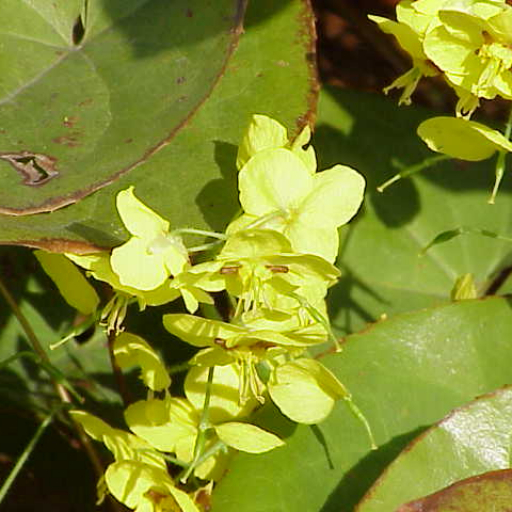
Plant Overview
Often called the "Bishop’s Hat" or "Fairy Wings," Epimedium pinnatum is a resilient, elegant survivor of the woodland floor. Hailing from the rugged mountains of Northern Iran and the Caucasus, this perennial groundcover is a secret weapon for gardeners. It is the "underdog" hero of the landscape, specializing in beautifying those "hopeless" shady corners where other plants struggle to survive.
🔍 How to Identify
- 🍃 Heart-Shaped Foliage: The leaves are leathery and distinctly heart-shaped. In early spring, the new growth often emerges with a beautiful bronze or reddish tint before turning a deep, waxy green.
- 🌼 Spurred Flowers: It produces airy clusters of bright yellow flowers. Each bloom features tiny, nectar-filled spurs and looks like a miniature floating star or a tiny, elaborate hat.
- 🌱 Dense Mat Habit: It grows via underground rhizomes, forming a thick, weed-suppressing carpet that stays low to the ground, usually topping out at about 12 inches.
🏡 In Your Garden
- 🌳 The Dry Shade Master: This plant is famous for its ability to thrive in "dry shade"—the difficult area directly beneath large, thirsty trees where the soil is often parched and sunlight is scarce.
- ✂️ The Spring Haircut: Because it is evergreen or semi-evergreen, the old leaves can look a bit tattered by the end of winter. Trimming the old foliage to the ground in late February allows the delicate new flower spikes to take center stage without being hidden.
- 🛡️ Deer & Rabbit Resistant: Thanks to its leathery texture and specific chemical compounds, it is rarely on the menu for backyard critters, making it a reliable choice for rural landscapes.
⚠️ Safety & Toxicity
- ✅ Generally Non-Toxic: Epimedium pinnatum is not known to be poisonous to humans, cats, or dogs. It is considered a safe addition to family-friendly gardens.
- 🌿 Mild Irritation: While not toxic, the wiry stems and fine hairs on some varieties can occasionally cause very mild skin irritation for those with high sensitivity. Wearing gloves during your annual spring cleanup is recommended.
✨ Fun Fact
While Epimedium pinnatum is primarily ornamental, its close cousins in the same genus are famous in traditional medicine as "Horny Goat Weed." Legend has it that a Chinese goat herder noticed his flock became remarkably "energetic" after grazing on these specific woodland leaves!

Detailed Care Instructions
To grow Epimedium pinnatum, also known as barrenwort or fairy wings, follow these steps:
- Planting: Choose a site with well-draining soil and partial shade. Epimedium pinnatum prefers dappled sunlight or morning sun and afternoon shade. Dig a hole slightly larger than the plant's root ball and place it in the hole. Fill the hole with soil, making sure not to bury the crown of the plant.
- Watering: Keep the soil consistently moist but not waterlogged. Water thoroughly when the top inch of soil feels dry. Avoid overwatering as it can lead to root rot.
- Mulching: Apply a layer of organic mulch around the plant to help retain moisture and suppress weed growth. Avoid covering the base of the plant as it can cause crown rot.
- Fertilization: Epimedium pinnatum doesn't require heavy fertilization. Applying a slow-release organic fertilizer in early spring and a light application in early summer should be sufficient. Follow the package instructions for proper dosage.
- Pruning: In late winter or early spring, before new growth emerges, trim back any dead or damaged leaves. This will allow the new foliage to grow unhindered.
- Division: Every few years, typically in early spring or fall, you can divide the plant to propagate more Epimedium pinnatum. Dig up the clump and carefully separate it into smaller sections, making sure each section has roots attached. Replant the divided sections in well-prepared soil.
- Pests and diseases: Epimedium pinnatum is generally resistant to pests and diseases. However, you should still keep an eye out for common garden pests like aphids, slugs, and snails. Treat any infestations promptly using environmentally-friendly methods.
- Winter care: In colder regions, Epimedium pinnatum may die back in winter. Apply a layer of mulch around the plant to protect the roots during freezing temperatures.
By following these steps, you can successfully grow and care for Epimedium pinnatum plants.

Place in a window with dappled sun or a spot in the middle of a room. Or directly in a window facing west or east.

Epimedium Pinnatum is a plant that requires moderate watering. The soil should be kept moist, but not waterlogged. It is important to avoid letting the soil dry out completely between watering sessions. When watering, it is recommended to use room temperature water that has been allowed to sit for at least 24 hours to allow any chlorine to dissipate. Watering should be done at the base of the plant, avoiding getting water on the leaves or flowers. It is also important to avoid over-watering, as this can lead to root rot. It is best to monitor the soil moisture level and adjust watering accordingly.
To fertilize this plant, you should use a balanced fertilizer in early spring, just before new growth appears. Make sure to apply the fertilizer according to the instructions on the label, as over-fertilization can damage the plant. Additionally, you can apply a layer of compost or well-rotted manure around the base of the plant in the fall to help provide nutrients for the following growing season. It's also important to ensure the plant is well-watered before and after fertilizing to prevent any damage.
Epimedium Pinnatum plant prefers to grow in a well-draining soil that is rich in organic matter. The ideal soil pH for this plant is slightly acidic to neutral. The soil should be able to retain moisture without becoming waterlogged, as the plant does not tolerate waterlogged conditions. It is recommended to add peat moss or compost to the soil before planting to improve drainage and provide nutrients to the plant. It is also important to avoid using heavy clay soils, as they can prevent the plant from growing properly and may cause root rot.
One way to propagate this plant is through division. In the early spring or fall, carefully dig up the plant and separate the clumps into smaller sections, making sure each section has some roots and foliage. Replant the sections in a suitable location with well-draining soil and good light.
Another method is through seed propagation. Collect ripe seed pods in the fall, remove the seeds and sow them in a mixture of sand and soil. Keep the soil moist and at a cool temperature of around 40-50°F (4-10°C) for their root system to develop. Once they have germinated, transplant the seedlings to a suitable location in the garden.
A third method is through stem cuttings taken in early summer. Cut a stem with at least two leaf nodes and place it in a rooting hormone to stimulate root growth. Plant the cutting in a container with moist soil and cover it loosely with a plastic bag to create a humid environment. After a few weeks, the cutting should have developed roots and can be transplanted to a suitable location in the garden.








