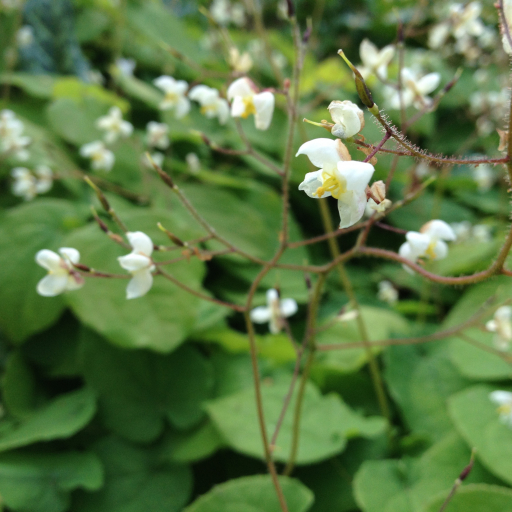
Plant Overview
Known as the Hairy Barrenwort, Epimedium pubigerum is a quiet hero of the woodland garden. While its cousins might steal the show with bright pinks, this species offers a refined, evergreen presence that holds its ground even in dry shade. In garden circles, it is prized for its "airy" appearance, with tiny blossoms that look like a cloud of hovering fairies above the foliage.
🔍 How to Identify
- 🍃 Leathery Foliage: The leaves are heart-shaped and divided into three leaflets. They emerge with a bronze tint in spring, maturing into a glossy, deep green that stays on the plant through most winters.
- 🌸 Starry Blooms: It produces small, delicate flowers that are usually creamy white or pale yellow with soft pink backs. They lack the long "spurs" found on other Epimediums, giving them a more open, cup-like shape.
- 🪶 The "Hairy" Stem: If you look closely at the stems and the undersides of the leaves, you will see fine, soft hairs (pubescence) which give the plant its scientific name.
🏡 In Your Garden
- 🌳 Dry Shade Champion: This is one of the best plants for that "impossible" spot under large, thirsty trees. While it prefers moist soil, it is remarkably drought-tolerant once its root system is established.
- ⏳ Patience is Key: It is a slow-growing, clump-forming perennial. It won't take over your garden overnight, but it is incredibly long-lived and becomes more beautiful and "tufted" with each passing year.
- ✂️ Winter Cleanup: Since it is semi-evergreen, the leaves can look a bit tattered by the end of winter. Cutting the old foliage back to the ground in February allows the new flower spikes to emerge without being hidden by old growth.
⚠️ Safety & Toxicity
- ✅ Non-Toxic: Epimedium pubigerum is generally considered safe and non-toxic for both humans and household pets like cats and dogs.
- 👐 Skin Safety: It does not have thorns or irritating sap, making it a "friendly" plant for gardeners who prefer to work without gloves.
✨ Fun Fact
The name Epimedium is ancient, mentioned by the Roman naturalist Pliny the Elder, though he was likely referring to a completely different plant! The species name pubigerum comes from the Latin pubes (hair) and gerere (to bear), referring to its fuzzy stems.

Detailed Care Instructions
Epimedium Pubigerum, also known as barrenwort or Bishop's hat, is a perennial plant that is quite easy to grow in the right conditions. Here are some tips for successfully growing Epimedium Pubigerum:
- Sunlight: Epimedium Pubigerum prefers partial to full shade, so choose a location in your garden that receives dappled sunlight or shade for most of the day.
- Soil: This plant thrives in moist, well-draining soil that is rich in organic matter. Amend the soil with compost or well-rotted manure before planting to provide the plant with the nutrients it needs.
- Watering: Keep the soil consistently moist but not waterlogged. Water regularly, especially during hot, dry periods.
- Feeding: Fertilize Epimedium Pubigerum in the spring with a balanced fertilizer to promote healthy growth and flowering.
- Mulching: Mulch around the base of the plant to help retain moisture and suppress weeds.
- Pruning: Remove any dead or damaged foliage in the spring to encourage new growth. You can also cut back the plant to the ground after it has finished flowering to promote growth.
- Propagation: Epimedium Pubigerum can be propagated by division in the spring. Dig up the plant carefully, divide the clumps, and replant them in a suitable location.
By following these tips, you can successfully grow Epimedium Pubigerum in your garden and enjoy its beautiful foliage and delicate flowers.
Epimedium Pubigerum plant requires regular watering to thrive.
It is important to provide consistent moisture to the plant's roots, as they do not tolerate drought well.
Water the plant deeply, allowing the water to penetrate the soil and reach the roots.
Avoid overwatering, as this can lead to root rot and other issues.
Make sure the soil is well-draining to prevent waterlogged conditions.
Monitor the plant regularly and adjust your watering schedule as needed based on the plant's individual needs.
To fertilize the Epimedium Pubigerum plant, use a balanced fertilizer with equal parts nitrogen, phosphorus, and potassium (such as a 10-10-10 formula). Apply the fertilizer in early spring before new growth appears and again in mid-summer to encourage healthy plant growth. Be careful not to over-fertilize, as this can harm the plant. Water the plant well after applying fertilizer to help it absorb the nutrients.
Epimedium pubigerum plants prefer to grow in well-draining soil that is rich in organic matter. A good soil mixture for these plants would consist of a combination of loam, sand, and organic compost. The loam helps to provide necessary nutrients for the plant, while the sand helps to improve drainage and prevent waterlogging. Adding organic compost will help to improve soil structure and provide additional nutrients for the plant to thrive. It is important to ensure that the soil is slightly acidic to neutral in pH, as Epimedium pubigerum plants prefer slightly acidic conditions for optimal growth. Regularly amending the soil with organic matter and maintaining proper drainage will help to keep the plant healthy and thriving.
Epimedium Pubigerum plants can be propagated through division or by planting seeds.
To propagate through division, first carefully dig up the plant in early spring or fall, making sure to preserve as much of the root system as possible. Gently separate the root ball into smaller sections, each containing both roots and stems. Replant these sections in well-draining soil, making sure to water them thoroughly.
To propagate Epimedium Pubigerum plants from seeds, collect ripe seeds from the plant in late summer to early fall. Sow the seeds in a seed tray filled with a well-draining seed-starting mix. Cover the seeds lightly with soil and mist the tray to keep the soil moist. Place the seed tray in a warm, bright location, but out of direct sunlight. Germination may take several weeks to several months.
Once the new plants have established themselves, they can be transplanted into their permanent growing locations in the garden. Epimedium Pubigerum plants prefer a partially shaded to shaded location with moist, well-draining soil. With proper care, the newly propagated plants should grow and thrive in their new environment.








