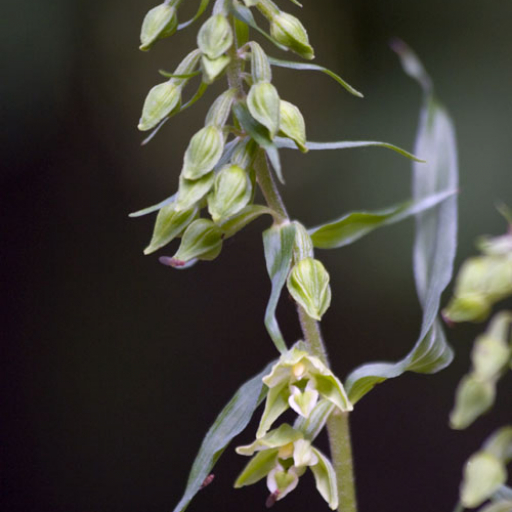
Plant Overview
The Green-flowered Helleborine is a quiet, unassuming member of the orchid family that prefers the dappled light of woodland floors over the spotlight. Often overlooked because its blossoms blend perfectly with the surrounding foliage, this plant is a master of subtlety. In Northern and Western Europe, it is considered a botanical treasure for those patient enough to spot its "nodding" lime-green bells.
🔍 How to Identify
- 🌸 The Bloom: Small, pendulous (drooping) flowers that are predominantly lime-green to yellowish-white. Unlike many orchids, they lack vibrant pink or purple pigments.
- 🍃 The Foliage: Broad, ovate leaves that are arranged spirally up the stem. They feature distinct, deep parallel veins that give the plant a textured look.
- 📏 The Stem: A slender, upright stalk that is often pale green and can appear slightly "frosty" or hairy toward the top near the flower spikes.
🏡 In Your Garden & Habitat
- 🌳 The Shade Seeker: This orchid is highly specialized for low-light environments, often found under the heavy canopy of beech or oak trees or tucked away in dune slacks. It relies on a complex symbiotic relationship with underground fungi to survive.
- 🧬 A Self-Sufficient Soul: While most orchids go to great lengths to attract bees or wasps, Epipactis phyllanthes is often "cleistogamous." This means it is capable of pollinating itself, sometimes without the flower ever fully opening to the world.
⚠️ Safety & Toxicity
- 🛡️ Safe Status: This plant is generally considered non-toxic to humans and common household pets. It does not possess thorns or stinging hairs.
- 🚫 Protection Warning: While it isn't "poisonous," it is often legally protected. You should never pick or attempt to transplant it. Because of its dependence on specific soil fungi, moving it to a garden is almost always a death sentence for the plant.
✨ Fun Fact
Because this orchid often self-pollinates before it even opens, some populations have evolved to be "auto-pollinating" experts. This allows them to thrive in deep, dark woods where there are very few insects available to do the work for them!

Detailed Care Instructions
To grow an Epipactis Phyllanthes plant, follow these steps:
- Choose a suitable location: Epipactis Phyllanthes prefers partially shaded areas with moist soil and good drainage. Avoid direct sunlight, as it can scorch the leaves.
- Prepare the soil: Loosen the soil and remove any weeds or debris. Epipactis Phyllanthes prefers fertile soil, so amend it with organic matter if necessary.
- Planting method: This plant can be grown from seeds or rhizomes. If starting from seeds, sow them directly on the soil surface in late winter or early spring. If using rhizomes, plant them about 1-2 inches deep in the soil.
- Watering: Keep the soil consistently moist but not waterlogged. Provide regular watering, especially during dry periods.
- Fertilization: Epipactis Phyllanthes plants don't require heavy fertilization, but you can apply a balanced, slow-release fertilizer in spring to promote healthy growth.
- Mulching: Apply a layer of organic mulch around the plant to help retain soil moisture and suppress weed growth. Avoid placing mulch directly against the stem to prevent rotting.
- Dividing: Epipactis Phyllanthes plants can be divided every 3-4 years to maintain healthy growth. Lift the rhizomes carefully and separate them into smaller sections. Replant the divisions, ensuring each has enough roots attached.
- Pests and diseases: This plant is generally resistant to major pest and disease problems. However, check regularly for any signs of aphids, slugs, or leaf spot diseases. Treat with appropriate controls if necessary.
- Winter care: Epipactis Phyllanthes is cold hardy and can tolerate frost. However, in regions with severe winters, mulching around the base of the plant can provide additional protection.
- Monitoring and maintenance: Regularly monitor the plant for any signs of stress, disease, or pest infestation. Remove any dead or damaged foliage to promote healthy growth.
By following these guidelines and providing proper care, you can successfully grow the Epipactis Phyllanthes plant in your garden or outdoor space.

Place in a window with dappled sun or a spot in the middle of a room. Or directly in a window facing west or east.

To properly water the Epipactis Phyllanthes plant, you should first ensure that the soil around the roots is dry to the touch before watering. When you do water the plant, make sure to do so gently and evenly, avoiding getting the leaves or stem wet. You should also avoid over-watering or letting the plant sit in standing water, as this can lead to root rot. Instead, aim to water the plant just enough to keep the soil moist, but not waterlogged. Finally, it is important to note that the watering needs of the Epipactis Phyllanthes plant may vary depending on factors such as the climate, humidity, and amount of sunlight it receives, so it is best to monitor the plant closely and adjust your watering routine as necessary.
To fertilize this plant, you should apply a slow-release fertilizer in the spring, following the manufacturer's instructions for the correct amount to use. Avoid over-fertilizing, as this can lead to burnt or damaged foliage. Additionally, you can supplement with a liquid fertilizer every 4-6 weeks during the growing season, diluting it to half strength before application. Always water thoroughly after fertilizing to ensure proper nutrient absorption by the plant.
Epipactis Phyllanthes is a type of terrestrial orchid. It requires a well-draining soil mix that is rich in organic matter. A suitable mix can include a blend of peat moss or coir, perlite, and vermiculite. The soil should be slightly acidic, with a pH of around 5.5 to 6.5. It is important to ensure that the soil remains moist but not waterlogged to avoid root rot. It is recommended to fertilize Epipactis Phyllanthes sparingly, using a balanced fertilizer diluted to half strength once a month during the growing season.
To propagate Epipactis Phyllanthes plants, you will need to follow a simple process. The first step is to ensure that you have a healthy and mature plant with established roots. Once you have your plant, follow these steps:
- Take a sterile knife or scissors and cut off a healthy stem of the plant.
- Remove any leaves from the bottom half of the stem, leaving only a few leaves at the top.
- Dip the bottom of the stem in rooting hormone powder to encourage the growth of roots.
- Plant the stem in a pot filled with well-draining soil.
- Water the soil to keep it moist, but not waterlogged.
- Cover the pot with a clear plastic bag to create a humid environment for the cutting.
- Place the pot in a bright, but not direct sunlight location and wait for the roots to form.
- Once the roots have formed, you can remove the plastic bag and transplant the new plant into a larger pot or into your garden.
By following these steps, you can easily propagate Epipactis Phyllanthes plants and create new plants from existing ones.








