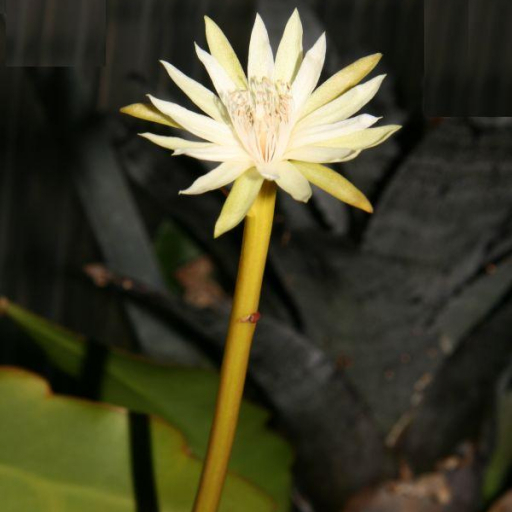
Plant Overview
Meet the Epiphyllum phyllanthus, often affectionately called the Climbing Cactus or Blade Apple. Unlike its prickly desert cousins, this elegant cactus is a jungle dweller that makes its home high in the tropical tree canopies of Central and South America. It is beloved by collectors for its long, ribbon-like stems and dramatic, moon-loving flowers that bloom only under the cover of night.
🔍 How to Identify
- 🌿 Flattened Stems: The plant consists of long, green, leaf-like stems (called cladodes) that are thin and flat with wavy, scalloped edges. They can grow several feet long, gracefully trailing or climbing.
- 🌸 Nocturnal Blooms: It produces striking white flowers with exceptionally long, slender tubes. These blossoms are "night-bloomers," opening their star-shaped petals in the evening and wilting by dawn.
- 🍎 Oval Fruit: If pollinated, the plant develops small, oblong fruits that turn a vibrant reddish-pink, resembling a miniature version of a dragon fruit.
🏡 In Your Garden
- 🌳 The Jungle Vibe: Because this is an "epiphyte" (a plant that grows on trees), it hates being buried in heavy, wet soil. It thrives best in a chunky, well-draining mix—like orchid bark and perlite—to mimic its natural home in the branches.
- ⛅ Indirect Light: Think of its native habitat under the forest canopy. It craves bright, filtered light but will quickly scorch and turn yellow if left in the direct, punishing afternoon sun.
- 💧 Humidity Lover: Unlike desert cacti, the Climbing Cactus enjoys a humid environment. It appreciates a regular misting or being placed near a humidifier, especially during the dry winter months.
⚠️ Safety & Toxicity
- ✅ Pet Friendly: Great news for pet owners! Epiphyllum phyllanthus is generally considered non-toxic to cats, dogs, and horses, making it a safe choice for a busy household.
- 👐 Easy Handling: One of its best features is the lack of traditional "ouch" factors. It doesn't have the long spines or irritating "glochid" hairs found on many other cacti, so you can prune and move it without armor.
✨ Fun Fact
- 🦇 The Night Shift: Because its flowers are pale and open only at night, they are invisible to most birds and bees. Instead, they have evolved a heavy, sweet fragrance specifically to attract nocturnal pollinators like hawk moths and nectar-feeding bats!

Detailed Care Instructions
| Humidity | Normal |
| Lighting | Full Sun |
| Difficulty | Medium |
| Temperature | 15°C - 25°C |
To grow Epiphyllum Phyllanthus (commonly known as the "queen of the night" cactus), follow these steps:
- Choose the right location: Epiphyllums thrive in bright but indirect sunlight. Find a spot near a window that receives filtered light or partial shade. Avoid direct sun as it can scorch the plants.
- Select the proper container: Use a wide and shallow pot with drainage holes to avoid waterlogged soil. Epiphyllums have shallow roots and prefer a slightly cramped space. A clay or terracotta pot is ideal as it helps with drainage.
- Prepare the soil: Use a well-draining potting mix specifically formulated for cacti or succulents. These mixes usually contain a mixture of sand, perlite, and peat moss or coconut coir.
- Planting: Gently place the Epiphyllum Phyllanthus in the container, making sure to position it at the same depth it was in its previous pot. Avoid burying the plant too deeply as this can cause rotting.
- Watering: Epiphyllums prefer weekly watering during the growing season (spring and summer) and reduced watering during winter. Make sure to allow the top inch of soil to dry out between waterings to prevent root rot. Avoid overwatering, as it can harm the plant.
- Humidity: Epiphyllums appreciate higher humidity levels. You can increase humidity by placing a tray filled with water near the plant or by misting it regularly.
- Fertilizing: Feed Epiphyllums with a balanced, water-soluble fertilizer diluted to half the recommended strength every two to four weeks during the growing season. Avoid fertilizing during winter, as the plant is dormant.
- Temperature and environment: Epiphyllum Phyllanthus thrives in temperatures between 60 and 80°F (15 to 27°C). Protect the plant from drafts and sudden temperature changes.
- Pruning and maintenance: Trim any dead or diseased stems to maintain the plant's health. Pruning can also help shape the plant if it becomes too leggy. Wear gloves as the plant has tiny thorns.
- Propagation: Epiphyllums can be propagated through stem cuttings. Allow the cuttings to dry for a few days before planting them in well-draining soil. They typically root within a few weeks.
With proper care and a suitable environment, your Epiphyllum Phyllanthus plant should grow and reward you with beautiful blooms.

Place in a window with dappled sun or a spot in the middle of a room. Or directly in a window facing west or east.

To water this plant, the first step is to check the soil moisture level. One way to do this is by sticking your finger about an inch into the soil. If it feels dry, then the plant needs to be watered. It's important not to overwater as this can lead to root rot. When watering, pour water slowly around the base of the plant until the soil is evenly moist. Allow the excess water to drain out of the pot before placing it back in its spot. It's best to avoid getting water on the leaves or stem of the plant. The frequency of watering will depend on the temperature, humidity, and light conditions in the plant's environment. In general, it's better to underwater than overwater this type of plant.
For best results, fertilize this plant once a month during the growing season with a balanced, water-soluble fertilizer. Dilute the fertilizer to half strength and apply to moist soil. During the dormant season, reduce fertilization to once every two months. Avoid over-fertilizing, as this can lead to burn or other damage to the plant.
The Epiphyllum Phyllanthus plant grows well in a well-draining soil mixture that is composed of an equal combination of peat moss, perlite, and vermiculite. It is important to ensure that the soil mixture is slightly acidic and has a pH range of 6.0 to 7.0. The plant also prefers rich soil that is high in organic matter, which can be achieved by adding compost or well-rotted manure to the soil mixture. It is essential to choose a pot with drainage holes to allow excess water to drain easily. The Epiphyllum Phyllanthus plant prefers a slightly moist soil, but overwatering should be avoided as it can lead to root rot.
Epiphyllum Phyllanthus is a plant that belongs to a particular genus that is commonly propagated by cutting. To propagate Epiphyllum Phyllanthus, first, select a healthy mature stem of adequate length to cut. Cut the stem using a sharp and sterilized pair of pruning shears just below a leaf node. The cutting should be at least 3-4 inches long, with at least 2-3 leaves.
It is ideal to dip the cut end in rooting hormone powder before planting it. Next, prepare a soil mixture that is well-draining and porous. Make sure that the soil is moist enough to sustain the cutting's growth.
Make a hole in the prepared soil and plant the cutting into it by placing the cut end in the hole and gently covering it with soil. Firmly press the soil around the cutting, and water it thoroughly. Ensure that the cutting is placed somewhere bright and warm, but away from direct sunlight.
With patience, in a few weeks to a month, your Epiphyllum Phyllanthus cutting will form roots, and new growth will start appearing from the stem. At this point, it has successfully propagated, and you can transplant it into a larger pot or outdoors as desired.
Common pests of the climbing cactus include Scale insect, mealybugs, thrips. Make a habit of checking your climbing cactus frequently for pests so that any infestations can be caught and managed early.








