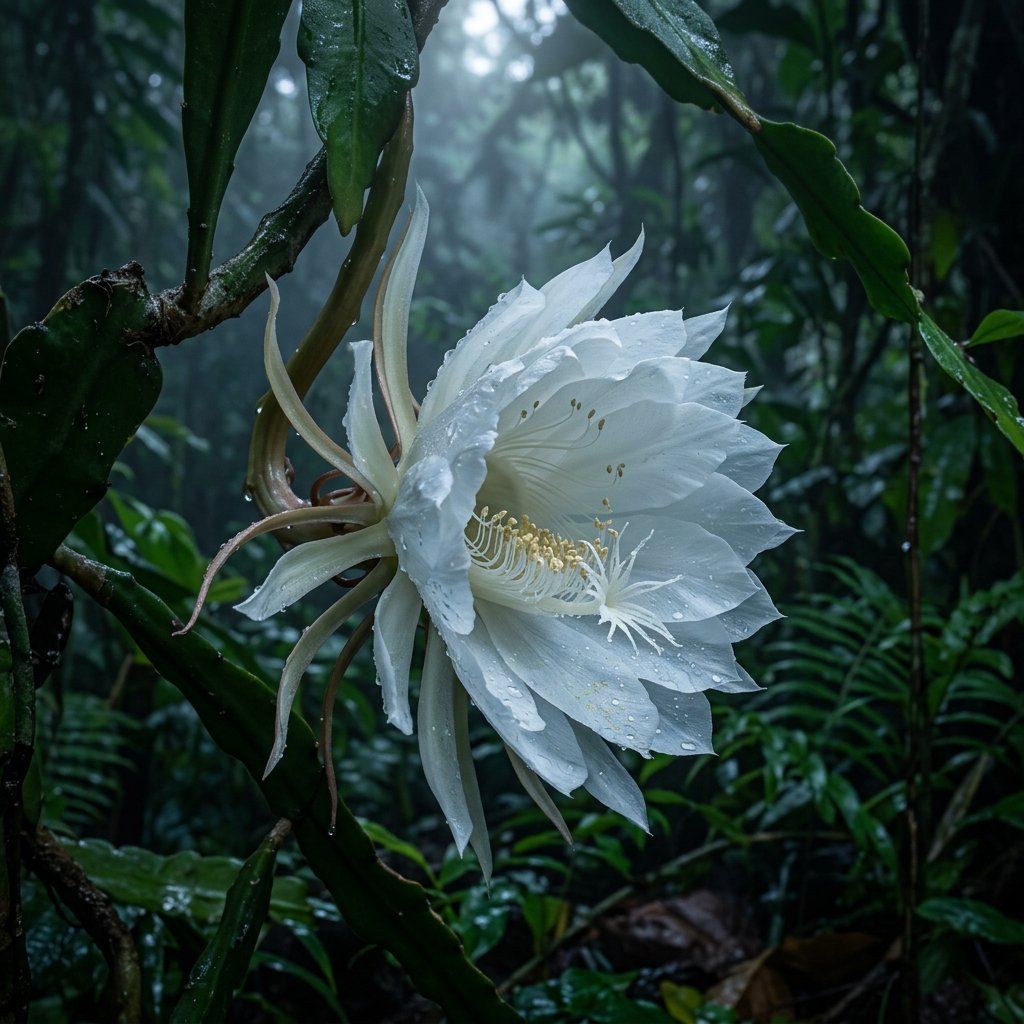
Plant Overview
Known as the "Orchid Cactus," Epiphyllum is nature's dramatic showstopper, blending the ruggedness of a cactus with the elegance of a tropical orchid. Despite being a member of the cactus family, these plants swapped the desert for the rainforest canopy, growing as epiphytes on the branches of tall trees. In many cultures, the blooming of certain species is a social event, as friends gather to watch the massive, fragrant flowers unfurl in a single night.
🔍 How to Identify
- 🌵 The Stems: They lack traditional leaves. Instead, they have long, flat, fleshy stems with scalloped or wavy edges that can grow several feet long and trail beautifully.
- 🌸 The Blooms: Enormous, funnel-shaped flowers that can be the size of a dinner plate. While wild species are often pure white, hybrids (Epicacti) come in neon pinks, deep reds, and vibrant oranges.
- 🍃 Growth Habit: They have a pendulous, sprawling growth habit. Because they are designed to hang from trees, they may look "messy" or top-heavy if not kept in a hanging basket.
🏡 In Your Garden
- 🌳 The Tropical Twist: Unlike desert cacti, Epiphyllum hates being bone-dry. They require "jungle-like" conditions: high humidity, dappled sunlight (never harsh, direct noon sun), and a potting mix rich in orchid bark or perlite.
- 🪴 Tight Roots: These plants are surprisingly pickier about their pots than their soil. They bloom most prolifically when they are slightly root-bound, so avoid "up-sizing" their container too frequently.
- 💧 The Drainage Dance: They love moisture but loathe "wet feet." Their shallow root systems are prone to rot if the water doesn't drain away instantly, mimicking the way rain washes over a tree branch.
⚠️ Safety & Toxicity
- 🐾 Pet Friendly: These are excellent choices for pet owners. They are generally considered non-toxic to both cats and dogs.
- 👶 Gentle Cacti: Unlike their prickly relatives, most Epiphyllum species are spineless or have very soft, hair-like bristles, making them safe to touch for children and hobbyists.
✨ Fun Fact
- 🌙 The Night Watchman: The most famous species, Epiphyllum oxypetalum, is known as the "Queen of the Night." It blooms only once a year, strictly after dark. The flower opens at sunset and begins to wilt before the sun rises the next morning, giving it a fleeting, mystical reputation.

Detailed Care Instructions
| Color | Pinks, Reds, Whites, Yellows, Oranges, And Shades In Between |
| Humidity | Dry |
| Lighting | Part Sun |
| Soil Type | Standard Potting Soil Amended With Peat And Sand |
| Bloom Time | Mainly Late Spring And Summer |
| Difficulty | Easy |
| Plant Type | Cactus |
| Mature Size | Up To 300 Cm By 100 |
| Native Area | Central And South America |
| Temperature | 15°C - 30°C |
| Sun Exposure | Filtered Sunlight |
| Hardiness Zones | 10 To 11 |
Here are some tips on how to grow Epiphyllum plants:
- Select a suitable location: Epiphyllum plants thrive in bright but indirect sunlight. They prefer areas with morning sun and afternoon shade. Indoors, place them near a window with filtered sunlight.
- Choose the right soil: Use a well-draining potting mix that is rich in organic matter. A mix of peat moss, perlite, and sand or cactus soil is ideal.
- Watering: Epiphyllums prefer slightly moist soil. Water them thoroughly when the top inch of soil feels dry, but avoid over-watering as it can cause root rot. During winter, reduce watering frequency.
- Fertilization: Feed your Epiphyllum plants during the growing season with a balanced, water-soluble fertilizer. Apply half-strength fertilizer every 2-3 weeks.
- Humidity: These plants prefer higher humidity levels. Placing a tray of water near the plant or misting it occasionally can help maintain humidity.
- Propagation: Epiphyllums can be propagated through stem cuttings. Allow the cuttings to dry for a day or two, and then insert them into a well-draining potting mix. Keep the soil slightly moist until they establish roots.
- Temperature: Epiphyllums prefer temperatures between 60-70°F (15-21°C). Avoid exposing them to extreme temperatures or drafts.
- Pruning: Prune your Epiphyllum plants to maintain their shape and promote bushier growth. Remove any dead or diseased parts, and prune leggy shoots to encourage new growth.
- Pests and diseases: Keep an eye out for common pests like mealybugs and aphids, and treat them promptly. Avoid overwatering to prevent root rot.
- Considerations for blooming: Epiphyllums usually bloom at night or early morning. They require a period of cool, dry conditions for several weeks in winter to trigger blooming. Reduce watering and lower temperatures (around 50°F or 10°C) during this period.
Remember that Epiphyllums are epiphytic cacti and do not tolerate heavy soil and excessive moisture. With proper care, these plants can grow and produce beautiful flowers.

Place in a window with dappled sun or a spot in the middle of a room. Or directly in a window facing west or east.

Epiphyllum plants are unique flowering plants that are known for their stunning blooms and ability to grow without soil. Watering an Epiphyllum plant can be tricky, as it requires an appropriate amount and frequency of watering to thrive.
To water an Epiphyllum plant, you'll need to create an environment that mimics its natural habitat. This can be achieved by providing it with ample humidity and controlled sunlight.
The best way to water an Epiphyllum plant is to use a watering can with a long spout to get the water down to the root level. It's important not to overwater your plant, so be sure to monitor the soil's moisture level before watering.
If the soil feels dry to the touch, it's time to water your plant. However, make sure not to saturate the soil too much, as this can lead to root rot and other diseases. You can also mist the leaves with a water spray bottle to help keep the humidity levels up.
It's essential to note that Epiphyllums are prone to leaf drop and wilting if they're underwatered or overwatered. Therefore, be sure to provide them with an appropriate amount of water and check the soil's moisture level frequently.
To fertilize this plant, use a balanced, water-soluble fertilizer with equal amounts of nitrogen, phosphorus, and potassium during the growing season. Apply the fertilizer every two weeks, and reduce watering to once a month during the winter. Do not over-fertilize, as this can cause the plant to become leggy and weak.
Epiphyllum plants thrive in a well-draining, aerated soil that is rich in organic matter. A soil mix composed of a combination of peat moss, coconut coir or sphagnum moss, perlite or vermiculite, and sand or grit is ideal for Epiphyllum plants. This type of soil mix allows for proper air circulation and water drainage while also retaining enough moisture to keep the plant healthy. It is important to note that Epiphyllum plants are sensitive to overwatering, so it is crucial that the soil does not become waterlogged. Additionally, a pH range of 5.5-6.5 is recommended for optimal growth.
Epiphyllum plants can be propagated easily from stem cuttings. Start by selecting a healthy stem that is around 3-4 inches long. Using a sterilized sharp knife, cut the stem at a 45-degree angle.
Then, let the cutting dry and callus over for 3-5 days before planting. After the cutting has calloused, prepare a well-draining potting mix and fill a small pot or container with it. Make a small hole in the soil and plant the cutting into the soil, burying around half of it.
Water the cutting lightly and keep it in a bright but indirect light location. It is recommended to cover the pot with plastic wrap or a clear plastic bag to create a mini greenhouse and hold in some moisture until new growth appears. Be patient, as Epiphyllum cuttings can take several weeks to months to show any signs of growth.
Once new growth appears, remove the plastic covering and continue to care for the plant by watering it regularly but allowing the soil to dry out slightly between waterings. After a few months, the new plant should be established and ready to transplant into a larger pot or into the ground.
Common pests of the orchid cactus include Scale insect, mealybugs, thrips. Make a habit of checking your orchid cactus frequently for pests so that any infestations can be caught and managed early.







