Plant Overview
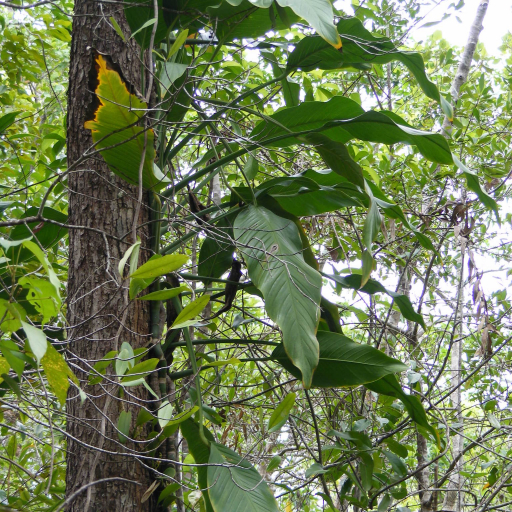
Often called the Silver Streak Pothos, this elegant climber is the sophisticated, long-leafed cousin of the common Golden Pothos. Native to the rainforests of New Guinea and the Solomon Islands, it stands out for its sleek, lance-shaped foliage that looks more like a willow leaf than a traditional heart-shaped houseplant. In its natural habitat, it is a daring climber, scaling giant trees to reach the tropical sun.
🔍 How to Identify
- 🍃 Leaf Shape: Unlike typical Pothos, these leaves are exceptionally long, narrow, and pointed (lanceolate), resembling a forest blade.
- ✨ Silver Variegation: Juvenile plants feature delicate, shimmering silver-grey streaks that run parallel to the veins, giving the plant its "Silver Streak" nickname.
- 🪜 Growth Habit: It is an aggressive climber; when given a pole, the leaves grow significantly larger and lose some of their silver patterns in favor of deep, glossy green.
🏡 In Your Garden
- 🧗 The Need to Climb: While it can trail from a basket, this plant "thinks" it’s in a jungle. If you want those massive, mature leaves, you must provide a moss pole or totem for its aerial roots to grip.
- 💧 Humidity over Soil: Because it is an epiphyte, it prefers chunky, airy soil (like an aroid mix) and high humidity. If the air is too dry, the tips of those beautiful long leaves may turn brown and crispy.
- ☀️ Light Nuance: It craves bright, filtered light. Direct afternoon sun will scorch the silver streaks, while too little light will cause the plant to become "leggy" with large gaps between leaves.
⚠️ Safety & Toxicity
- 🐾 Toxic to Pets: Like most members of the Araceae family, it contains insoluble calcium oxalate crystals.
- 👄 Irritant: If chewed or swallowed by curious cats, dogs, or toddlers, it can cause immediate mouth pain, swelling of the throat, and digestive upset. It is best displayed on a high shelf or a hanging planter.
✨ Fun Fact
In the wild, Epipremnum amplissimum is a shapeshifter! As it climbs higher into the canopy, its leaves can transform from small, silver-streaked blades into giant, deep-green paddles that can reach over a foot in length.

Detailed Care Instructions
To grow an Epipremnum Amplissimum plant, follow these steps:
- Choose a suitable location: The plant prefers bright indirect light, so find a spot near a window where it can receive filtered sunlight. Avoid direct sunlight as it can scorch the leaves.
- Select the right soil: Use a well-draining potting mix that retains some moisture. You can also mix regular potting soil with perlite or sand for improved drainage.
- Pick a container: Select a pot with good drainage holes that is slightly larger than the plant's root ball. A 6 to 8-inch pot is usually sufficient for a young plant.
- Planting: Take the plant out of the nursery pot, and gently loosen the roots. Plant it in the new container at the same depth it was previously growing. Fill the remaining space with the potting mix, ensuring that the plant is stable.
- Watering: Keep the soil consistently moist but not soggy. Water when the top inch of soil feels dry to the touch. Avoid overwatering, as it can lead to root rot.
- Humidity: Epipremnum Amplissimum prefers high humidity. You can increase humidity around the plant by misting it regularly or placing a tray of water near it.
- Temperature: This plant thrives in average room temperatures between 60-85°F (15-29°C). Protect it from drafts and extreme temperature changes.
- Fertilizer: Feed the plant with a balanced liquid fertilizer once every 2-4 weeks during the growing season (spring and summer). Dilute the fertilizer to half strength and follow the instructions on the packaging.
- Pruning: Regularly remove any dead or yellowing leaves. You can also prune the plant to control its size or encourage branching.
- Propagation: Epipremnum Amplissimum can be propagated through stem cuttings. Take a 4-6 inch cutting from a healthy plant, remove the bottom leaves, and place it in water or moist soil until roots develop.
- Repotting: As the plant grows, you may need to repot it every 1-2 years into a slightly larger container to provide more room for growth.
Remember to observe your plant regularly for any signs of pests or diseases and take appropriate measures to control them.

Place in a window with dappled sun or a spot in the middle of a room. Or directly in a window facing west or east.

Epipremnum Amplissimum is a tropical plant that requires regular watering to thrive. Here are some detailed guidelines on how to water this plant effectively:
1. Watering Frequency: Epipremnum Amplissimum prefers moderately moist soil, so it's essential to provide consistent moisture without overwatering. Check the plant's moisture level by pressing your finger about an inch into the soil. If it feels dry, it's time to water.
2. Watering Technique: Use a watering can or a gentle hose attachment to water the plant. Avoid using a strong stream of water, as it can disturb the plant's root system. Instead, water slowly and evenly around the base of the plant until the water starts coming out through the drainage holes at the bottom of the pot.
3. Amount of Water: Water the Epipremnum Amplissimum until the excess water drains out from the drainage holes. Make sure not to leave the plant sitting in standing water, as it can lead to root rot. It's better to underwater slightly than to overwater this plant.
4. Well-Draining Soil: Epipremnum Amplissimum prefers well-draining soil that retains some moisture while allowing excess water to escape. Using a well-draining potting mix with ingredients like perlite or vermiculite can help ensure proper water drainage.
5. Watering Temperature: Use water at room temperature to avoid shocking the plant's roots. Avoid using cold or hot water, as extreme temperatures can stress the plant.
6. Seasonal Adjustments: During the warmer months or when the plant is actively growing, you may need to water more frequently. Monitor the plant's moisture needs by regularly checking the soil's moisture level and adjust the watering frequency accordingly.
7. Humidity: Epipremnum Amplissimum appreciates higher humidity levels, but it can tolerate average room humidity. To increase humidity, you can mist the plant's leaves occasionally with a spray bottle or place a tray filled with water and pebbles near the plant. As the water evaporates, it will create a humid microclimate around the plant.
8. Signs of Overwatering: Keep an eye out for signs of overwatering, such as yellowing or wilting leaves, mushy stems, or a foul odor coming from the soil. If you notice any of these signs, reduce the watering frequency and allow the soil to dry out before watering again.
Remember, these guidelines are general and may need to be adjusted based on the specific conditions in your growing environment. It's always beneficial to observe your plant closely and make watering adjustments accordingly.
To fertilize your Epipremnum Amplissimum plant, follow these instructions:
- Choose a balanced fertilizer with equal ratios of nitrogen (N), phosphorus (P), and potassium (K).
- Dilute the fertilizer according to the manufacturer's instructions. Generally, a 1/4 strength solution is suitable for houseplants.
- Water the plant thoroughly before applying fertilizer to ensure the soil is moist.
- Pour the diluted fertilizer solution evenly around the base of the plant, avoiding direct contact with the leaves.
- Use a sufficient amount of fertilizer to cover the entire root zone of the plant.
- After fertilizing, water the plant again to help distribute the nutrients throughout the soil.
- Fertilize the Epipremnum Amplissimum plant every 4-6 weeks during the growing season, typically from spring to fall.
- During winter, reduce the frequency of fertilization to every 8-12 weeks or as recommended for the specific fertilizer you are using.
- Monitor the plant's response to the fertilizer. If the leaves start showing signs of burning or discoloration, dilute the fertilizer further or reduce the frequency of application.
- Regularly clean the foliage to prevent dust accumulation, which can hinder nutrient absorption.
Remember, it's always best to refer to the specific instructions on the fertilizer packaging as they may vary slightly.
Epipremnum Amplissimum is a tropical plant native to Southeast Asia. When choosing the right soil for this plant, it is important to consider its natural habitat and growth requirements.
The ideal soil for an Epipremnum Amplissimum plant is a well-draining mixture that allows water to flow through easily. This helps prevent over-watering and ensures adequate oxygenation of the roots. A general recommendation is to use a mixture of peat moss and perlite or sand. The peat moss retains moisture while perlite or sand improves drainage.
Additionally, Epipremnum Amplissimum plants prefer slightly acidic to neutral soil with a pH range of 5.5 to 7. Soils with high organic matter content are also beneficial as they provide essential nutrients and support healthy root development.
It is worth noting that Epipremnum Amplissimum is a versatile plant that can tolerate various soil types to some extent. However, providing it with a well-draining, slightly acidic to neutral soil rich in organic matter will promote optimal growth and overall health.
Epipremnum amplissimum plant can be propagated through various methods, including stem cuttings and air layering. Here's a detailed guide on propagating Epipremnum amplissimum:
- Stem cuttings:
- Select a healthy and well-established plant to take a cutting from. Choose a stem that is firm and has at least two or three leaves.
- Using a clean and sharp pair of gardening shears or a knife, cut the stem just below a leaf node. A leaf node is where a leaf or petiole is attached to the stem.
- Remove any lower leaves, leaving only a few leaves at the top. This helps reduce moisture loss and encourages root development.
- If desired, you can dip the cut end of the stem in a rooting hormone powder to enhance root formation.
- Prepare a small pot or container with well-draining soil mix, such as a mixture of perlite, peat moss, and sand.
- Make a small hole in the soil using a pencil or your finger and gently insert the cut end of the stem into the hole.
- Firmly press the soil around the stem to provide stability and ensure good soil-to-stem contact.
- Place the pot in a warm and bright location, preferably with indirect sunlight. Avoid direct sunlight as it can lead to excessive heat and drying out.
- Mist the cutting regularly to maintain a humid environment, which will aid in root development. Avoid overwatering to prevent rotting.
- After a few weeks, roots should begin to develop. You can gently tug on the stem to check for resistance, indicating that roots have formed.
- Once a sufficient root system has developed, you can transfer the newly rooted cutting to a larger pot or into the ground.
- Select a healthy and well-established plant to take a cutting from. Choose a stem that is firm and has at least two or three leaves.
- Air layering:
- Air layering is another effective method for propagating Epipremnum amplissimum, particularly for larger plants that have long vines or aerial roots.
- Select a healthy section of the plant's stem, preferably one with one or more aerial roots. Make a small wound on the stem by removing a small section of bark, about half an inch in length.
- Dust the wound with rooting hormone powder to stimulate root growth.
- Take a moist sphagnum moss or a mixture of peat moss and perlite, and wrap it around the wounded section of the stem. Enclose the moss with plastic wrap or a plastic bag, securing it tightly above and below the wound.
- Ensure that the moss remains consistently moist during the rooting process and periodically mist it if necessary.
- After a few weeks to a couple of months, roots should start to form within the moss. You can check by gently removing the plastic wrap and carefully inspecting the root development.
- Once an adequate root system has developed, cut below the rooted section of the stem, ensuring you have enough roots to establish a new plant.
- Plant the rooted section into a well-draining potting mix or directly into the ground, providing it with appropriate care and maintenance.
- Air layering is another effective method for propagating Epipremnum amplissimum, particularly for larger plants that have long vines or aerial roots.
Common pests of the silver streak pothos include Mealybugs, spider mites, fungus gnats, thrips. Make a habit of checking your silver streak pothos frequently for pests so that any infestations can be caught and managed early.








