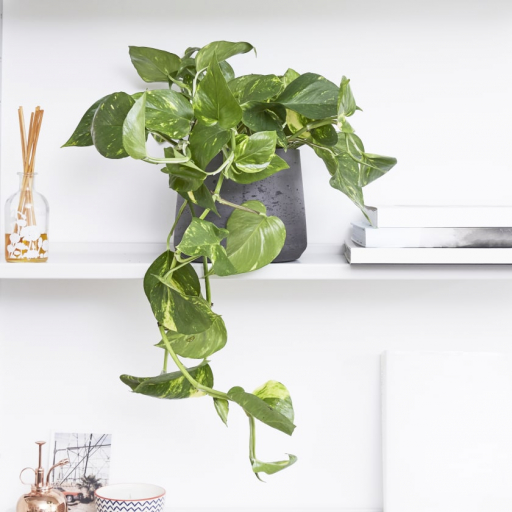
Plant Overview
Meet the "Devil’s Ivy," a plant so resilient it earned its nickname for being nearly impossible to kill—staying green even when kept in near-total darkness. Native to the Solomon Islands, this trailing vine is the ultimate "gateway plant" for beginners, loved for its marble-patterned leaves and air-purifying qualities. In its natural tropical habitat, it can climb trees to heights of 40 feet, but in your home, it’s content to gracefully tumble off a bookshelf.
🔍 How to Identify
- 🍃 Heart-Shaped Foliage: The leaves are distinctively waxy and shaped like perfect hearts, usually measuring 3–4 inches indoors but growing much larger if allowed to climb.
- ✨ Golden Variegation: True to its name (aureum meaning "golden"), the deep green leaves are typically splashed with irregular streaks of yellow, cream, or white.
- 🪴 Aerial Roots: Look for small, brown nubs along the stems at the "nodes." These are adventitious roots used for clinging to surfaces or drinking moisture from the air.
🏡 In Your Garden
- 🌥️ Light & Color: While it survives in low light, its beautiful golden variegation is a "use it or lose it" feature. If the room is too dark, the plant will turn solid green to maximize its chlorophyll and catch what little light is available.
- ✂️ Leggy Growth: Pothos can become "leggy" (long vines with few leaves) if it isn’t pruned. Trimming the vines just below a node encourages the plant to branch out, creating a bushier, fuller look.
- 💧 The "Wilt" Warning: This plant is an excellent communicator. It will slightly droop its leaves when it is thirsty, but it recovers almost instantly once watered. It prefers its soil to dry out halfway before the next drink.
⚠️ Safety & Toxicity
- 🐾 Toxic to Pets: Epipremnum aureum contains insoluble calcium oxalate crystals. If chewed or swallowed by cats or dogs, it can cause intense oral irritation, drooling, and swelling of the mouth.
- 👶 Human Safety: Similar to pets, the sap can cause skin irritation for some people and is toxic if ingested by children. It is best displayed in hanging baskets out of reach.
✨ Fun Fact
🧪 The Shy Bloomer: Pothos is known as a "shy flowering" plant. Due to a genetic lack of certain growth hormones (gibberellins), it almost never produces flowers in the wild or in cultivation. The last time a wild Pothos was observed flowering naturally was in 1962!

Detailed Care Instructions
Out of all of the different varieties of pothos available, the glacier pothos is considered moderately rare. It can be harder to find than some of its close relatives such as the marble queen or pearls and jade pothos, but easier to find than some of the rarer varieties like the harlequin pothos or jessenia pothos.
Are glacier pothos and n’joy pothos the same plant?
Although they look similar, the glacier pothos and the n’joy pothos are two distinct cultivators of the marble queen pothos.
Why does my glacier pothos only have one vine?
Sometimes pothos plants are sold as single-vine plants, or if you are growing your plant from a cutting the mature plant will only be a singular vine as it matures. In their native environment pothos tend to branch out more readily due to the ideal conditions available to them, but sometimes this doesn’t happen indoors. Don’t worry - there are a few things that you can do to grow fuller-looking glacier pothos. First, try propagating your plant and replanting the rooted cuttings back in the same pot! Also, ensure that you are providing your glacier pothos with enough sun, water, and fertilizer to promote strong, healthy growth. Giving your plant something to climb such as a moss pole or trellis can also encourage more vigorous and bushy growth.
| Color | Does Not Flower |
| Soil Ph | 6.1-6.5 |
| Humidity | High |
| Lighting | Shade |
| Toxicity | Poisonous |
| Soil Type | Well-Drained Potting Soil |
| Bloom Time | Does Not Flower Unless Treated With A Special Hormone Supplement |
| Difficulty | Easy |
| Plant Type | Trailing Vine |
| Hibernation | Cold Period |
| Mature Size | 6 To 10 Feet (As Much As 30 Feet) |
| Native Area | Solomon Islands |
| Temperature | 21°C - 32°C |
| Sun Exposure | Shade To Part Shade Outdoors, Bright Indirect Light Indoors |
| Hardiness Zones | 10-12 |
To grow an Epipremnum Aureum plant, also known as a golden pothos or devil's ivy, you can follow these steps:
- Choose a healthy plant: Look for a plant that has green leaves and no signs of wilting or damage.
- Planting location: Choose a location with bright, indirect sunlight. This plant can tolerate low light conditions but will thrive best with moderate light.
- Select a container: Choose a pot with drainage holes to allow excess water to drain. Make sure it is large enough to accommodate the root system.
- Potting soil: Use a well-draining and rich potting soil mix. Avoid heavy soils that can lead to waterlogged roots.
- Planting: Fill the pot with potting soil, leaving enough space for the root ball. Place the plant in the pot and backfill with soil, pressing gently to secure it.
- Watering: Water the plant thoroughly after planting, allowing excess water to drain. The soil should be evenly moist but not soggy. Watering once a week should be sufficient, but adjust based on the plant's needs and environmental conditions.
- Humidity: Epipremnum Aureum plants prefer moderate to high humidity. You can create a humid environment by placing a tray filled with water near the plant or using a humidifier.
- Fertilizing: Use a balanced liquid fertilizer once a month during the growing season (spring and summer). Follow the instructions on the fertilizer packaging for dosage.
- Pruning: Regularly trim any yellow or brown leaves and trim back longer vines to maintain the desired shape and size of the plant.
- Propagation: Epipremnum Aureum is easy to propagate. You can take stem cuttings with several leaves and root them in water or directly in soil. Once rooted, transfer them to their individual pots.
- Monitoring: Keep an eye out for pests such as mealybugs or spider mites. Inspect the leaves regularly and take action if you notice any infestation.
Remember, the Epipremnum Aureum plant is a fast-growing vine, so provide it with a trellis or pole to climb on if you want it to grow vertically. With proper care, your Epipremnum Aureum plant will grow and thrive, adding beauty to your space.

Place in a window with dappled sun or a spot in the middle of a room. Or directly in a window facing west or east.

Epipremnum Aureum is a houseplant that needs to be watered regularly to thrive. The best way to water this plant is to make sure the top inch of soil is dry before watering it. You can check the moisture level of the soil by sticking your finger into it or by using a moisture meter.
When it's time to water the plant, fill a watering can with room temperature water and slowly pour it onto the soil until the excess water starts to drain out of the bottom of the pot. Avoid getting water on the leaves, as this can lead to fungal diseases.
Make sure to let the soil drain completely before returning the plant to its usual location. Overwatering can cause the plant to develop root rot, so don't water it again until the top inch of soil is dry.
In addition to regular watering, Epipremnum Aureum also benefits from misting. Use a spray bottle filled with room temperature water to mist the leaves once a week to keep them healthy and shiny.
To fertilize this plant, use a balanced fertilizer with equal amounts of nitrogen, phosphorous, and potassium. Dilute the fertilizer to half strength before applying to the soil. Apply the fertilizer every two to four weeks during the growing season, which generally runs from spring to fall. Be careful not to over-fertilize as this can lead to leaf burn and root damage.
The recommended soil for the Epipremnum Aureum plant is a well-draining, nutrient-rich soil mix. The soil should have a pH level between 5.5 to 7.5. A good mixture would include perlite, peat moss, and sand to ensure that the soil is well-aerated and has adequate drainage. The soil should be moist but not waterlogged as overwatering will cause the roots to rot. In addition, the soil should be rich in organic matter to provide the necessary nutrients for the plant's growth and development. Overall, a loose, well-draining soil mixture is ideal for the Epipremnum Aureum plant.
Propagation of this plant can be done through stem cuttings. Select a healthy-looking stem and cut it just below a node. Remove any lower leaves from the stem, leaving the top few intact. Place the cutting in a glass of water and change the water every few days. Once roots have formed, the cutting can be potted in soil. It is important to keep the soil moist and provide indirect sunlight until the new plant becomes established.
Common pests of the golden pothos include Mealybugs, spider mites, fungus gnats, thrips. Make a habit of checking your golden pothos frequently for pests so that any infestations can be caught and managed early.








