Plant Overview
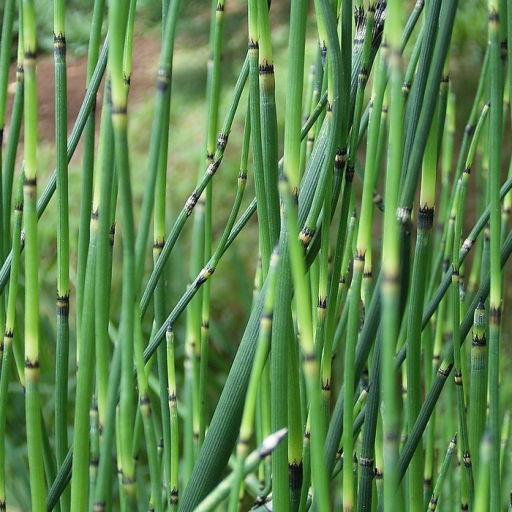
Meet the "Living Dinosaur" of the plant world. Equisetum giganteum, commonly known as the Giant Horsetail, looks like it was plucked straight from a Jurassic landscape. Native to the wetlands of Central and South America, this towering primitive plant doesn't produce flowers or seeds; instead, it relies on ancient spore-based reproduction, just as its ancestors did over 300 million years ago.
🔍 How to Identify
- 🎋 Towering Stems: Unlike its smaller garden cousins, this variety can reach incredible heights of up to 15 feet. The stems are bright green, hollow, and jointed, giving them a distinct bamboo-like appearance.
- 🖤 Sheathed Nodes: It lacks traditional broad leaves. Instead, you will find small, blackish-toothed scales circling each "joint" or node of the stem, looking like tiny primitive crowns.
- 🪚 Sandpaper Texture: The outer skin of the plant is embedded with silica (the main component of glass). This gives the stems a rough, abrasive texture that feels like fine-grit sandpaper to the touch.
🏡 In Your Garden
- 💧 Thirsty by Nature: In the wild, this plant lives on the edges of swamps and rivers. In a garden setting, it thrives in "wet feet" conditions. It is the perfect choice for the muddy edges of a pond or a bog garden where other plants might drown.
- 🚧 The Great Escape: Giant Horsetail is a vigorous spreader via underground runners (rhizomes). Because it can be quite invasive, it is highly recommended to plant it in sturdy, bottomless containers or lined trenches to prevent it from taking over your entire landscape.
- 🛡️ Pest Proof: Thanks to that high silica content, the plant is naturally resistant to almost all common garden pests. Deer and rabbits usually give it a wide berth because the stems are far too tough and "glassy" to be a tasty snack.
⚠️ Safety & Toxicity
- 🚫 Toxic to Livestock: It contains thiaminase, an enzyme that can cause Vitamin B1 deficiency. It is famously dangerous to horses (causing "Equisetosis") if they graze on it in large quantities.
- 🐾 Pets & Kids: While not usually attractive to cats or dogs due to its texture, it is considered toxic if ingested. Keep it away from curious nibblers to avoid digestive upset or more serious nutrient malabsorption issues.
✨ Fun Fact
Before the invention of modern cleaning pads, travelers and settlers used dried stems of this plant family to scrub metal pots, polish pewter, and sand down wood. This earned the Equisetum genus the enduring nickname "Scouring Rush."

Detailed Care Instructions
To grow Equisetum Giganteum, also known as the giant horsetail or snake grass, follow these steps:
- Find a suitable location: Equisetum Giganteum prefers full sun to partial shade. Choose a spot with moist soil, as this plant thrives in wet conditions.
- Prepare the soil: The plant prefers slightly acidic to neutral soil, so you may need to amend your soil with organic matter or compost before planting.
- Plant the rhizomes: Obtain Equisetum Giganteum rhizomes, which are similar to underground stems, from a reputable nursery or garden center. Plant them directly into the soil at a depth of about 2 to 3 inches.
- Provide water: Keep the soil consistently moist, as this plant requires a lot of water. Consider planting it near a water source or in a boggy area of your garden.
- Control spreading: Equisetum Giganteum can become invasive when left unchecked, so it's important to contain its growth. Install a barrier made of thick plastic or metal around the planting area to prevent the rhizomes from spreading.
- Fertilize sparingly: Equisetum Giganteum doesn't require much fertilization. If you feel the need to give it a boost, use a balanced, slow-release fertilizer in early spring according to the package instructions.
- Prune as needed: Remove any diseased or damaged fronds as they appear. Additionally, cut back the plant every year in early spring to control its growth and keep it tidy.
Remember that Equisetum Giganteum can be quite aggressive and difficult to eradicate once established, so make sure to take the necessary steps to contain its growth within your desired planting area.

Place in a window with dappled sun or a spot in the middle of a room. Or directly in a window facing west or east.

To water this plant, it is important to keep in mind that it enjoys moist soil. It is recommended to make sure the soil is evenly moist without being waterlogged. This can be achieved by watering deeply and allowing the soil to drain before watering again. It is also important to avoid letting the soil completely dry out between watering. The plant can be watered using a watering can, hose, or other methods depending on personal preference. It may be helpful to check the moisture level of the soil regularly to ensure it is not becoming too dry or soggy.
To fertilize this plant, use a balanced, slow-release fertilizer with equal ratios of nitrogen, phosphorus, and potassium. Apply the fertilizer according to the package instructions, being careful not to over-fertilize. Water the plant immediately after fertilizing to help the nutrients absorb into the soil. Fertilize once per season, in early spring or late winter, before new growth appears.
Equisetum Giganteum (the plant in question) is commonly found in wetland environments and requires a high amount of moisture to thrive. Therefore, it is recommended to use soil that has a good drainage system that doesn't allow waterlogging, but also retains moisture well. The soil should be rich in organic matter and nutrients to support the plant's growth. It is also important to avoid using soil with a high pH level, as this can cause the plant's leaves and stems to yellow. Additionally, Equisetum Giganteum prefers soil that is slightly acidic. Therefore, using soil with low pH and high organic matter content is recommended for optimal growth and health of the plant.
Equisetum Giganteum plant can be propagated through division. To do this, take the existing plant and gently separate the root system into smaller sections. Each section should have some healthy foliage and its own root system. Once separated, plant each section in its own container or location in the garden. Be sure to keep the new plants well-watered, especially during the first few weeks as they establish themselves in their new location.








