Plant Overview
Known as the "Scouring Rush" or "Snake Grass," Equisetum hyemale is a living fossil that has remained largely unchanged for over 100 million years. With its minimalist, vertical silhouette and striking black-banded joints, it brings an architectural, "Zen" aesthetic to modern gardens and water features. While it looks like miniature bamboo, it is actually a fern relative that reproduces via spores rather than seeds.
🔍 How to Identify
- 🌿 Stems: Thick, hollow, and unbranched reeds that grow perfectly vertical. They are a deep, matte green and feel surprisingly rough to the touch.
- 🖤 Nodes: Distinctive black or dark brown rings circle the stem at regular intervals, marking where tiny, scale-like leaves have fused to the stalk.
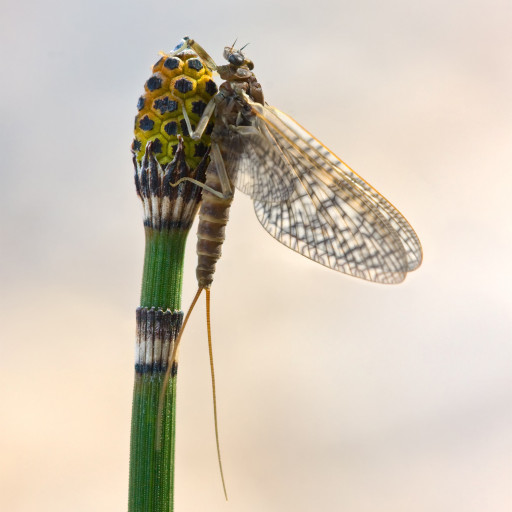
- 🍦 Fertile Tips: In spring or summer, some stems develop small, pinecone-like tips called strobili, which release spores into the wind.
🏡 In Your Garden
- 🌊 Wet Feet: This plant is a semi-aquatic specialist. It thrives in boggy soil or shallow standing water, making it the perfect choice for the edges of ponds or rain gardens where other plants might drown.
- 🧱 The Great Spreader: Be warned—this plant is an aggressive traveler. It spreads via underground rhizomes that can easily escape their designated spot. To keep it from taking over your yard, it is best grown in sturdy containers or "sunken" pots with barriers.
- 🌑 Versatile Light: While it prefers full sun to stay rigid and upright, it is remarkably tolerant of deep shade, though it may grow a bit more "leggy" and lean toward the light in darker corners.
⚠️ Safety & Toxicity
- 🐴 Livestock Warning: While generally safe to touch, it contains an enzyme called thiaminase. If consumed in large quantities by horses or cattle, it can lead to a vitamin B1 deficiency.
- 🐾 Pets & Humans: It is generally considered non-toxic to dogs and cats, but its high silica content makes it very tough and unpalatable. It is not meant for human consumption.
✨ Fun Fact
True to its name "Scouring Rush," pioneers and early settlers used these plants as natural sandpaper. Because the stems are packed with silica (the same mineral found in sand and quartz), they were the go-to tool for scrubbing greasy iron pots and polishing fine pewter or wooden instruments!

Detailed Care Instructions
| Color | Non-Flowering Plant |
| Soil Ph | 6.5 To 7.5 |
| Humidity | Normal |
| Invasive | Weed |
| Lighting | Full Sun |
| Soil Type | Moist, Well-Drained |
| Bloom Time | Non-Flowering Plant |
| Difficulty | Medium |
| Plant Type | Evergreen Perennial |
| Mature Size | 2 To 6 Feet Tall And 1 To 6 Feet Wide |
| Native Area | North America, Eurasia |
| Temperature | 10°C - 24°C |
| Sun Exposure | Full Sun To Part Shade |
| Hardiness Zones | 4 To 9 |
To grow Equisetum hyemale, also known as horsetail or scouring rush, follow these steps:
- Obtain a healthy rhizome: Start by obtaining a rhizome from a reputable source. Equisetum hyemale spreads through creeping rhizomes, so even a small section can grow into a new plant.
- Choose the right location: Equisetum hyemale thrives in moist soil and prefers partial shade to full sun. It can tolerate a range of soil conditions but does best in consistently moist soil.
- Prepare the planting area: If planting in the ground, clear the area of weeds and other plants. If planting in a container, choose a container large enough to accommodate the plant. Place some stones or broken pottery in the bottom of the container for drainage.
- Planting: Plant the rhizome horizontally into the soil or container, leaving part of it above the surface. Water the soil thoroughly after planting.
- Watering: Keep the soil consistently moist, watering whenever the top inch of soil feels dry. Avoid allowing the plant to sit in standing water as this can promote root rot.
- Fertilizing: Equisetum hyemale does not require regular fertilization. However, you can add a balanced liquid fertilizer once or twice a year during the growing season to promote healthy growth.
- Maintenance: Remove any dead or yellowing stems regularly to maintain the plant's appearance. Equisetum hyemale can spread rapidly, so it may need occasional pruning to control its growth.
- Controlling spread: If you are concerned about Equisetum hyemale spreading uncontrollably in your garden, consider planting it in a container or using a root barrier to contain its spread.
Equisetum hyemale is a hardy plant that can be quite invasive if not properly managed. Therefore, it is important to monitor its growth and take necessary steps to prevent it from becoming a nuisance.

Place in a bright room that is sun drenched almost all day. Or directly in a south-facing window.

Equisetum Hyemale plant prefers to be placed in a container with enough drainage holes to allow the excess water to drain off easily. It is advised to keep the soil moist at all times but not waterlogged. To ensure proper watering, one can insert a finger into the soil up to the first knuckle, and if it feels dry, it's time to water the plant. It's important to use lukewarm water to avoid shocking the plant's delicate roots. One can water the plant from the top until water runs out of the drainage holes, or by placing the container in a saucer of water to allow the roots to soak up water from the bottom. It is advisable to avoid letting water sit in the saucer for too long as it can lead to root rot. The frequency of watering will depend on the temperature, humidity, and light levels around the plant. It is recommended to water frequently during the growing season, and less frequently during the dormant winter months to prevent the soil from becoming too soggy.
To fertilize this plant, use a balanced, all-purpose fertilizer every 2-3 months during the growing season. Dilute the fertilizer to half strength and apply to the soil around the base of the plant. Be careful not to get any fertilizer on the leaves or stems as it may cause damage. Water the plant thoroughly after fertilizing.
When growing the plant commonly known as Equisetum Hyemale, it is recommended to use a specific type of soil. This plant prefers a soil that is rich in nutrients and well-draining. The soil should be composed of a mixture of sand, peat moss, and perlite. The sand helps to promote good drainage, while the peat moss helps to retain moisture. Perlite is added to the soil mixture to enhance its ability to drain well.
It is also important to ensure that the soil pH is around 6.0 to 7.5, as this plant prefers a slightly acidic to neutral environment. The soil should be kept consistently moist, but not waterlogged. It is recommended to water the plant deeply once a week and avoid letting the soil dry out completely.
When planting Equisetum Hyemale, it is important to ensure that the soil is evenly moist throughout the root ball. The plant should be planted at the same depth it was originally growing and mulched with a layer of organic material to help retain moisture in the soil.
Equisetum Hyemale plant can be propagated through spores, which can be collected from mature plants and sown in a moist growing medium. It can also be propagated through rhizome division, where a healthy, established plant is dug up and divided into smaller pieces, each containing a section of rhizome and some shoots. These divisions can then be replanted in a new location and will grow into new plants. Additionally, stem cuttings can be taken from healthy plants and grown in water or moist soil until new roots develop. It is important to ensure that the cuttings are taken from the base of the plant and have at least one node, where new shoots will develop. The growing medium should be kept moist but not waterlogged, and the cuttings should be kept in a warm, bright location until they are established.








