Plant Overview
Often called the Branched Horsetail, this plant is a literal "living fossil" that has remained largely unchanged for over 100 million years. It looks like a cross between a miniature bamboo forest and a bottle brush, bringing a striking, prehistoric aesthetic to any landscape. While it is prized for its structural beauty, it is a fierce survivor that can quickly turn from a garden accent into a permanent resident.
🔍 How to Identify
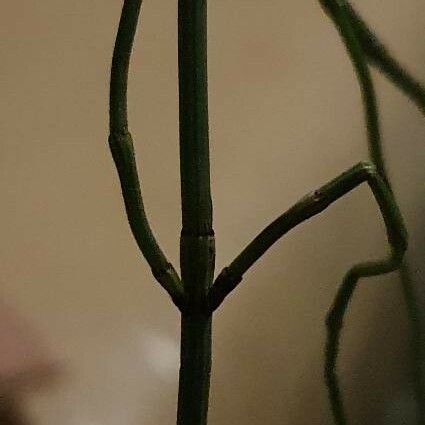
- 🌿 Segmented Stems: The main stalks are hollow, green, and jointed, resembling tiny bamboo. These segments can be easily pulled apart at the "knuckles."
- 🎋 Whorled Branches: Unlike some of its cousins, this species produces thin, needle-like branches that sprout in circles (whorls) from the joints of the main stem.
- 🌑 Sheath Teeth: At each joint, you’ll find a tiny ring of dark, tooth-like scales. These are actually the plant's reduced leaves, which have evolved to be almost invisible.
🏡 In Your Garden
- 🌊 Wet Feet Specialist: This plant thrives in boggy, marshy soil where most other plants would suffer from root rot. It is an excellent choice for the edges of a backyard pond or a rain garden.
- 🚧 The Runner's Nature: It spreads via an aggressive underground network of rhizomes. To prevent it from taking over your entire yard, it is highly recommended to grow it in deep containers or use root barriers to keep it contained.
⚠️ Safety & Toxicity
- 🐴 Livestock Warning: It contains an enzyme called thiaminase, which breaks down Vitamin B1. It is notably toxic to horses and sheep if consumed in large quantities over time.
- 🐾 Pet Safety: While it isn't usually attractive to cats or dogs, the high silica content and enzymes can cause digestive irritation or nutritional issues if chewed on frequently.
✨ Fun Fact
- 🧽 The Scouring Rush: Because the stems are packed with microscopic crystals of silica (the primary component of glass), early travelers and settlers used bunches of Horsetail to scrub their metal cooking pots and polish wood until they shone!

Detailed Care Instructions
To grow Equisetum ramosissimum (also known as horsetail or scouring rush), follow these steps:
- Obtain a rhizome: Purchase or obtain a rhizome of Equisetum ramosissimum from a reputable nursery or garden center.
- Choose a suitable container: Select a container that is at least 12 inches deep and has drainage holes at the bottom to prevent waterlogging.
- Soil preparation: Fill the container with a well-draining soil mix, such as a 1:1 ratio of potting soil and sand or perlite. This plant thrives in moist, loamy soil.
- Planting: Place the rhizome horizontally, just barely covered with soil. Make sure the growing points or nubs are pointing upward.
- Watering: Keep the soil consistently moist but not waterlogged. Water the plant from the bottom by placing the pot in a tray of water and allowing it to absorb moisture through the drainage holes. Avoid overhead watering as it can promote fungal diseases.
- Light conditions: Equisetum ramosissimum thrives in full sun to partial shade. Place the container in an area that receives 4-6 hours of direct sunlight per day.
- Temperature and humidity: This plant prefers cool to moderate temperatures. Optimal temperature range is between 60-75°F (15-24°C). Maintain ambient humidity by occasionally misting the plant or placing it near a humidifier.
- Fertilizing: Apply a balanced liquid fertilizer with a 10-10-10 NPK ratio every 4-6 weeks during the growing season (spring and summer). Follow the package instructions for proper dosage.
- Pruning: Horsetail plants do not require much pruning, but you can remove any yellow or brown stems to maintain a tidy appearance.
- Propagation: To propagate Equisetum ramosissimum, divide the rhizomes in early spring. Simply separate individual rhizomes and replant them in separate pots or locations.
Remember that horsetail spreads through rhizomes and can be invasive in some areas. Consider growing it in containers or confining it to a specific area in the garden to prevent it from spreading uncontrollably.

Place in a bright room that is sun drenched almost all day. Or directly in a south-facing window.

To water this plant, ensure that the soil is consistently moist. It prefers well-draining soil and should be watered thoroughly but not allow the soil to become waterlogged. It is recommended to water the plant deeply once a week, allowing the water to seep into the soil and reach the plant's roots. Avoid overhead watering as it can cause fungal growth on the plant. It is important to monitor the soil moisture levels regularly and adjust watering frequency accordingly.
To fertilize this plant, use a balanced liquid fertilizer, diluted to half strength. Apply the fertilizer once a month during the growing season, which is typically in spring and summer. Make sure to water the plant well before and after fertilization to prevent root burn. Avoid overfertilization as it can lead to excessive growth and weaken the plant.
When planting Equisetum Ramosissimum, it is important to use a soil that is well-draining and rich in nutrients. The soil should be loamy with a pH level between 6.0 and 7.5. It is recommended to mix the soil with peat moss or compost to ensure that it is highly organic. The plant prefers moist soil, so it is important to keep the soil consistently moist, but not waterlogged. It should not be planted in heavy clay soil or sandy soil without adequate amendments. When repotting, it is also important to choose a container with good drainage and to fill it with the proper soil mix. Overall, using the appropriate soil is essential for the growth and health of Equisetum Ramosissimum.
To propagate this plant, you can divide the rhizomes into smaller sections and replant them in well-draining soil. It is best to do this in the spring or fall, when the plant is actively growing. When dividing the rhizomes, make sure that each section has roots and shoots. Plant the sections in a shallow hole, making sure that the crown is just below the soil surface. Water the new divisions thoroughly and keep them moist until they are established. It is also possible to propagate this plant from spores, which can be collected and sown in sterile soil.








