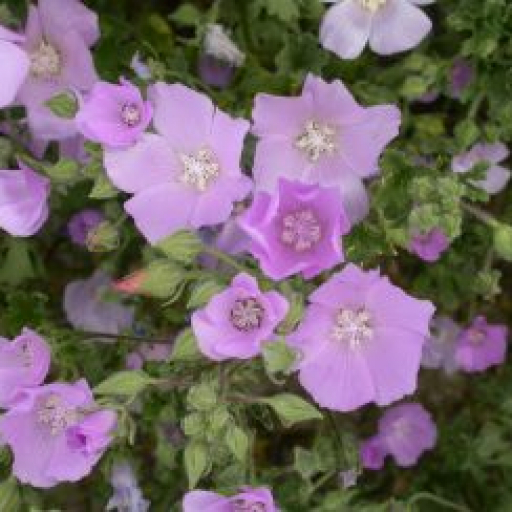
Plant Overview
Known affectionately as Parry’s Mallow, this delicate desert native is one of the hidden gems of the American Southwest. Named after the prolific 19th-century botanist Charles Christopher Parry, these flowers are famous for participating in "superblooms," where they transform arid, dusty plains into a shimmering carpet of lavender and rose.
🔍 How to Identify
- 🌸 The Petals: It features five heart-shaped petals that range from pale lavender to a deep, rosy purple. If you look closely, you’ll see fine, darker veins radiating from the center like a natural roadmap for bees.
- 🍃 Fan-Like Foliage: The leaves are small, fuzzy, and "palmately lobed," meaning they look a bit like a tiny, crinkled green hand or a fan.
- 📏 Growth Habit: This is a low-growing annual. It usually stays close to the ground (prostrate) or reaches up just a few inches, making it look like a delicate lace spread over the desert floor.
🏡 In Your Garden
- 🏜️ The Ultimate Xeriscape: Because it hails from the California deserts, it is exceptionally drought-tolerant. It thrives in "neglect" and prefers sandy or gravelly soil that drains almost instantly.
- 🌧️ Rain-Dependent Beauty: In the wild, Parry’s Mallow is an ephemeral; it waits for the perfect winter rains to germinate. In a garden setting, it teaches us patience, as its seeds may stay dormant until the moisture levels are exactly to its liking.
- ☀️ Sun Seeker: This plant is a sun-worshipper. It will rarely thrive in shade, as it needs high heat and direct light to produce its vibrant pigments.
⚠️ Safety & Toxicity
- ✅ Safe Status: Parry’s Mallow is generally considered non-toxic to humans, cats, and dogs. It belongs to the Malvaceae family, which includes many edible plants like Okra and Hibiscus.
- 🧤 Tactile Tip: While not poisonous, the plant is covered in "stellate" (star-shaped) hairs. These can feel a bit scratchy or irritating to gardeners with very sensitive skin, so light gloves are recommended when handling them.
✨ Fun Fact
The man this plant is named after, Charles Parry, was known as the "King of Colorado Botany." He traveled across the West on horseback and is credited with discovering hundreds of plant species, including the famous Engelmann Spruce!

Detailed Care Instructions
Eremalche Parryi, also known as Parry's mallow, is a native plant to the southwestern United States and northern Mexico. Here are some tips on how to grow Eremalche Parryi plant:
- Climate: Eremalche Parryi thrives in hot, dry climates and does well in full sun. It is drought tolerant once established.
- Soil: Parry's mallow prefers well-draining soil that is sandy or loamy. Avoid heavy clay soils, as they can cause root rot.
- Watering: Water your Eremalche Parryi plant sparingly, as it is adapted to drought conditions. Water deeply but infrequently to encourage deep root growth.
- Fertilizer: Parry's mallow does not require regular fertilization. A light application of a balanced fertilizer in the spring can help promote healthy growth.
- Pruning: Prune your Eremalche Parryi plant in the early spring to remove any dead or damaged growth. This will encourage new growth and a more compact shape.
- Propagation: Parry's mallow can be propagated from seeds or cuttings. Seeds can be sown directly into the ground in the spring, while cuttings can be taken in the summer and rooted in a well-draining soil mix.
- Pests and diseases: Eremalche Parryi is relatively pest and disease-resistant. However, keep an eye out for aphids, spider mites, and powdery mildew, and treat as necessary.
By following these tips, you can successfully grow Eremalche Parryi plant in your garden or landscape.

Eremalche Parryi plants should be watered regularly but sparingly to mimic their natural desert habitat. It is important to allow the soil to dry out partially between waterings to prevent overwatering, which can lead to root rot. When watering, aim to moisten the soil around the roots without drenching it. Avoid spraying water on the foliage, as this can lead to fungal diseases. Additionally, it is beneficial to water in the morning or early evening to minimize water loss through evaporation. It is also advisable to use a well-draining potting mix to ensure excess water can easily escape from the root zone.
To fertilize Eremalche Parryi plants, choose a balanced, water-soluble fertilizer with equal proportions of nitrogen, phosphorus, and potassium. Dilute the fertilizer according to the manufacturer's instructions and apply it to the soil around the base of the plant, avoiding direct contact with the leaves. Fertilize the plant once in the spring to promote healthy growth and blooming. Be careful not to over-fertilize, as this can damage the plant's roots.
Eremalche Parryi, also known as the desert five-spot, is a drought-tolerant plant native to the southwestern United States. When selecting soil for this plant, it is important to choose a well-draining mix that mimics its natural habitat. A sandy or sandy loam soil with good drainage is ideal for Eremalche Parryi, as it prefers arid conditions and is adapted to survive in dry, sandy soils. Adding some organic matter to the soil can help improve fertility and water retention, but be sure not to overwater as this plant is susceptible to root rot in overly moist conditions. Overall, a sandy, well-draining soil mix with moderate fertility is best for growing Eremalche Parryi successfully.
Eremalche Parryi plants can be propagated through seeds or cuttings.
To propagate Eremalche Parryi plants from seeds, collect mature seeds from the plant in the late summer or fall when the seed pods are dry. Sow the seeds in well-draining soil in a sunny location. Keep the soil consistently moist until the seeds germinate, which typically takes a few weeks.
To propagate Eremalche Parryi plants from cuttings, select a healthy stem from the plant and cut a 4-6 inch section just below a leaf node. Remove the lower leaves from the cutting and dip the cut end in rooting hormone. Plant the cutting in well-draining soil and keep it in a warm, sunny location. Keep the soil moist and within a few weeks, roots should begin to form on the cutting.
Both methods of propagation can be successful in producing new Eremalche Parryi plants that are genetically identical to the parent plant.








