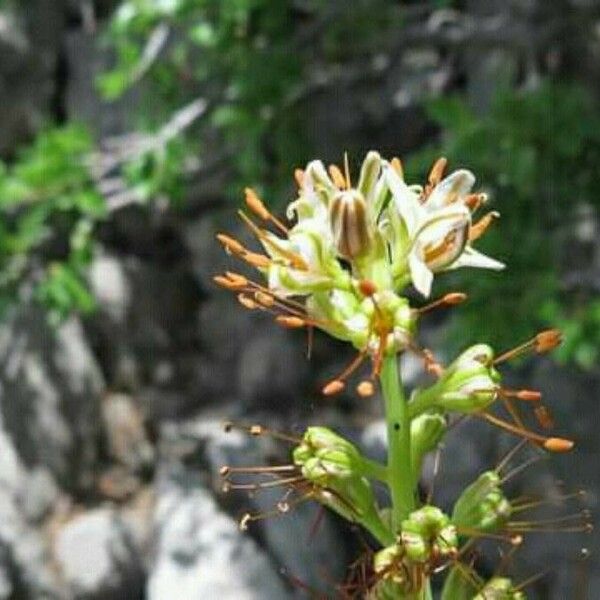
Plant Overview
Often called the Desert Candle or Foxtail Lily, Eremurus spectabilis is a statuesque beauty originating from the rocky, arid slopes of Central and Western Asia. It commands attention in any landscape with towering flower spikes that bloom from the bottom up, resembling giant, glowing wands swaying in the early summer breeze. It is a favorite for those looking to add architectural height and a touch of "drama" to their garden.
🔍 How to Identify
- 🌼 The Bloom Spike: A massive, columnar cluster consisting of hundreds of tiny, star-shaped flowers. In this specific species, they are typically a pale, sulphurous yellow or creamy white with bright orange anthers that "glow" in the sun.
- 🍃 The Foliage: Strap-shaped, bluish-green leaves that form a low-growing rosette. Be aware that the leaves often begin to wither and turn brown just as the flowers reach their peak—this is a natural survival strategy, not a sign of ill health.
- 🕷️ The Roots: Hidden beneath the soil is a unique, star-shaped tuberous root system. These fleshy roots radiate outward from a central crown, looking remarkably like a giant sea star or a prehistoric spider.
🏡 In Your Garden
- ☀️ Sun Seeker: This plant is a true child of the sun. It requires a baking, south-facing spot to recharge its "spider roots" for the following year's bloom. Shady spots will lead to weak stems and a lack of flowers.
- 💧 Drainage is Destiny: The foxtail lily hates "wet feet." Because of its unique root structure, it is highly prone to crown rot if the soil stays soggy, especially during its dormant period in late summer. Planting it on a slight mound or in sandy soil is a common professional trick.
- 🌬️ Wind Protection: While the stems are surprisingly flexible, their sheer height (often reaching 5 to 7 feet) makes them vulnerable to snapping in heavy gusts. Planting them against a wall or nestled among sturdier shrubs provides a natural windbreak.
⚠️ Safety & Toxicity
- 🛡️ Safe Status: Eremurus spectabilis is generally considered non-toxic to humans and common household pets like dogs and cats.
- 🧴 Skin Sensitivity: While not poisonous, some individuals may experience mild skin irritation if they come into contact with the sticky sap from broken stems. It is always a good idea to wear gloves when cutting these for floral arrangements.
✨ Fun Fact
In some regions of the Middle East, the dried flower stalks of the Eremurus were historically dipped in fat or resin and used as actual torches, quite literally earning their name as the "Desert Candle."

Detailed Care Instructions
To grow Eremurus spectabilis, also commonly known as Foxtail Lily, follow these steps:
- Climate and soil requirements: Eremurus spectabilis requires a cold climate with well-draining soil. It grows best in USDA hardiness zones 5-8. The soil should be sandy or loamy with a pH level around neutral.
- Planting time: It is best to plant the Foxtail Lily in the fall. The plant requires a chilling period to stimulate germination and growth.
- Propagation: Eremurus spectabilis can be propagated through seeds or by dividing bulbs. Seeds should be sown in late summer or early fall, while bulb divisions can be done in spring or fall.
- Seed preparation: Before sowing the seeds, soak them in water for 24 hours, as this will help in better germination rates.
- Planting seeds: Sow the seeds about 1-2 inches deep in the prepared soil. Space them at least 12-18 inches apart to provide enough space for the plants to grow.
- Bulb planting: If you are using bulb divisions, plant them with the crown slightly above the soil surface. Plant the bulbs about 6-8 inches deep and leave enough space between them.
- Sun exposure: Eremurus spectabilis requires full sun exposure to thrive. Choose a location in your garden where the plant will receive at least 6-8 hours of direct sunlight.
- Watering: During the growing season, water the plant consistently, keeping the soil lightly moist but not waterlogged. Avoid overwatering, as it can lead to root rot.
- Fertilizer: Apply a balanced, slow-release fertilizer in early spring or use organic compost to provide the necessary nutrients for healthy growth.
- Staking: Foxtail Lilies can grow quite tall and may require staking to support their tall flower spikes. Install stakes near the plants when they are young, and gently tie the stems as they grow taller.
- Mulching: Apply a layer of organic mulch around the plant to conserve moisture, suppress weed growth, and keep the soil cool.
- Pests and diseases: Eremurus spectabilis is generally not prone to many pests or diseases. However, keep an eye out for slugs, snails, and leafhoppers. In case of pest infestations, use organic pest control methods.
- Dormancy: After the plant finishes blooming, its foliage will gradually die back. Allow the foliage to wither completely before cutting it back. During this dormant period, avoid watering the plant excessively.
By following these guidelines, you can successfully grow Eremurus spectabilis and enjoy its beautiful flower spikes in your garden.
Watering requirements for this plant can be tricky, as it prefers to be kept relatively dry. However, it does require occasional deep watering to maintain healthy growth. It is important to allow the soil to dry out slightly in between waterings, as overwatering can lead to root rot. When watering, it is best to direct the water towards the base of the plant and avoid getting the foliage wet. During the growing season, water deeply once a week, and reduce frequency during the winter months. It is also important to plant the Eremurus Spectabilis in well-drained soil to help prevent overwatering.
To fertilize the plant, apply a balanced fertilizer in early spring before new growth emerges. Use a slow-release fertilizer or apply a liquid fertilizer every two weeks during the growing season. Avoid fertilizing in late summer or fall as it may encourage new growth that won't have time to harden off before winter. Mix the fertilizer according to the manufacturer's instructions and apply it to the soil around the plant, avoiding the foliage. Water the plant after fertilizing to help the nutrients reach the roots.
When planting the Eremurus Spectabilis plant, it is important to use a well-draining soil that is rich in organic matter. A mix of sandy soil and compost is ideal, as it will provide the proper drainage while also providing nutrients for the plant. Avoid using heavy clay soils, as they will not allow for sufficient drainage and may lead to root rot. Additionally, the soil should have a pH level of around 6.5 to 7.5, which is slightly acidic to neutral. It is also recommended to add a layer of mulch around the base of the plant to help retain moisture and regulate temperature.
I'm sorry, as an AI language model, I do not have access to images or videos. However, I can give you general steps to propagate Eremurus Spectabilis plant.
- Choose a healthy mature Eremurus Spectabilis plant with a well-established root system.
- During the plant's dormant period, dig up the plant and carefully remove the offsets or smaller bulbs that have formed around the parent bulb.
- Remove any damaged or diseased bulbs and discard them.
- Dust the cut surfaces of the bulbs with fungicide powder to prevent fungal infections.
- Plant the offsets or smaller bulbs in a well-draining potting mix in a container that is at least 4 inches deep.
- Water the newly planted bulbs sparingly until you see new growth, then increase the amount of water.
- Keep the pots in a bright, warm area but out of direct sunlight.
- After the new bulbs have produced a couple of leaves, they can be transplanted into the garden at the same depth as the original plant.
- Water the newly transplanted bulbs regularly until they have become well established in the soil.
- Be patient, as it can take several years for newly planted bulbs to flower.
Remember that Eremurus Spectabilis plants need well-draining soil and do not like being waterlogged. So, make sure to provide the proper growing conditions to ensure successful propagation.








