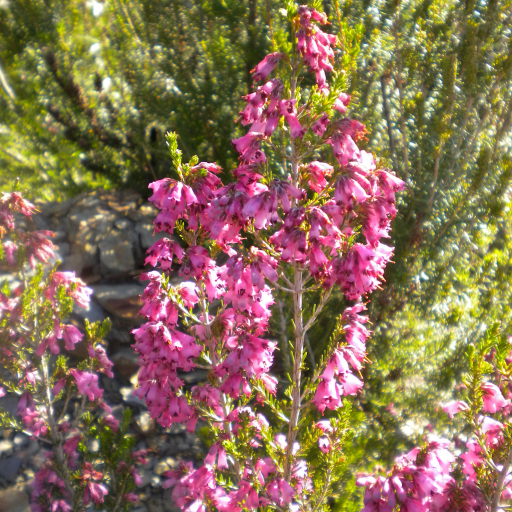
Plant Overview
Often called the Spanish Heath, this sun-loving shrub turns Mediterranean hillsides into a sea of vibrant magenta every spring. It is a resilient, woody plant that thrives where others struggle, often found clinging to rocky slopes or sandy heaths in Spain and Portugal. If you are looking to bring a "wild moorland" aesthetic to your landscape, this hardy evergreen is a perfect choice.
🔍 How to Identify
- 🌸 The Blooms: Clusters of elongated, bell-shaped flowers that range from deep pink to bright magenta. They typically appear in late winter to early spring.
- 🌿 Leaf Texture: Tiny, dark-green needle-like leaves (known as "ericoid" leaves) that grow in whorls along the upright stems.
- 🪵 Growth Habit: A multi-stemmed evergreen shrub that can reach heights of 4 to 6 feet, giving it a soft, airy, and textured appearance.
🏡 In Your Garden
- 🧪 Acidic Obsession: This plant is a "calcifuge," meaning it has a physical intolerance to lime and alkaline soil. It requires acidic conditions to thrive; if planted in "sweet" soil, its leaves will quickly turn yellow as it loses the ability to take in nutrients.
- 🌬️ Coastal Toughness: Because it originated in rugged Mediterranean coastal regions, it is incredibly salt-tolerant and wind-resistant. It’s a fantastic choice for seaside gardens where harsh salt spray would wither more delicate plants.
⚠️ Safety & Toxicity
- ✅ Generally Safe: Erica australis is not known to be toxic to humans or common household pets like cats and dogs.
- 🐝 Bee Magnet: While safe to touch and grow, it is highly attractive to bees. If you have a severe bee allergy, you may want to plant it away from high-traffic doorways or patios.
✨ Fun Fact
The nectar from Erica australis is a primary source for "Heather Honey" in Western Europe. This specific honey is famous for its "thixotropic" properties—it is a thick jelly that only becomes liquid when stirred or shaken!

Detailed Care Instructions
To grow Erica Australis (also known as Australian Heath), follow these steps:
- Climate: Erica Australis requires a Mediterranean climate and prefers cool, humid conditions. It is best suited for USDA hardiness zones 8-11.
- Soil: Choose well-draining, acidic soil with a pH between 4.5 and 6.0. Sandy or loamy soils are ideal. If your soil is alkaline, consider growing Erica Australis in containers with an appropriate potting mix.
- Sunlight: Provide the plant with full sun to partial shade. It flourishes in bright but indirect light.
- Planting: Dig a hole in the soil and make sure it is slightly wider and deeper than the plant's root ball. Place the plant in the hole, ensuring the crown (where the stems meet the roots) is level with the soil surface. Backfill with soil and gently firm it around the plant.
- Watering: Keep the soil consistently moist but not waterlogged. Water regularly, especially during dry spells or when the plant is establishing. Avoid overhead watering as it can lead to fungal diseases.
- Mulching: Apply a layer of organic mulch, such as bark chips or pine needles, around the plant to retain moisture and suppress weed growth. Mulching also helps maintain a stable soil temperature.
- Pruning: Prune Erica Australis lightly after flowering. Trim back any dead or diseased branches, as well as to maintain a compact shape. Avoid cutting into old wood, as it may not resprout.
- Fertilizer: Use a fertilizer specifically formulated for acid-loving plants, such as azalea or rhododendron fertilizer. Apply according to the instructions on the package, usually in early spring and late summer.
- Pest and disease control: Erica Australis is relatively resistant to pests and diseases. However, keep an eye out for common problems such as aphids, mites, or root rot. Treat infestations or diseases promptly using appropriate remedies.
- Overwintering: In colder regions, Erica Australis may require protection from frost. Consider covering the plant with a frost cloth or move potted plants indoors during extreme cold spells.
By following these guidelines, you can successfully grow Erica Australis and enjoy its beautiful blooms.

Place in a bright room that is sun drenched almost all day. Or directly in a south-facing window.

To properly water this plant, ensure that the soil is moist yet well-drained. Avoid overwatering as it can lead to root rot. Water the plant deeply once a week or when the top inch of soil feels dry to the touch. Use room temperature water and avoid getting the foliage wet. If using a pot, it is advisable to place a saucer beneath it to collect excess water and prevent the roots from sitting in standing water.
To fertilize the plant, use a low-nitrogen, acid-loving fertilizer. Apply it in the spring and again in the fall when the plant is actively growing. Be sure to follow the package instructions for proper dilution and application rate. Avoid fertilizing during the dormant period in the summer. Always water the plant well before and after applying fertilizer to prevent burning of the roots.
The ideal soil for the Erica Australis plant should have a slightly acidic pH level and should be well-draining. It should also be rich in organic matter and nutrients that will support healthy growth and development. A mixture of peat moss, sand, and perlite is typically recommended for potted plants, while a loamy, sandy soil with good drainage is ideal for outdoor planting. Additionally, the soil should be kept consistently moist but not waterlogged, as the plant can be prone to root rot in overly wet conditions. Adequate sunlight and proper watering are also essential for the Erica Australis plant to thrive.
To propagate this plant, the following steps can be taken:
- Choose a healthy parent plant that is disease-free and has no signs of pest infestation.
- Take stem cuttings of at least 6-8 cm long from the parent plant in early spring or late summer.
- Make a clean cut just below a node using a sharp, sterile knife or scissors.
- Remove the bottom leaves from the cutting without damaging the stem.
- Dip the cut end of the stem in rooting hormone powder to increase the chances of successful rooting.
- Plant the stem cuttings in a well-drained potting mix of sand and peat at a depth of about 2 cm.
- Water the cuttings sparingly to keep the soil moist but not waterlogged.
- Cover the pot with a plastic bag or a clear plastic wrap to create a humid environment that will promote root growth.
- Place the pot in a bright, but not direct sunlight, location with a consistent temperature between 20-25°C.
- After 4-6 weeks, check for root growth by gently pulling on the cutting. If the cutting resists, it has rooted and can be transplanted into a larger pot or its final growing location.
Common pests of the spanish heath include Aphids, larvae. Make a habit of checking your spanish heath frequently for pests so that any infestations can be caught and managed early.








