Plant Overview
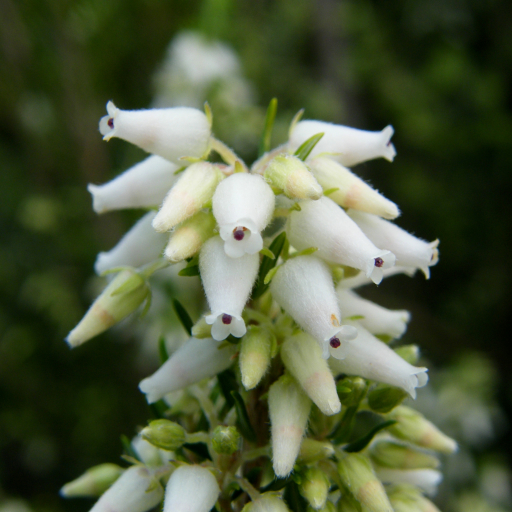
Often called the Water Heath, Erica caffra is a robust South African native that breaks the stereotype of heathers being delicate moorland groundcovers. While many of its cousins prefer dry, sandy slopes, this species is a moisture-loving pioneer frequently found hugging the banks of mountain streams. Its elegant, creamy-yellow bells provide a soft, vertical accent that brings a touch of the wild Cape Fold Mountains to your backyard.
🔍 How to Identify
- 🍃 The Leaves: Features tiny, dark green, needle-like leaves arranged in neat whorls of three. They give the plant a fine, feathery texture that remains attractive all year round.
- 🔔 The Blooms: Look for clusters of tubular, bell-shaped flowers at the ends of the branches. They range from creamy white to pale yellow and have a subtle, honey-like scent that attracts pollinators.
- 🪵 The Habit: An upright, woody shrub that can grow surprisingly tall for a heath. In the wild, it can reach the height of a small tree, though in gardens, it usually stays a manageable 2 to 3 meters.
🏡 In Your Garden
- 💧 Thirstier Than Most: As the name "Water Heath" suggests, this plant is not a fan of drought. It is an ideal candidate for rain gardens or the edges of ponds where the soil stays consistently damp.
- 🧪 Acidic Ambitions: Like most Ericas, it is a "calcifuge," meaning it hates lime. It requires acidic, well-draining soil to thrive. If your garden soil is naturally alkaline, it is best to grow this one in a large pot with specialized ericaceous compost.
- ✂️ Pruning Nuance: It benefits from a light "haircut" after flowering to prevent it from becoming too "leggy" or woody. However, avoid cutting back into old, leafless wood, as it may struggle to sprout new growth from there.
⚠️ Safety & Toxicity
- ✅ Safe Status: Erica caffra is generally considered non-toxic to humans and common household pets like cats and dogs.
- 🧤 Skin Sensitivity: While not poisonous, the fine foliage and woody stems can be slightly scratchy. If you have sensitive skin, wearing gloves while pruning will prevent minor mechanical irritation.
✨ Fun Fact
The genus name Erica is derived from the Greek word ereike, which means "to break." This is thought to refer to either the plant's brittle stems that snap easily in the wind or an ancient medicinal belief that certain heathers could "break" or dissolve bladder stones.

Detailed Care Instructions
To grow Erica caffra, also known as the Cape heath, follow these steps:
- Choose a location: Erica caffra prefers a sunny spot with well-draining soil. It can tolerate a range of soil types but does best in acidic, sandy soil.
- Planting: It is best to plant Erica caffra in the spring or fall. Dig a hole that is slightly larger than the plant's root ball and gently place the plant in the hole. Ensure the plant is planted at the same depth as it was in the container.
- Watering: Water the plant regularly, especially during the hot summer months. Ensure the soil is kept consistently moist but not waterlogged.
- Fertilizing: Erica caffra does not require much fertilization. You can apply a slow-release fertilizer in the spring to help encourage growth.
- Pruning: Prune the plant in the spring to remove any dead or diseased branches and encourage new growth.
- Mulching: Mulch around the base of the plant to help retain moisture and suppress weeds.
- Winter care: Erica caffra is hardy in USDA zones 8-11 but may need some protection during very cold winters. Consider covering the plant with a frost cloth or moving it to a protected location.
By following these steps, you should be able to successfully grow Erica caffra in your garden.

Place in a bright room that is sun drenched almost all day. Or directly in a south-facing window.

To properly water the Erica Caffra plant, you should ensure that the soil is consistently moist but not waterlogged. It is best to water the plant at the base, avoiding getting the foliage wet. Allow the top inch of soil to dry out slightly before watering again. Additionally, it is important to use room temperature water to prevent shock to the plant's roots. Consider using a plastic tray or saucer underneath the pot to catch excess water and prevent root rot. Adjust your watering schedule based on the plant's specific needs and environmental conditions.
The Erica Caffra plant should be fertilized once a year in the spring. Use a balanced, slow-release fertilizer specifically formulated for acid-loving plants. Follow the manufacturer's instructions for application rates and methods. Water the plant thoroughly after fertilizing to help the nutrients penetrate the soil. Avoid over-fertilizing, as this can lead to root burn and damage the plant.
Ericica Caffra plants prefer well-draining soil that is slightly acidic with a pH level around 4.5 to 5.5. A mix of peat moss, coarse sand, and organic material such as bark chips or compost can provide the ideal growing medium for these plants. Avoid using heavy or compacted soils, as they can lead to root rot and other problems. Adding perlite or vermiculite to the soil mix can improve drainage and aeration, which is important for the health of Erica Caffra plants. Additionally, incorporating a slow-release fertilizer specifically designed for acid-loving plants can help provide the necessary nutrients for healthy growth.
To propagate the Erica Caffra plant, you can follow these steps:
- Take a cutting from a healthy, mature plant. Using a sharp, clean pair of scissors or shears, cut a piece of stem about 4-6 inches long.
- Remove the lower leaves from the cutting, leaving only a few leaves at the top.
- Dip the cut end of the cutting in rooting hormone to encourage root growth.
- Plant the cutting in a well-draining potting mix or a mixture of peat moss and perlite.
- Water the cutting thoroughly and place it in a warm, bright location with indirect sunlight.
- Keep the soil moist but not waterlogged, and mist the cutting regularly to maintain humidity.
- After a few weeks, you should start to see roots forming. Once the cutting has established roots, you can transplant it into a larger pot or into the garden.
- Monitor the new plant for signs of stress and continue to provide adequate water and sunlight as it grows.
By following these steps, you should be able to successfully propagate the Erica Caffra plant and grow a new plant from a cutting.








